At a glance
- Humpbacks, green turtles, rays and dolphins all use these waters, with six whale species and four dolphin species officially recorded in the Whitsundays.[1]
- The sharks you meet here are small reef residents, and during stinger season most tours provide protective suits to swim safely.[2]
- Two airports serve the Whitsundays daily, Hamilton Island (HTI) and Proserpine (PPP), and Whitehaven Beach sits approximately 35 km from Airlie Beach by sea.[2][3]
- The dry season from June to October is the best time to visit, September is named the best month, and stinger season runs from late October until May.[4][5]
- The Whitehaven Full-Day Eco-Cruise with Buffet is rated 4.78 from 3,065 reviews, runs 8 hours and costs from US$175.[6]
- Top choice Whitehaven Eco-Cruise from US$175 Duration8 hours[6]Rating4.78 from 3,065 reviews[6]Free cancellationup to 24 hours in advance[6]GuideLive tour guide: English[6] Check availability
- Camira Sailing Adventure from US$182 Duration10 hours[7]Rating4.70 from 1,423 reviews[7]Free cancellationup to 2 days in advance[7]GuideLive tour guide: English[7] See this tour
- Snorkel and Hill Inlet Day from US$174 Duration6.5 hours - 1 day[8]Rating4.84 from 2,331 reviews[8]Free cancellationup to 24 hours in advance[8]GuideLive tour guide: English[8] See this tour
Cetaceans are a group of animals including whales, dolphins, and porpoises. They are an important part of the marine ecosystem in the Whitsundays, with six species of whale and four species of dolphin officially recorded as calling the Whitsundays home.
Is the eco-cruise worth it?
On the water
- Wear the stinger suit when the crew offers one
- Hat, long sleeves and reef-safe sunscreen for the run out
- Stay with the group and let the guide lead the snorkel
- No touching coral, turtles or rays, and no feeding fish
Humpback whales in the Whitsunday Passage
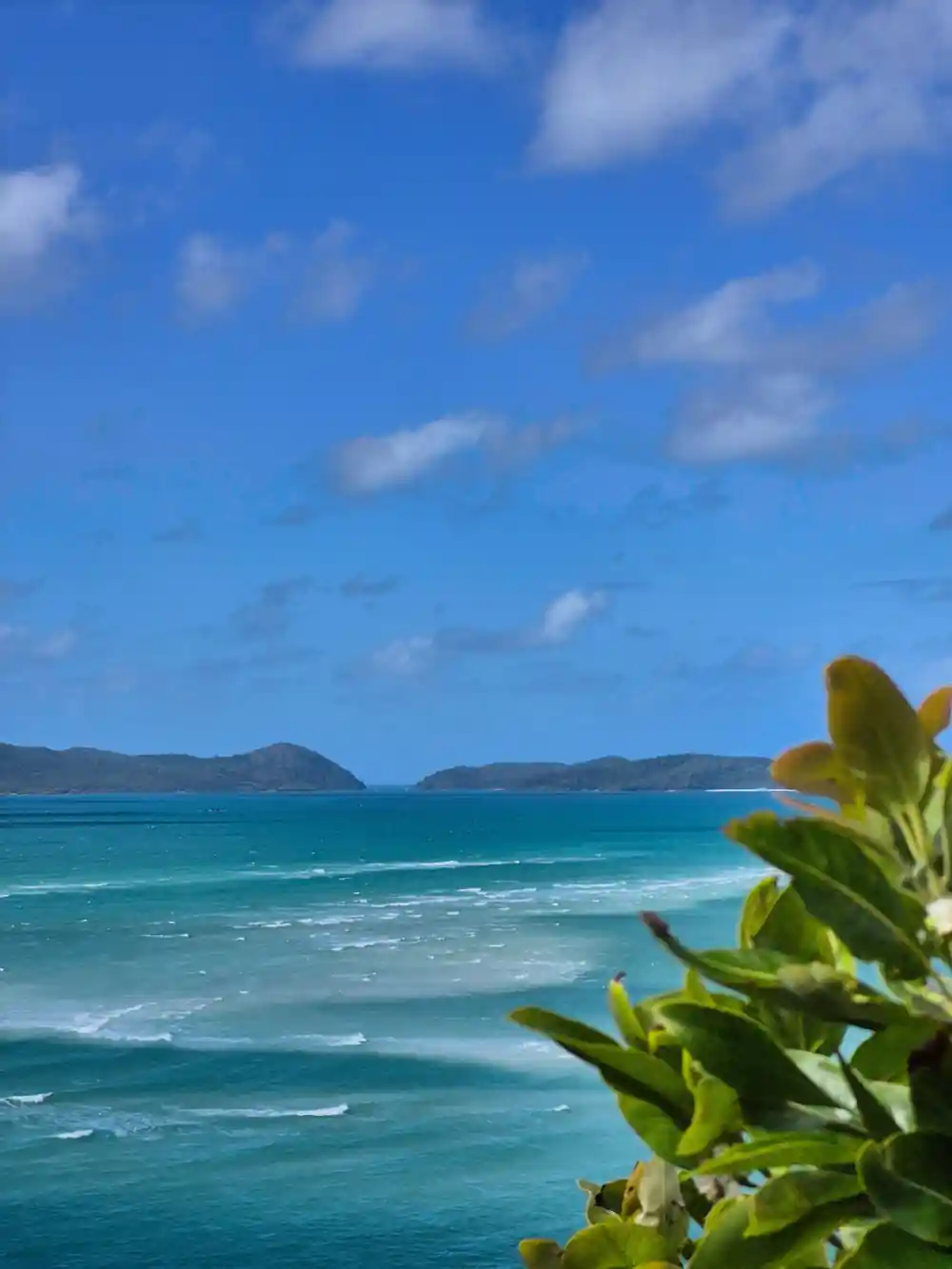
The Whitsundays has six species of whale and four species of dolphin officially recorded as calling the area home.[1] The star of the show is the humpback, which works its way along the Queensland coast each year and uses the calm water between the mainland and the islands as a place to rest, nurse calves and drift without fighting the open sea. The Whitsunday Passage is the channel that runs between the mainland and the island chain, deep enough for a whale to sound and sheltered enough for a small boat to follow at a respectful distance.
When a humpback surfaces near the boat everything else stops. You might see a dark shape roll under the bow, a plume of spray off to one side, a tail thrown up before a dive, or the whole animal clear of the water. Crews slow down and hold their line, and the whale decides how long the encounter lasts. Keep your voice down, keep your movements slow, and stay where the crew tells you to stand.
Whale season and beach season overlap. The dry season from June to October is the best time to visit the Whitsundays, and September is named as the best month of the year here.[4] Book a wildlife day for the middle of your stay, and keep a spare morning free in case the wind turns.
Green turtles on the seagrass beds
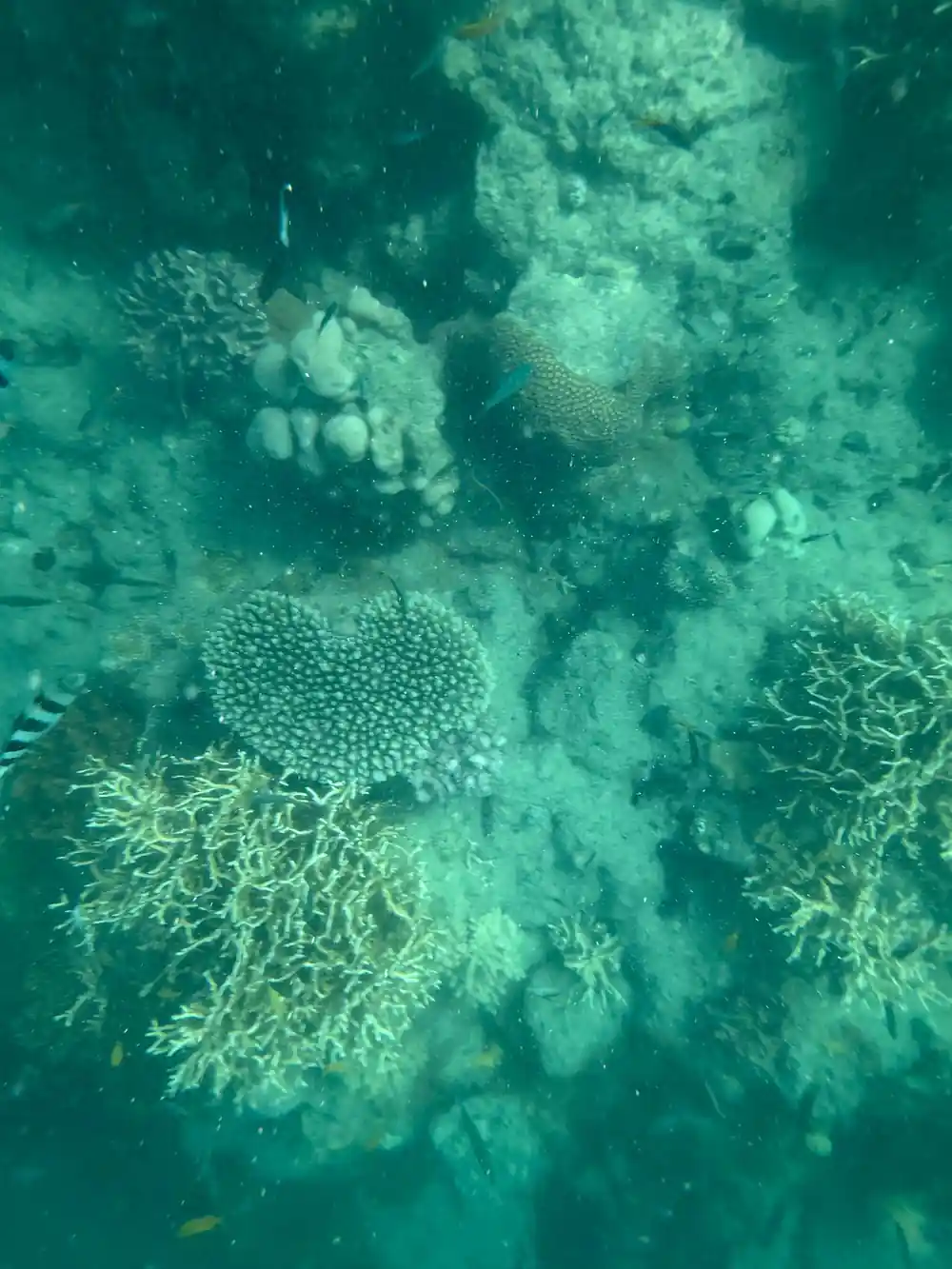
Green turtles are the grazers of the Whitsundays. They crop the seagrass meadows that grow in the sandy shallows between the islands, rising every few minutes for a breath before settling back to feed. Snorkelling over a patch of seagrass is the simplest way to meet one: hover still, keep your fins quiet, and let the turtle circle around you. Hawksbill and loggerhead turtles turn up on the reefs as well, usually over coral rather than weed.
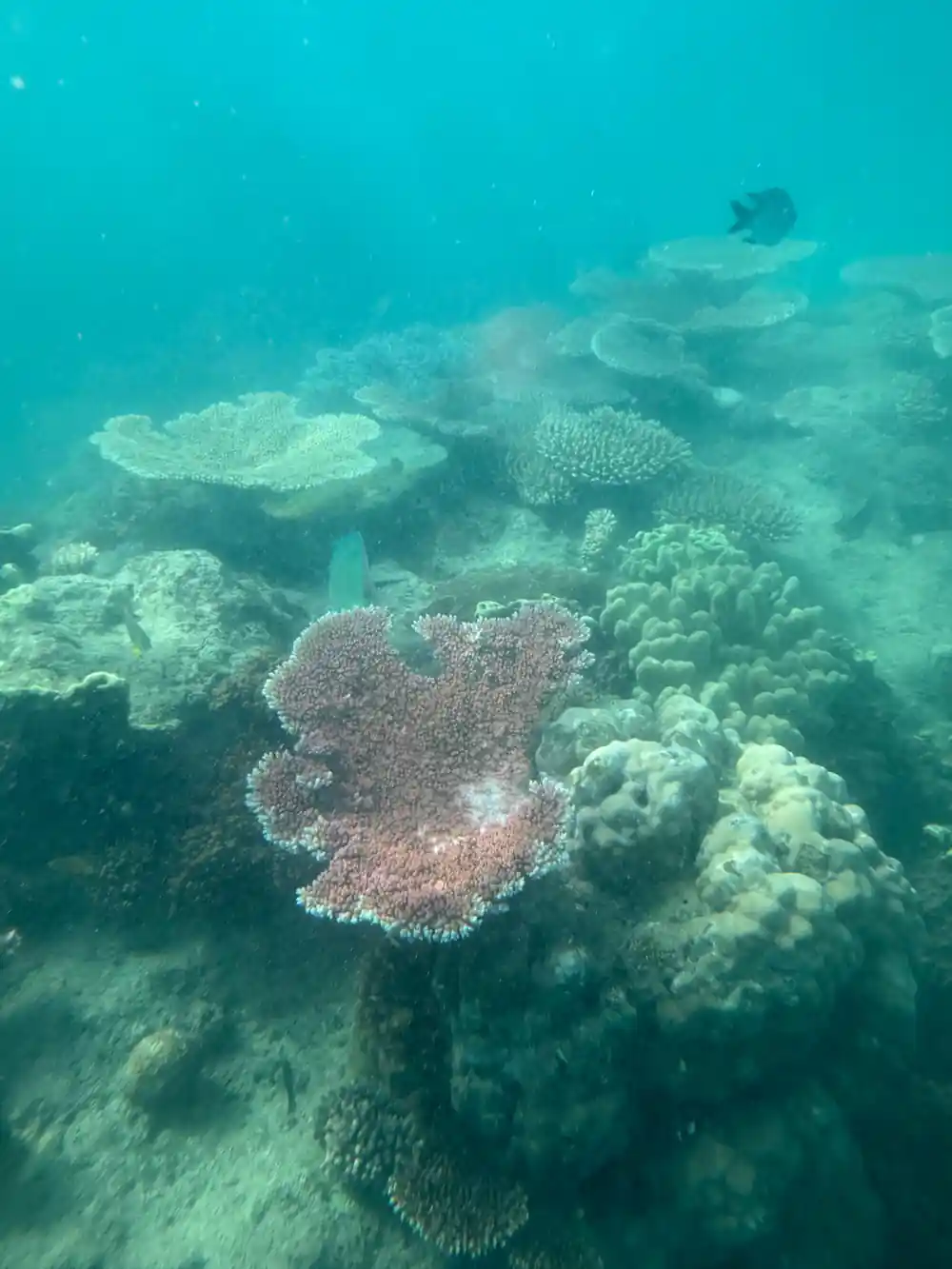
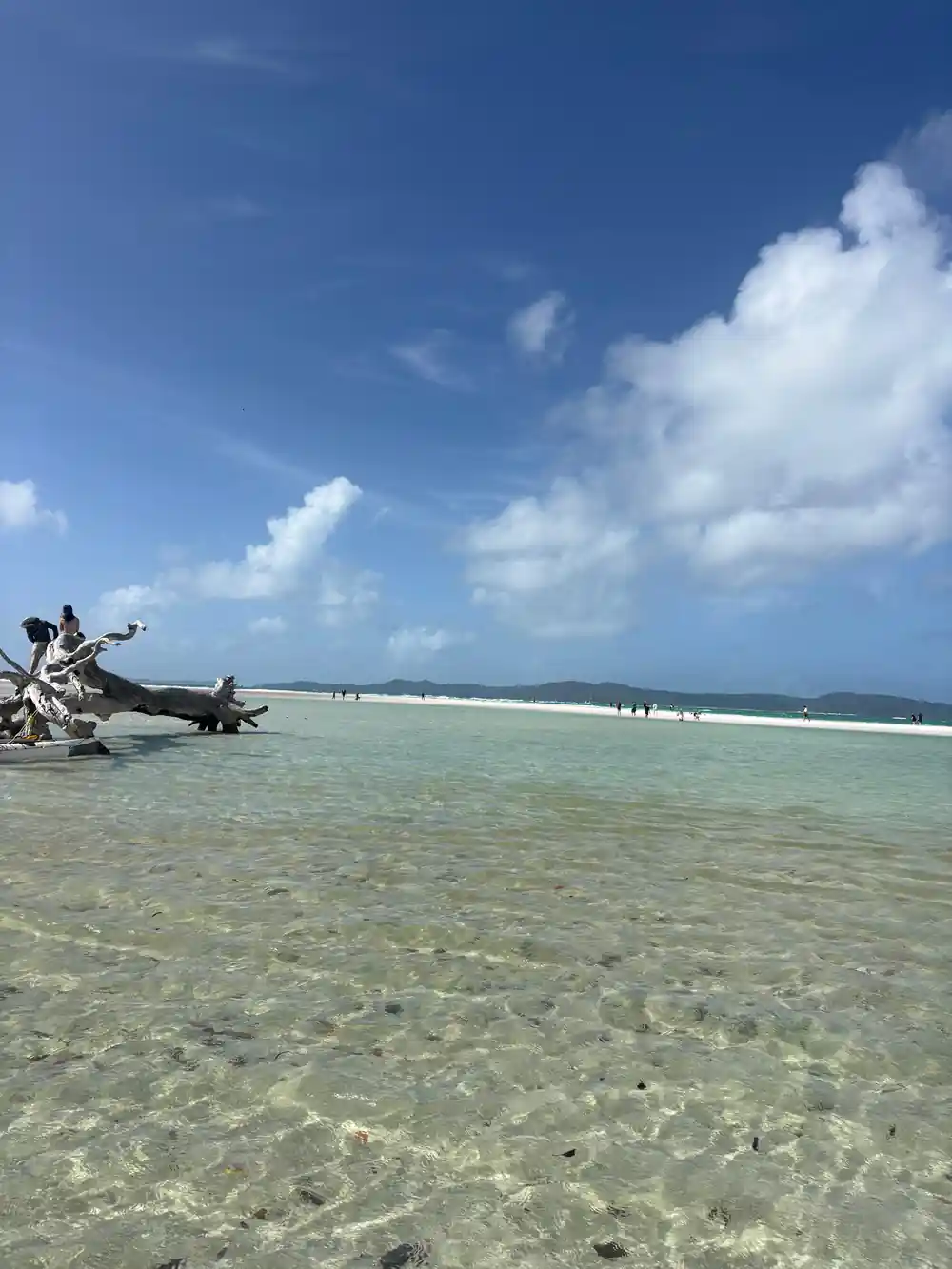
Hook Island is the classic stop for a snorkel. Across the top of the island there is a series of bays that offer excellent quality snorkelling, with beautiful healthy coral and diverse marine life.[9] The water off Whitehaven Beach is usually calm, warm and clear, which makes it a gentle place to get your mask wet for the first time.[2]
Turtles are protected animals, and the etiquette is straightforward. Do not touch, ride or chase them, do not block their path to the surface, and keep some clear water between you and any animal you meet. A turtle that swims away is a turtle behaving normally; let it go and watch it from a distance.
Reef sharks rest on the sand between coral heads.
Rays, dolphins and what you see from the deck
Dolphins tend to show up as a fin cutting the water beside the boat or a small group riding the pressure wave at the bow. Four species of dolphin are officially recorded in the Whitsundays, along with the whales that give the region its name for marine life.[1] Inshore, the animals you are likely to meet are bottlenose dolphins and the shy Indo-Pacific humpback dolphin, which favours the murky water near creek mouths and mangroves.
Rays are the quiet thrill. Eagle rays and manta rays cruise the reef edges and deeper channels, while stingrays lie half buried in the sand in the shallows off Whitehaven Beach. Shuffling your feet as you wade, rather than stepping straight down, is the local habit, and it gives a resting ray time to move off before you arrive.
From the deck of a cruising catamaran you also get the seabirds, the turtles lifting their heads to breathe, and the occasional splash of something larger. Binoculars earn their space in your bag, and a polarised pair of sunglasses does more for spotting fish than any amount of peering.
Reef sharks around the Whitsundays
Do you get sharks in the Whitsundays? Yes, and seeing one is a good sign rather than a bad one. The islands are ringed with fringing reef, and small reef sharks are residents of those reefs. Look for whitetip and blacktip reef sharks resting on the sand between coral heads, or a grey shape cruising the reef edge. They are wary of swimmers and usually move off before you get a proper look.
For anyone worried about a Whitsundays shark attack, the useful context is that the sharks here are reef species, not the oceanic hunters that make surf-zone news. You will not need a Whitsundays shark attack locations map to enjoy the islands: reef sharks are spread across the fringing reefs rather than gathered in one bay, and the animals you meet while snorkelling are going about their own day.
Good habits do more for your peace of mind than any statistic. Stay with the group, keep your hands to yourself, do not feed anything, and do not corner an animal against the coral. If a shark does swim past, hold still, keep your fins together and let it go. Tell the crew what you saw; they know these reefs and they like hearing about it.
from US$175
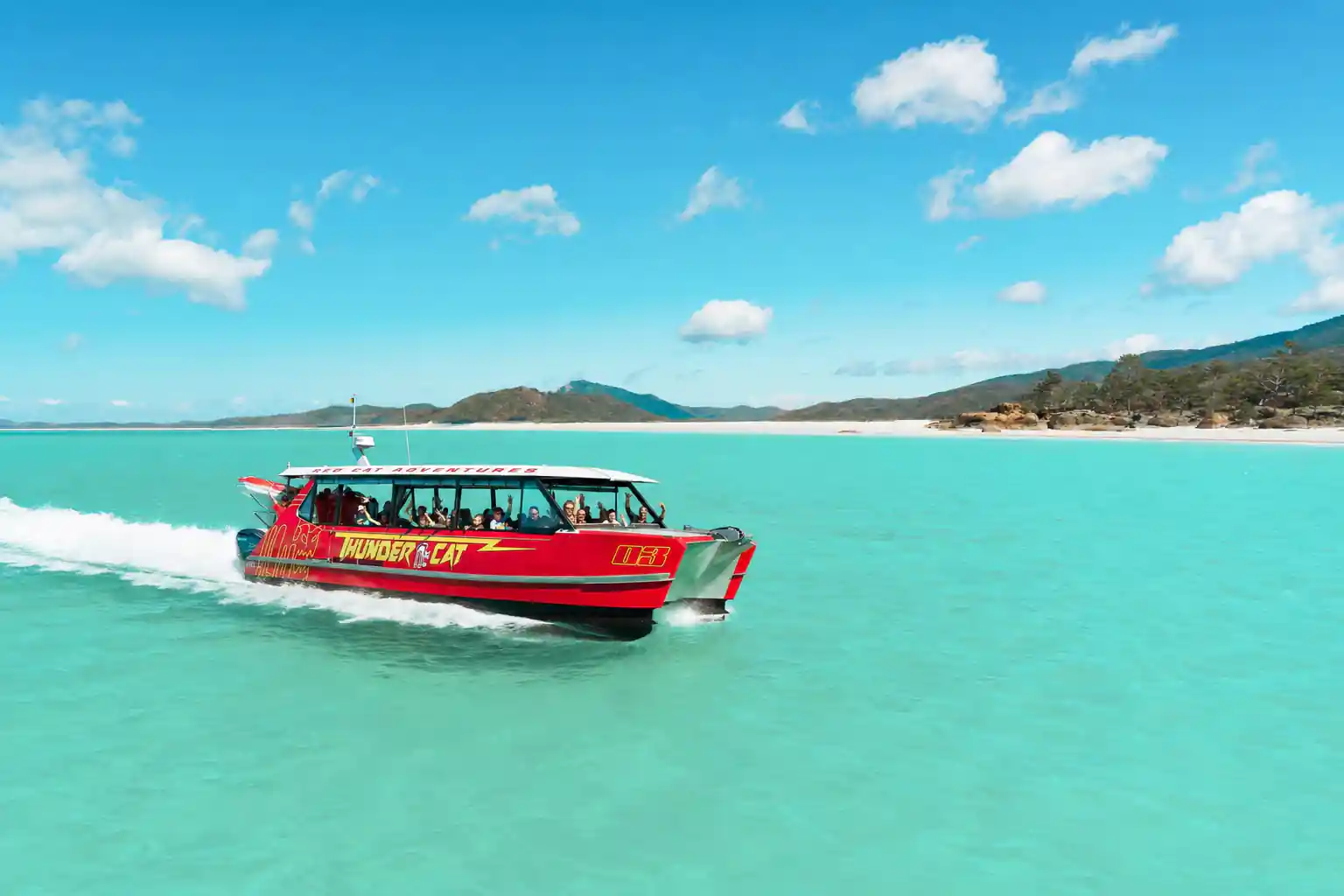
The Whitehaven Full-Day Eco-Cruise runs 8 hours, from US$175, and stops at Hill Inlet Lookout, Whitehaven Beach and Hook Island.[6]
Do you get crocodiles in Airlie Beach?
Do you get crocodiles in Airlie Beach? Saltwater crocodiles are part of life along this stretch of the Queensland coast. They live in river mouths, mangrove creeks and estuaries, and they move between them, so a crocodile can and does turn up in the Whitsundays region. What they are not is a reef animal. You will not meet one on the open island beaches or out on the fringing coral.
The places to treat with respect are the murky, mangrove-lined ones: creek mouths, boat ramps, tidal flats and the quiet corners of harbours. That means no wading in creeks, no swimming at dusk near a river mouth, and no dangling legs off a pontoon in the evening. Ask before you swim anywhere that is not an open beach.
Treat the estuaries as crocodile country and the islands as yours to enjoy. A beach day at Whitehaven or a snorkel on the reef is sand, coral and clear water, and the animals you meet there are fish, turtles, rays and the occasional reef shark.
Stinger season: box jellyfish and Irukandji
Stinger season in the Whitsundays runs from late October until May, which covers the warmer months of the Australian year.[5] The two animals behind the caution are the box jellyfish, a pale, nearly transparent cube with trailing tentacles, and the Irukandji, a jellyfish small enough to be almost invisible in the water. Both belong to the tropical water here rather than to the reef itself.
In practice the answer is a suit rather than a closed door. The water off Whitehaven Beach is usually calm, warm and clear.[2] During stinger season from November to April, most tours provide protective suits to swim safely.[2] A stinger suit covers your arms and legs, lets you swim and float without thinking about it, and goes on over your swimmers.
What to do: put the suit on properly, keep it on for the whole swim, and never handle a jellyfish, even one washed up on the sand. If anyone is stung, tell the crew straight away. They carry first aid and they deal with this every season, so let them take charge.
Planning your wildlife day on the water
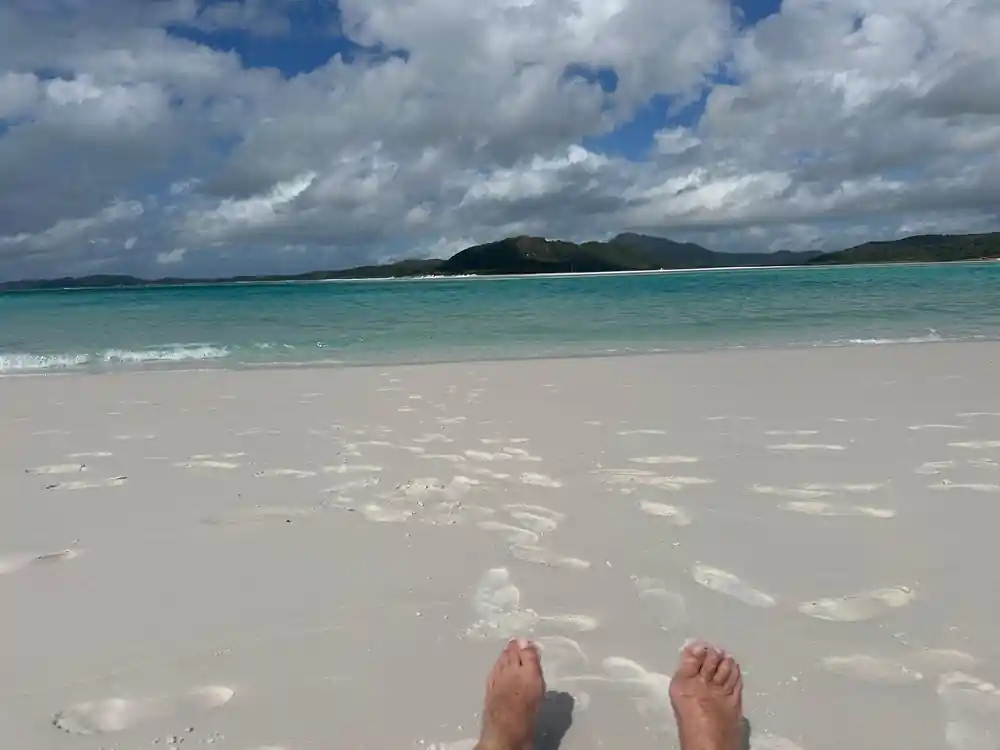
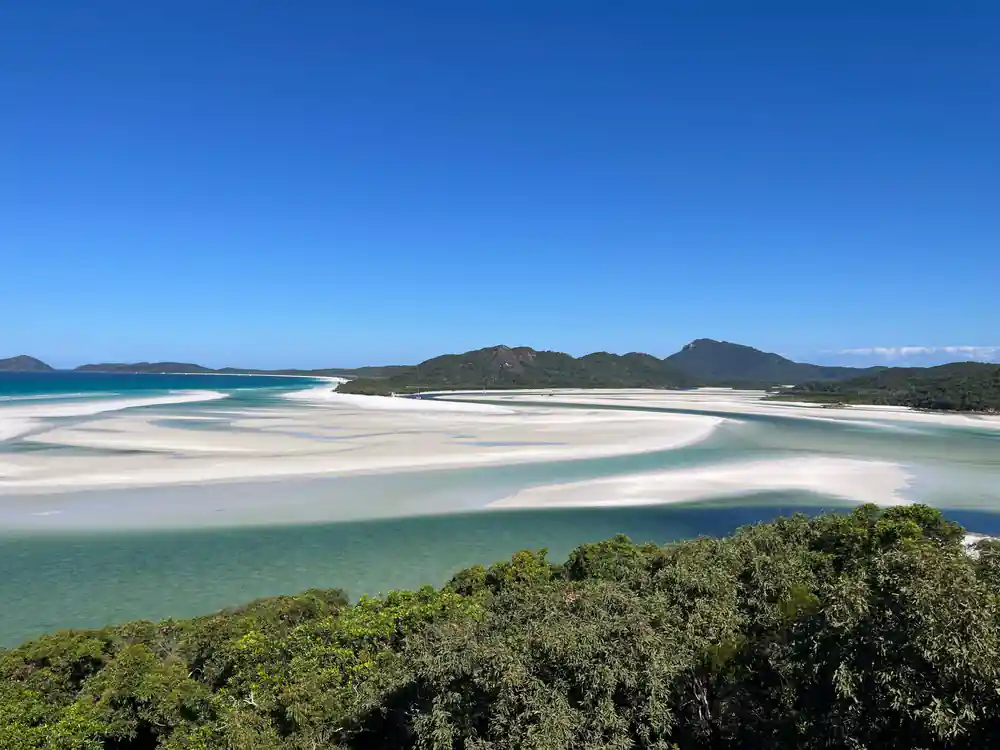
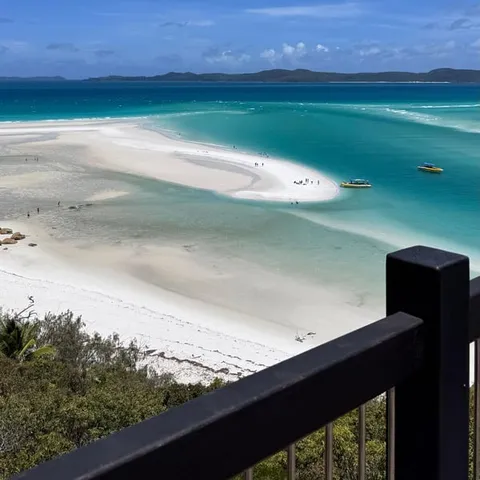
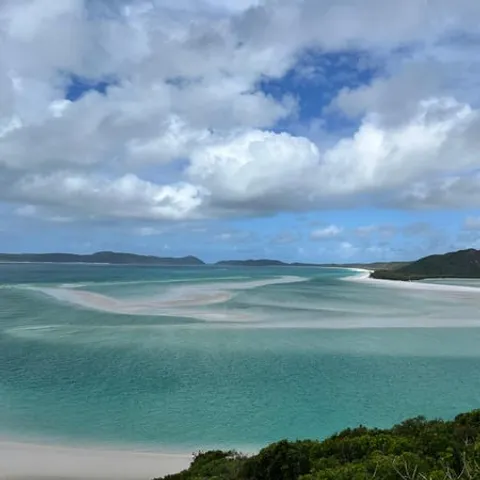
Whitehaven Beach is a little over four miles long, and its sand is composed of 98 percent silica.[10] The run out from Airlie Beach is approximately 35 km by sea.[2] Hill Inlet Lookout is the must-see stop at the northern end of the beach, where swirling sands and turquoise waters form a natural phenomenon that changes with the tides.[11]
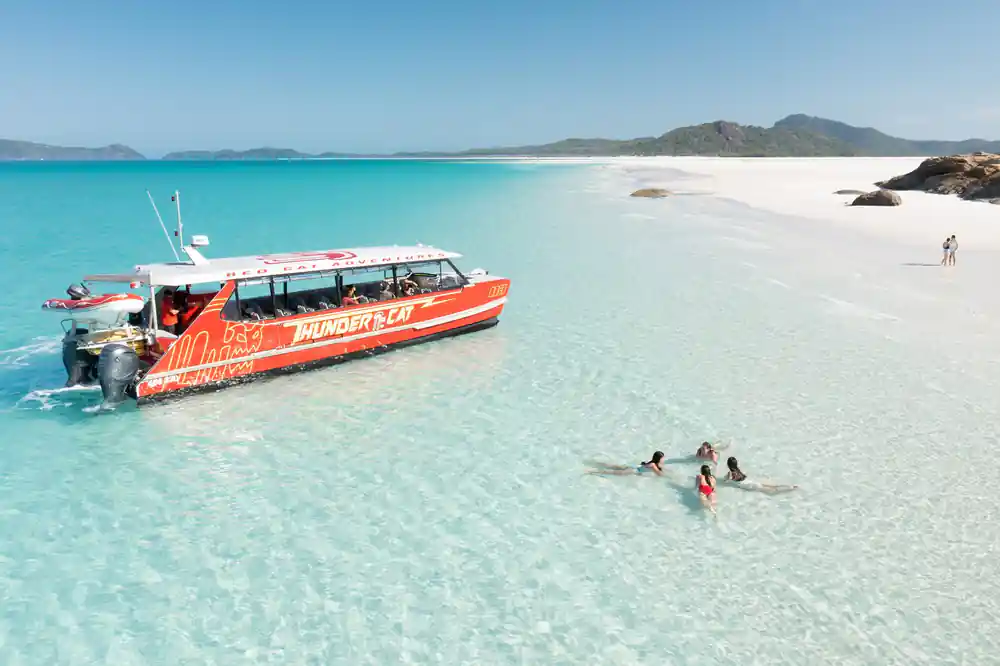
The Whitehaven Full-Day Eco-Cruise with Buffet runs for 8 hours and costs from US$175, with a live tour guide in English, pickup included and free cancellation up to 24 hours in advance.[6] It is rated 4.78 from 3,065 reviews.[6] The day moves from your pickup point to a catamaran, then to Hill Inlet Lookout, Whitehaven Beach and Hook Island, the island whose bays are known for their snorkelling.[6][9]
Getting here is straightforward: two airports serve the Whitsundays on a daily basis, Great Barrier Reef Airport on Hamilton Island (HTI) and Whitsunday Coast Airport at Proserpine (PPP).[3] On Whitehaven Beach itself, public toilets are the only facilities, at Hill Inlet Lookout and at the campgrounds near South Whitehaven Beach.[12] You can camp overnight on Whitsunday Island at the Whitehaven Beach camping area in Whitsunday Islands National Park.[13] Visitors on most commercial tourism operations in the marine park are liable to pay the environmental management charge, which the permit holder remits to the Reef Authority.[14]
GetYourGuide ratings for Whitsundays day trips
Values are the published GetYourGuide ratings for these listings:[6][7][8]
Day trip from-prices in US dollars
From-prices in US dollars for these GetYourGuide listings:[6][7][8][15]
When to go and when to book
Plan your wildlife day
Pick your season
Aim for the dry season, when the region is at its best and the water is calm and clear.
Choose the trip
A full-day cruise with a snorkel stop covers the lookout, the beach and the reef in one go.
Dress for stingers
Take the stinger suit, wear it properly and keep it on for the whole swim.
Keep your distance
Let animals come to you, keep your hands off coral and never chase a turtle or a ray.
Give yourself a buffer
Leave a spare morning in your itinerary so a windy day does not cost you the trip.
Whales, turtles and Whitehaven Beach on a full-day eco-cruise
from US$176Reserve now & pay later