At a glance
- The eco-cruise calls at Hill Inlet Lookout, Whitehaven Beach and Hook Island, with 24 pickup location options.[1]
- From US$175 for the full-day eco-cruise, with reserve now and pay later and free cancellation up to 24 hours in advance.[1]
- The eco-cruise runs for 8 hours, and Whitehaven Beach is approximately 35 km from Airlie Beach by sea.[1][2]
- Across the top of Hook Island a series of bays offers excellent quality snorkelling with healthy coral and diverse marine life.[3]
- The dry season from June to October is the best time to visit the Whitsundays, and September is the best month.[4]
- Top choice Whitehaven eco-cruise from US$175 Duration8 hours[1]Rating4.78 from 3,065 reviews[1]GuideLive tour guide: English[1]Free cancellationUp to 24 hours in advance[1] Check availability
- Snorkel and lookout day from US$174 Duration6.5 hours - 1 day[5]Rating4.84 from 2,331 reviews[5]GuideLive tour guide: English[5]Free cancellationUp to 24 hours in advance[5] See this tour
- Camira sailing adventure from US$182 Duration10 hours[6]Rating4.70 from 1,423 reviews[6]GuideLive tour guide: English[6]Free cancellationUp to 2 days in advance[6] See this tour
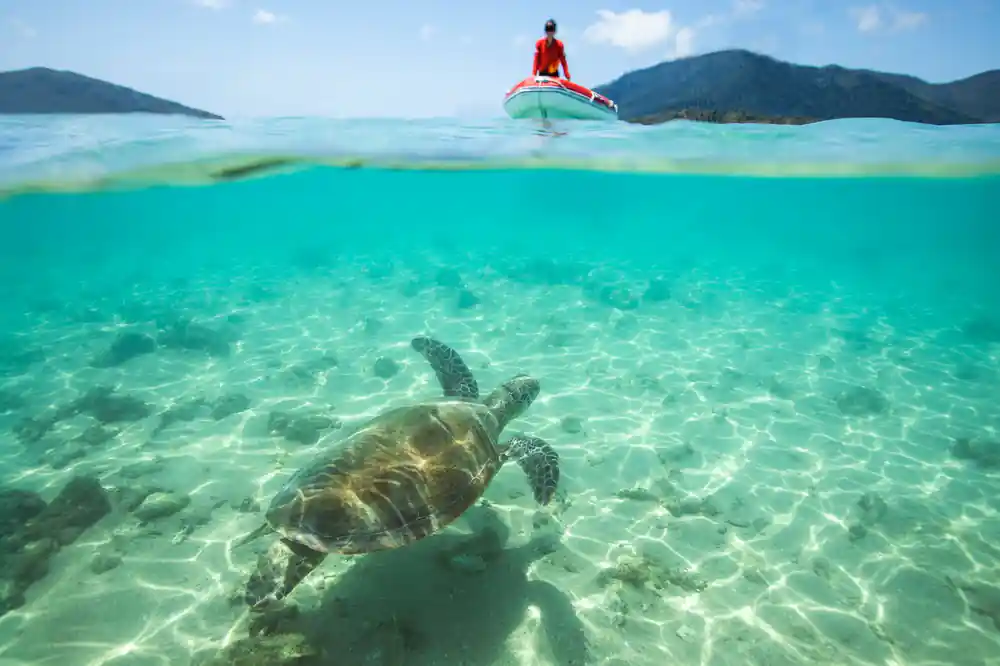
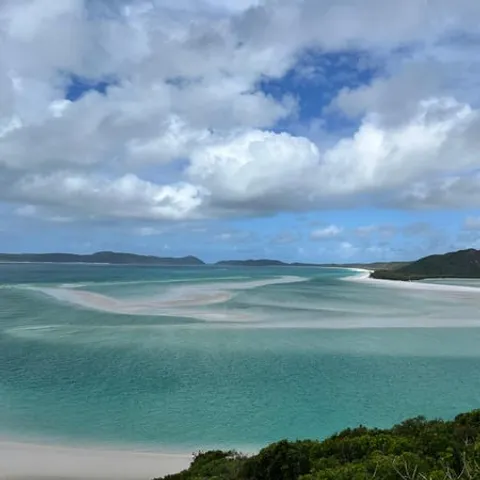
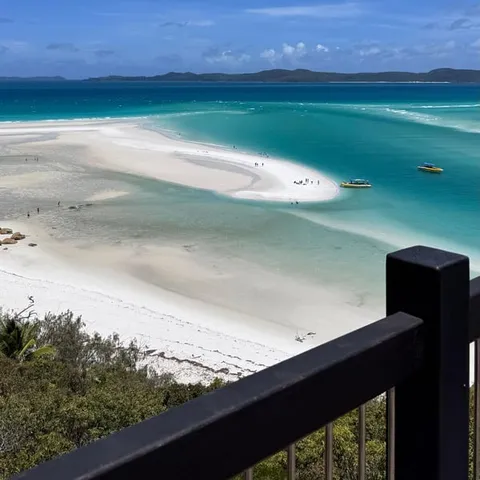
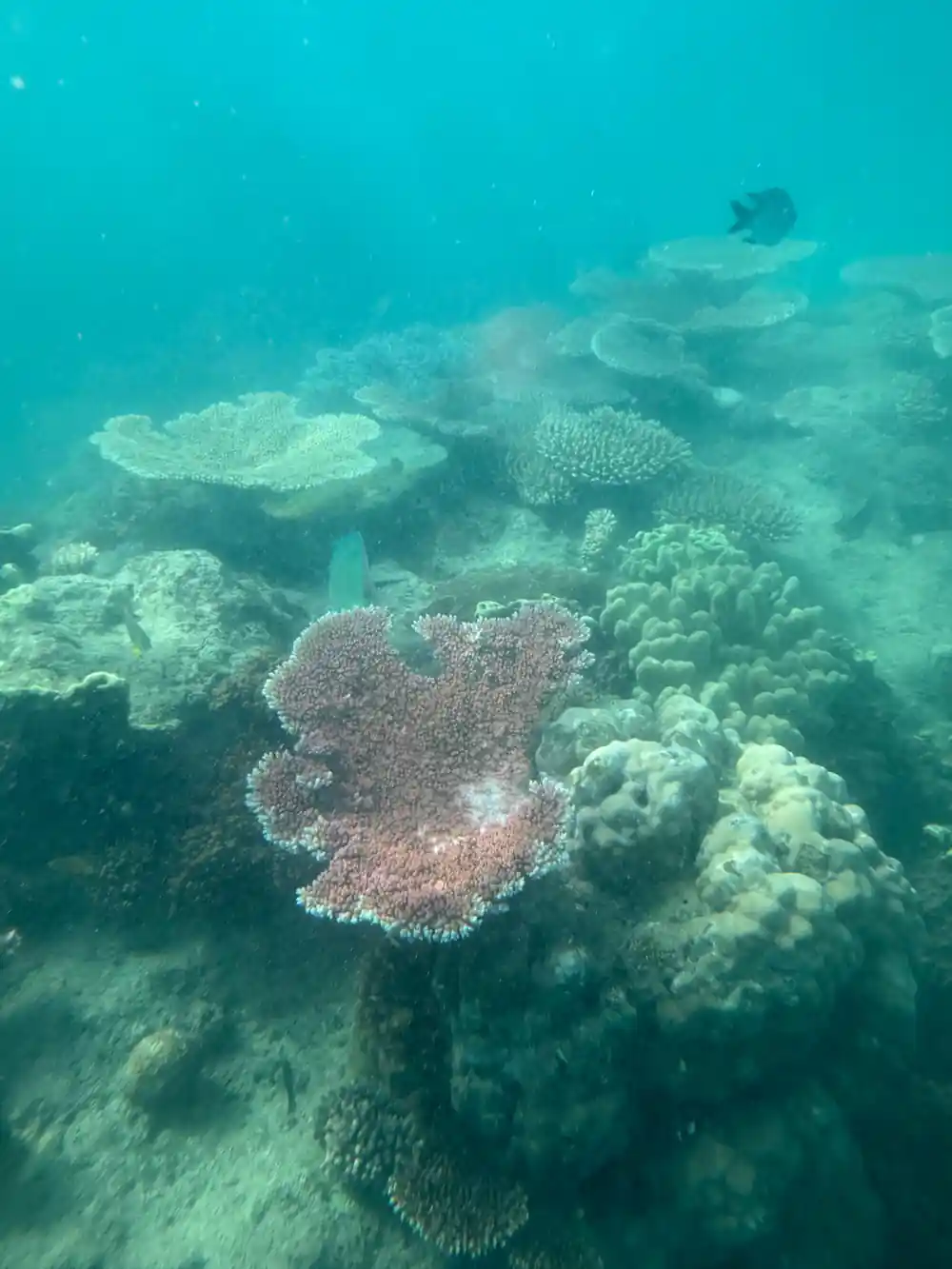
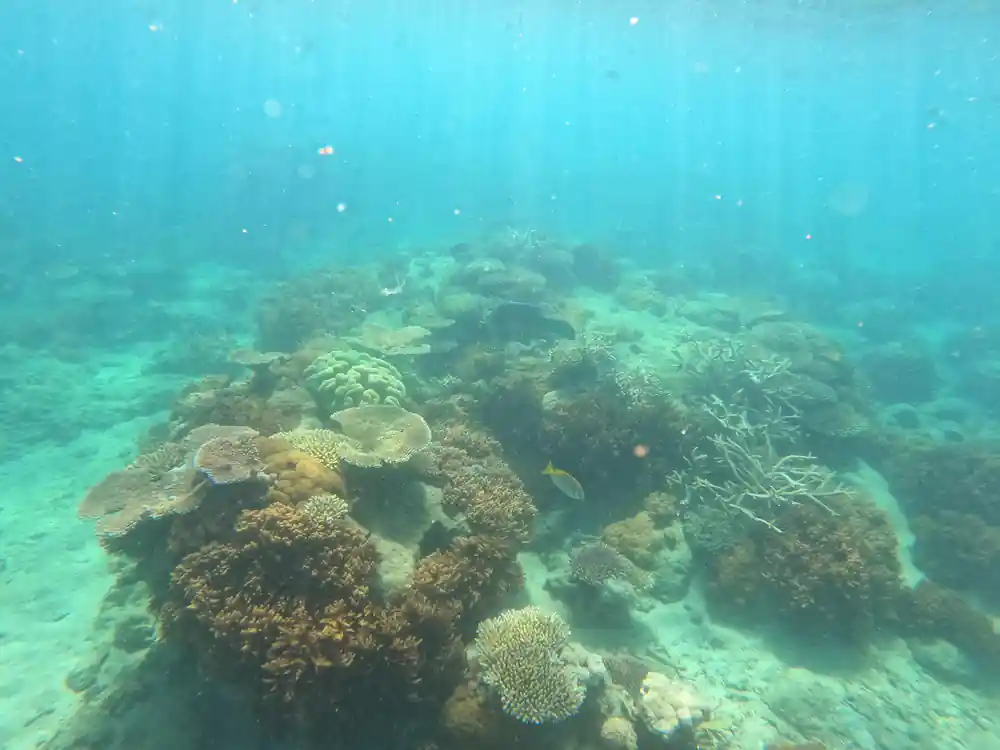
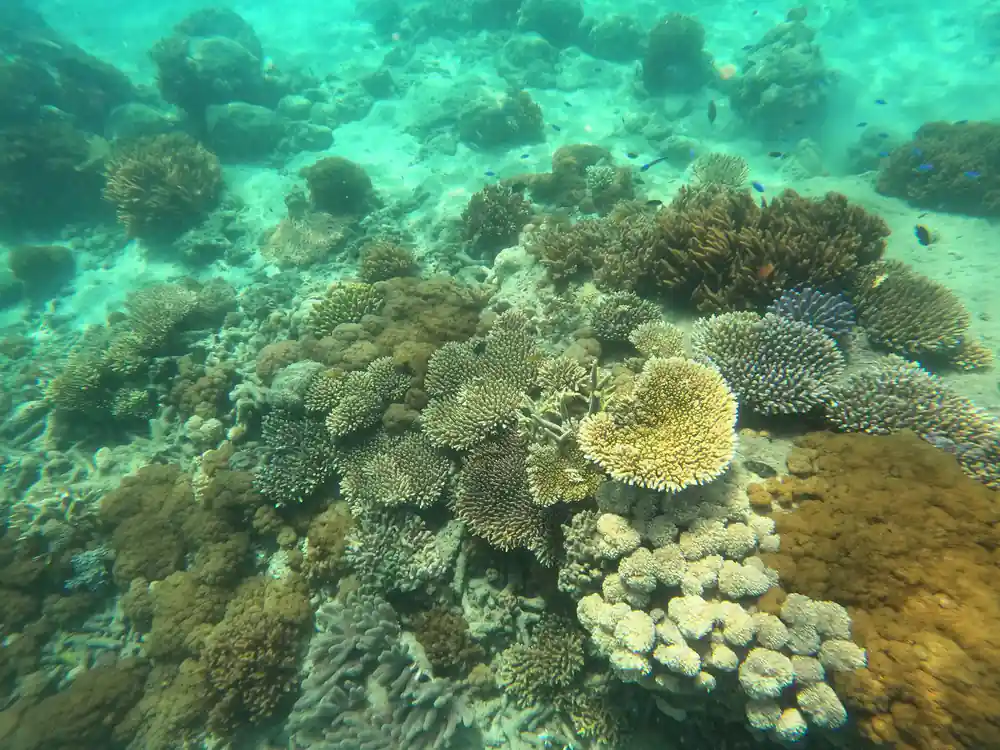
Across the top of Hook Island there is a series of bays that all offer excellent quality snorkelling with beautiful healthy coral and diverse marine life.
Is the Whitehaven eco-cruise worth booking?
Check before booking
Fringing Reefs: How Hook Island's Coral Structures Formed
Hook Island drops steeply into the water, and its reef begins almost at the shoreline. That is what makes it a fringing reef: coral settles on the shallow rocky shelf, builds upward toward the light, and gradually forms a flat reef top with a slope at its outer edge. The shelf sits close to the surface and the coral is within easy swimming distance of an anchored boat; the change from bright shallows to deeper water happens over a short distance.
The island's shape decides where coral grows most thickly. Points and ridges break the swell, so sheltered flanks stay calm, and coral does best where it gets both strong light and moving water. A series of bays across the top of Hook Island offers excellent quality snorkelling, with healthy coral and diverse marine life.[3]
What you swim over is the living skin of a much older structure. Reef limestone is laid down by generation after generation of coral, each polyp adding skeleton beneath itself, and growth follows light and current: branching corals in the shallows, plate and boulder corals lower down, soft corals and sponges in the shaded gaps. The hard coral Whitehaven and Hook Island snorkellers drift over is only the top layer of that slow accumulation.
Fish Life at Hook Island's Snorkel Sites
Put your mask in the water and the reef is immediately busy. Damselfish defend small patches of coral with more aggression than their size suggests, parrotfish scrape algae off rock and leave a trail of white sand behind them, and cleaner wrasses hover at their stations while larger fish queue up. Move slowly and the scene settles around you instead of scattering.
Different parts of a site hold different fish. Over the shallow coral gardens you find clouds of small reef fish, anthias, chromis and fusiliers, while the sandy channels between coral heads are where goatfish and flatheads work the bottom. Along the outer edge, where the reef drops away, larger species patrol: sweetlips, trevally and the occasional Maori wrasse.
The full-day eco-cruise stops at Hook Island on the same outing as Hill Inlet Lookout and Whitehaven Beach.[1] Take your time at the edge of the reef flat, where coral gives way to sand; that transition zone is where many of the smaller and shyer animals hide, and it is easy to drift past it while heading for the brightest coral.
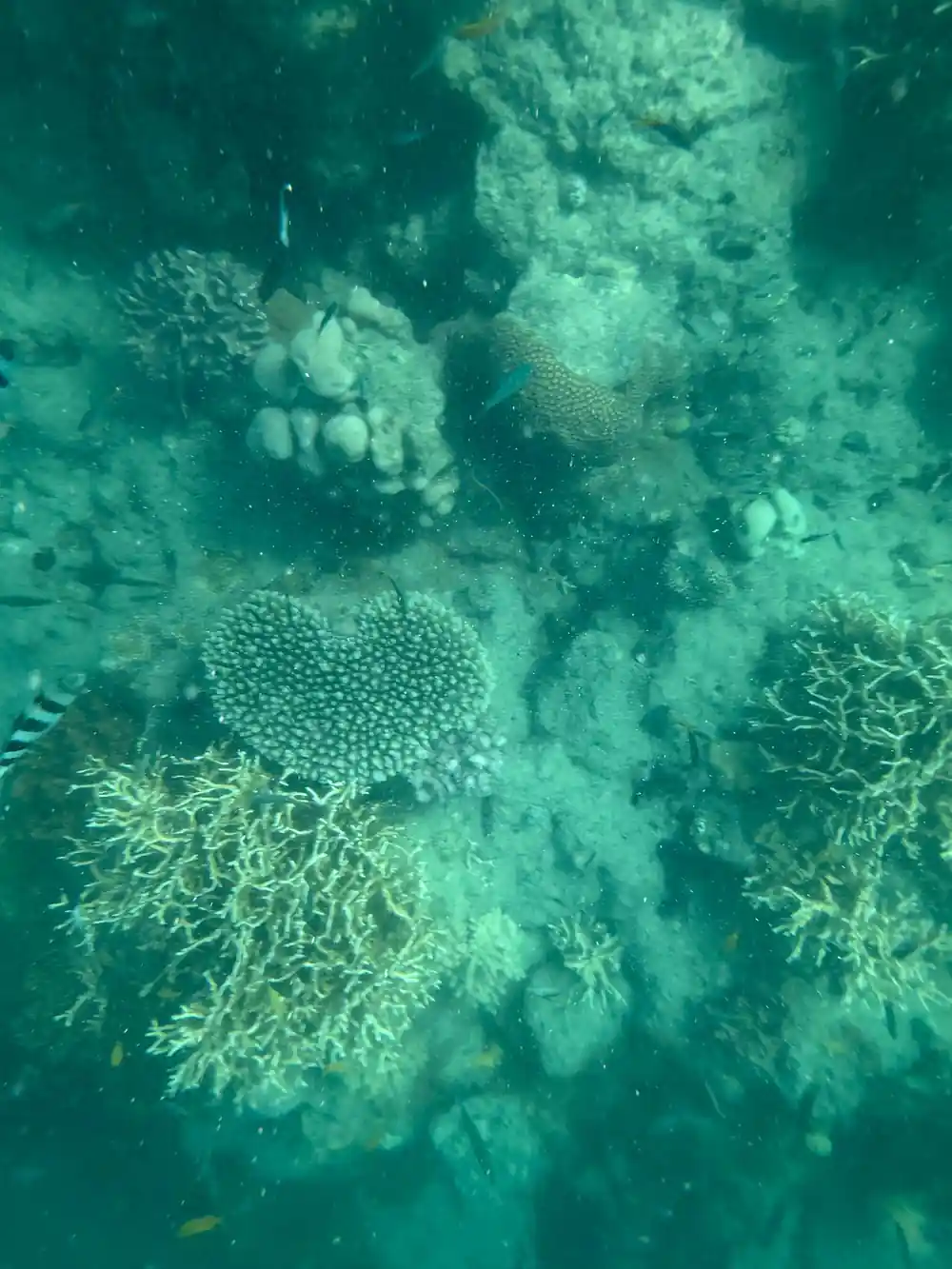
Snorkellers drift over the fringing reef that wraps around Hook Island.
Turtles, Rays, and Sharks in the Shallows
Green turtles graze on seagrass and algae in the shallows, rise to the surface to breathe, and then settle back down to feed, which gives a patient snorkeller a long look at an animal going about its day. Keep your distance, stay low in the water and let the turtle choose the gap; one that feels crowded will simply swim off.
Rays are common over open sand. Stingrays and blue-spotted rays rest half buried, and you often notice them only after they lift off in a puff of sand. Reef sharks patrol the same edges, usually small and shy, and a sighting is often a dark shape gliding away before you can point it out. Neither rays nor reef sharks show much interest in snorkellers who keep their fins still and their hands to themselves.
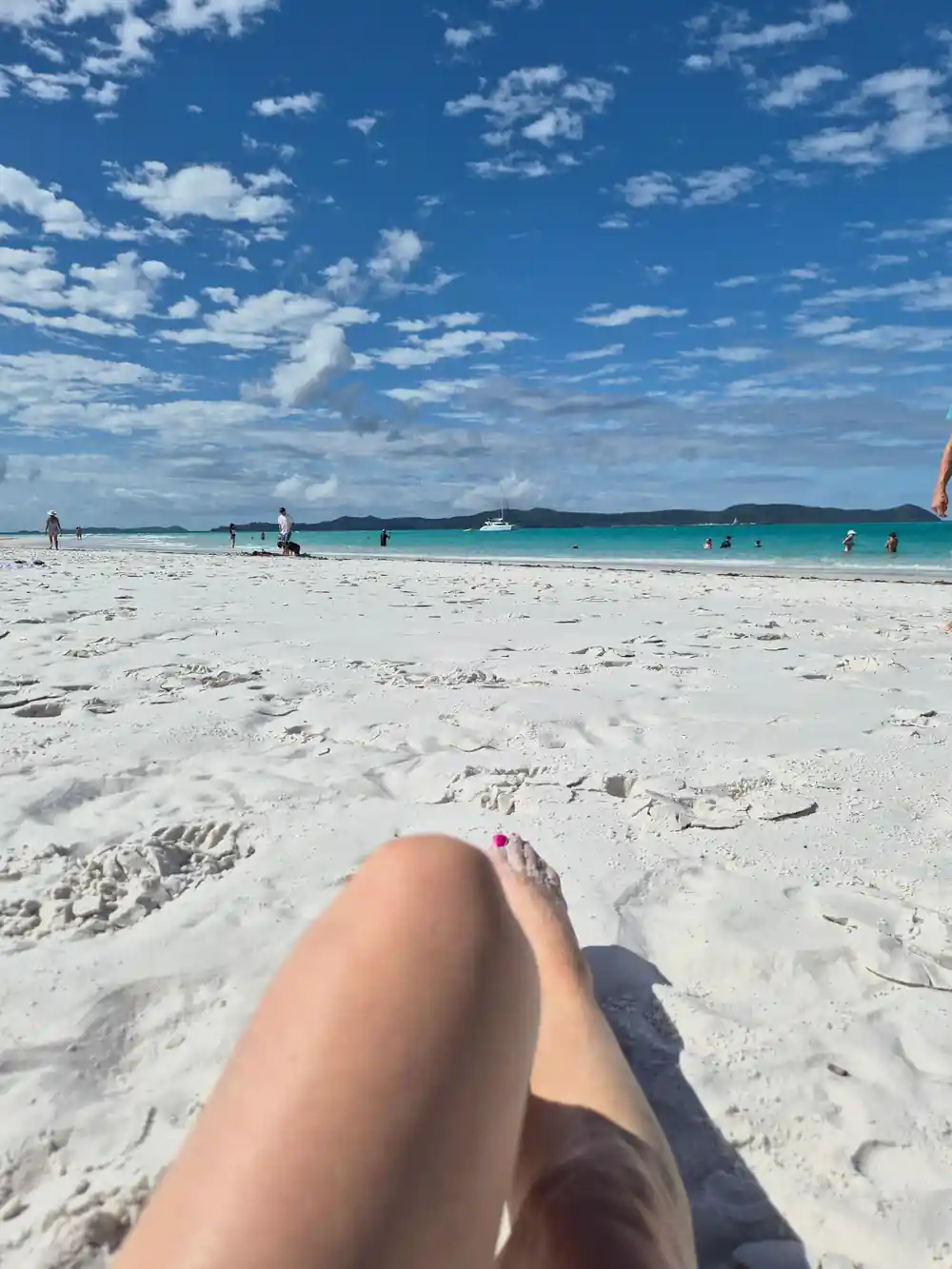
Conditions help you see them. At Whitehaven Beach the water is usually calm, warm and clear, and during stinger season (November to April) most tours provide protective suits to swim safely.[2] On Hook Island's fringing reef the same approach applies: float, watch, and let the animals come to you rather than chasing anything.
How Coral Gets Its Colour and Reproductive Cycles
Most coral colour is not the coral's own. Microscopic algae called zooxanthellae live inside the coral's tissue, and they supply the browns, greens and golds that dominate a reef. The brighter blues and pinks often come from pigments the coral makes itself to cope with strong sunlight. When water stays too warm for too long, the coral expels its algae, loses that colour and turns bone white, which is what bleaching looks like from a boat.
Reproduction is stranger than it looks from above. Many corals are broadcast spawners, releasing bundles of eggs and sperm into the water on the same few nights, timed to water temperature and the moon, so that colonies along a whole reef spawn together. Snorkellers and divers who happen to be in the water then watch the reef fill with small pink and orange packages drifting upward.
The larvae drift, then settle on clean rock and begin new colonies. New colonies need bare, algae-free surface, and reef recovery depends on having living coral nearby to supply larvae and enough open rock for them to attach to. On a fringing reef such as Hook Island's, where the reef runs close to the shore and to neighbouring islands, that supply can be very local.
from US$175
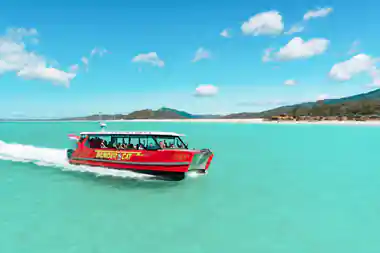
Airlie Beach's full-day eco-cruise with buffet, stopping at Hill Inlet Lookout, Whitehaven Beach and Hook Island.
Marine Mammals Passing Through Whitsunday Passage
Whitsunday Passage carries a lot of marine traffic, and not all of it is on the surface. Humpback whales travel through on migration, using the sheltered channel between the islands as a route, and from a boat deck you may spot a blow, a back or a raised tail. Dolphins are common as well, often in small groups that turn toward a moving boat and ride the pressure wave at the bow.
The recorded list is longer than you might expect. The Whitsundays has six species of whale and four species of dolphin officially recorded as calling the area home.[8] Dugongs graze the seagrass meadows in the calmer bays, and they surface briefly to breathe before dropping back out of sight.
You do not need to be in the water to see marine mammals. Duration on the eco-cruise is 8 hours, with crossings between Hook Island and Whitehaven Beach.[1] A pair of small binoculars and a windproof layer make the lookout spots on deck far more comfortable.
Park Fees, Permits and Marine Park Management
Whitsundays boat trips operate inside the Great Barrier Reef Marine Park. Visitors on most tourism operations in the Marine Park are liable to pay the environmental management charge to the permit holder, who then remits it to the Reef Authority.[9] It is collected by the operator as part of running a permitted tourist activity in the Marine Park.
Ashore, the park stays deliberately spare. The only facilities at Whitehaven Beach are public toilets up at Hill Inlet Lookout and public toilets and picnic tables at the campgrounds near South Whitehaven Beach.[7] Bring water, food and sun protection for the time you spend on the sand.
Camping is possible if you want the beach after the day boats leave. You can camp overnight on Whitsunday Island at the Whitehaven Beach camping area in Whitsunday Islands National Park.[10] Treat it as a walk-in camp: pack in what you need, take everything out again, and plan around simple facilities.
The Whitsundays and the Great Barrier Reef System
The Whitsundays are part of the Great Barrier Reef system rather than a separate destination beside it. These are continental islands, the tops of drowned hills, and the reefs that wrap around them are fringing reefs growing straight from the shoreline. Further out, the outer reef and its coral cays sit in clearer, deeper water, and separate tours run there; the island reefs are what day boats reach on a normal outing.
Getting to the region is straightforward. The Whitsundays are served daily by two airports: Great Barrier Reef Airport on Hamilton Island (HTI) and Whitsunday Coast Airport at Proserpine (PPP).[11] From Airlie Beach, Whitehaven Beach is approximately 35 km away by sea.[2] Once on the water, the islands stack up quickly: Hook Island, Whitsunday Island and the rest of the group all sit within a day's sail of the mainland.
Human history here runs deeper than the tourism. The Ngaro were a seafaring tribe that inhabited the Whitsundays Islands and coastal areas stretching from Cape Conway and down as far as the mountains to the east of Proserpine.[12] It is worth holding that in mind as the boat crosses the passage: these bays were travelled long before they were a holiday route.
Traveller ratings for Whitsundays day tours
GetYourGuide ratings for the eco-cruise with buffet[1], snorkel and Hill Inlet[5], Camira sailing[6], Hill Inlet and Whitehaven[13] and the half-day cruise[14].
Day trips out of Airlie Beach
From-prices in US dollars from each tour's GetYourGuide listing: eco-cruise with buffet[1], Camira sailing adventure[6], snorkel and Hill Inlet day[5], luxe sail, SUP and snorkel day[15].
When to go and when to book
How to plan the day
Choose your boat
The eco-cruise stops at Hill Inlet Lookout, Whitehaven Beach and Hook Island.[1]
Book with a buffer
Reserve now and pay later, with free cancellation up to 24 hours in advance.[1]
Check the season
Stinger season in the Whitsundays runs from late October until May.[16]
Plan the crossing
Whitehaven Beach is approximately 35 km from Airlie Beach by sea.[2]
Leave time for the lookout
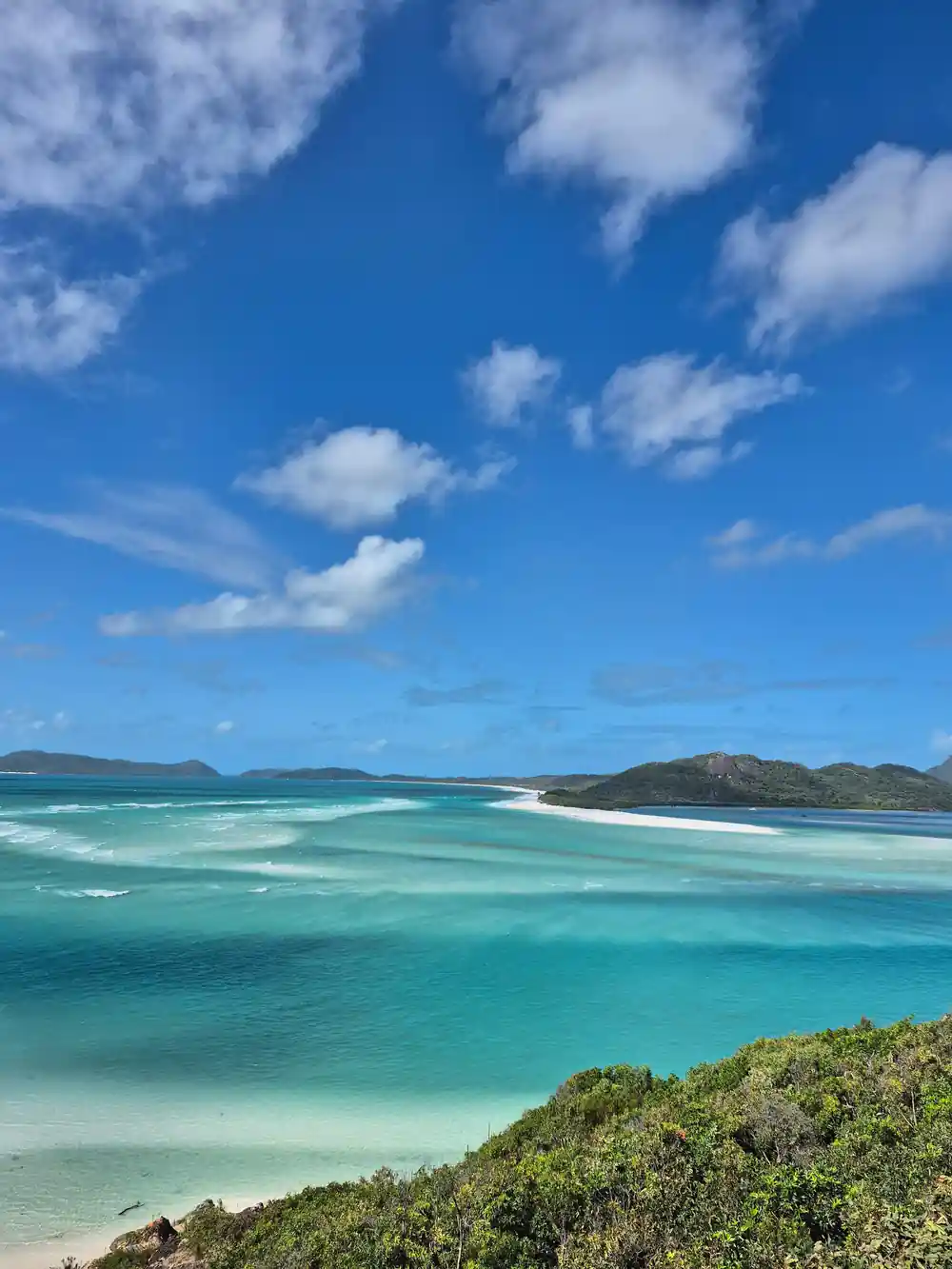
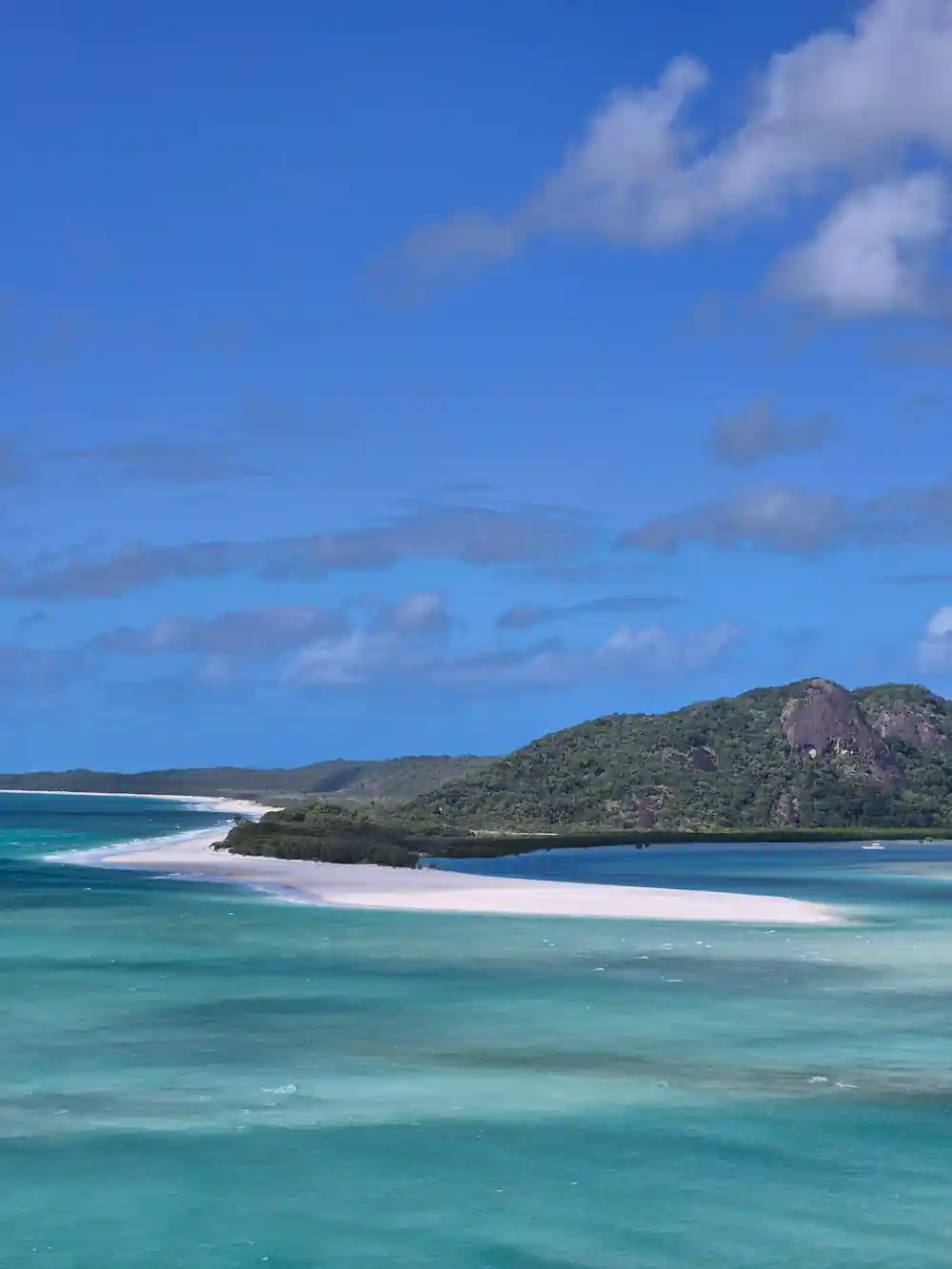
Hill Inlet Lookout is where swirling sands and turquoise waters change with the tides.[17]
Ready to see Hook Island's reefs from the water?
from US$176Reserve now & pay later