At a glance
- The trip booked here is the Airlie Beach: Whitehaven Full-Day Eco-Cruise with Buffet, an eight-hour day with a live English-speaking guide and pickup included.[1]
- The route runs from pickup by catamaran to Hill Inlet Lookout and Whitehaven Beach, then on to Hook Island, with 24 pickup and 24 drop-off locations in all.[1]
- In the Great Barrier Reef Marine Park, visitors on most commercial tourism operations pay the environmental management charge, remitted by the operator to the Reef Authority.[2]
- Whitehaven Beach is a little over four miles long and its sand is 98 percent silica; it sits approximately 35 km from Airlie Beach by sea.[3][4]
- The dry season from June to October is the best time to visit the Whitsundays, and September is named as the best month.[5]
- Top choice Full-Day Eco-Cruise from US$175 Duration8 hours[1]Ratingrated 4.78[1]Cancellationfree up to 24 hours ahead[1]Guidelive guide, English[1] Check availability
- Whitsundays Half-Day Cruise from US$87 Duration7 hours[6]Ratingrated 4.15[6]Cancellationfree up to 2 days ahead[6]Guidehost or greeter, English[6] See this tour
- Camira Sailing Adventure from US$182 Duration10 hours[7]Ratingrated 4.70[7]Cancellationfree up to 2 days ahead[7]Guidelive guide, English[7] See this tour
For most tourism operations, Marine Park visitors participating in a tourist activity are liable to pay the charge to the permit holder, who then remits the charge to the Reef Authority.
A low-impact day that covers Whitehaven properly
Check before booking
What an eco cruise means in the Whitsundays
Eco is less a badge on the Whitsundays coast than a set of habits. It shapes where a boat ties up, how the crew talks about the reef, what you carry ashore and how long you spend on a beach with no shops, no bins and very little shade. A low-impact day starts before the boat leaves the marina, with a briefing about wildlife distances, what not to touch and where the day's rubbish goes.
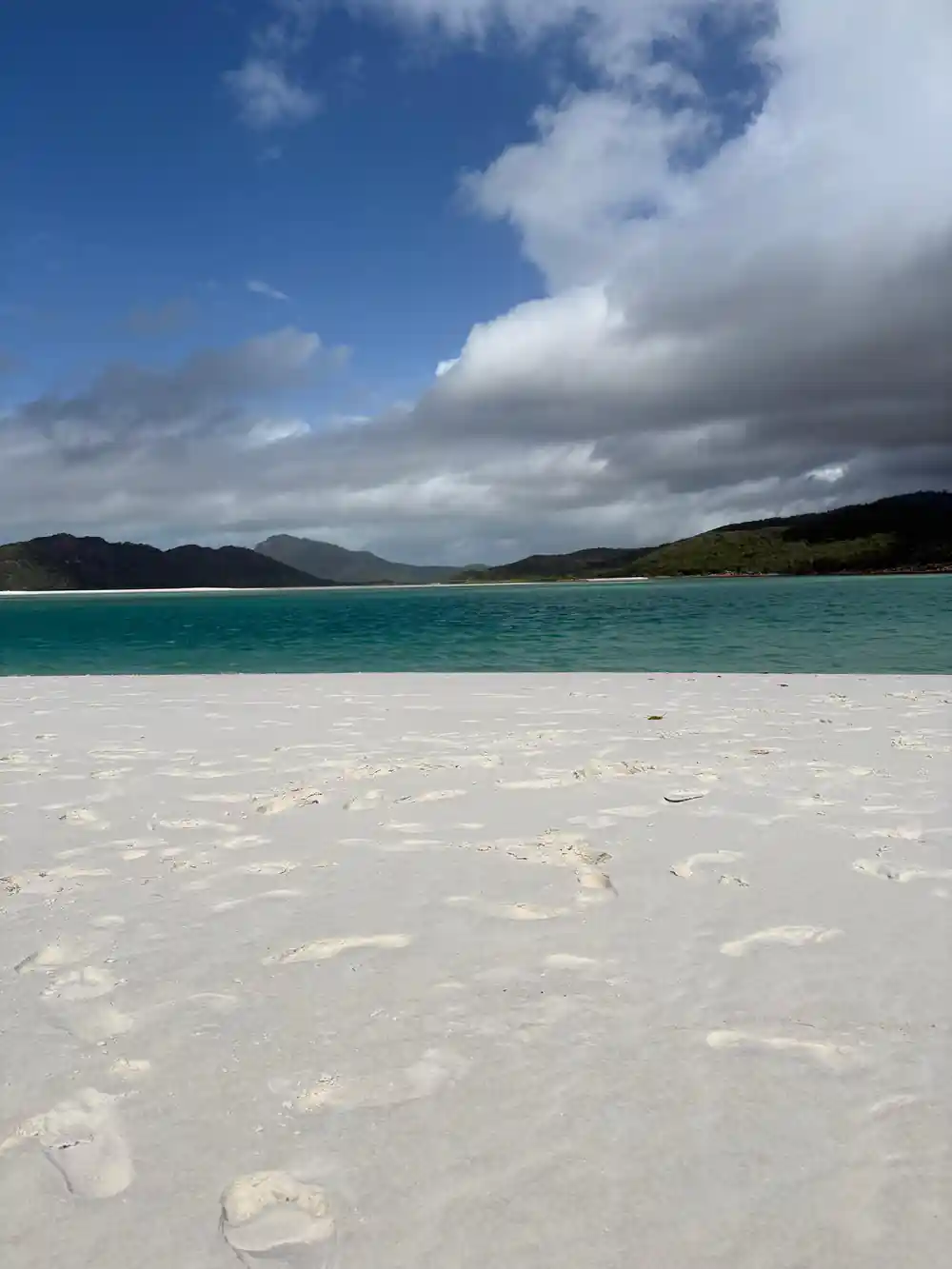
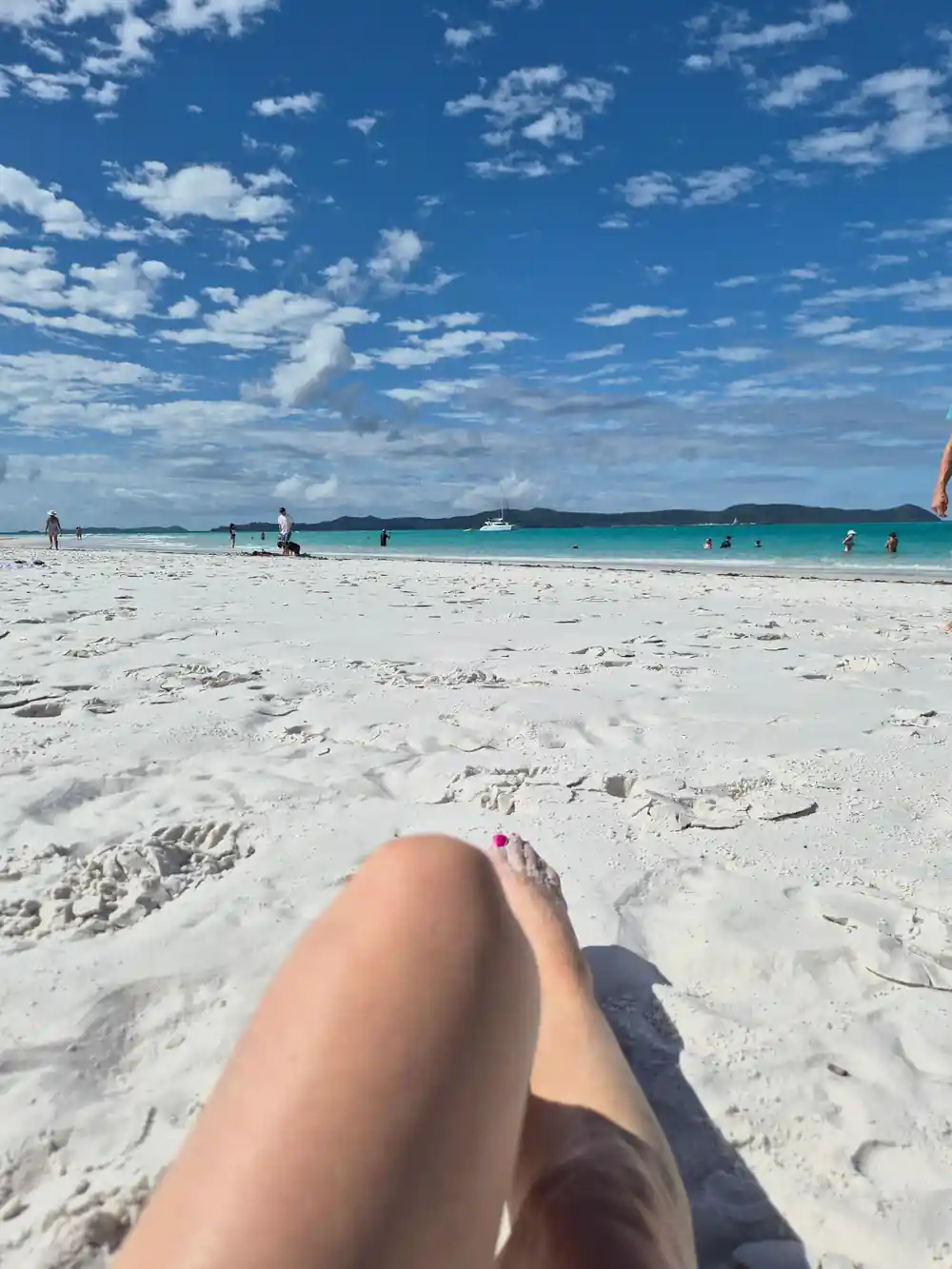
Whitehaven Beach explains the fuss. It is a little over four miles long, and its sand is composed of 98 percent silica.[3] From Airlie Beach it sits approximately 35 km away by sea, and fast boat tours generally take 60 to 75 minutes depending on the vessel and sea conditions.[4] That crossing is also planning information. A full day leaves room for the lookout, the beach and a snorkel stop, rather than squeezing them into one afternoon.
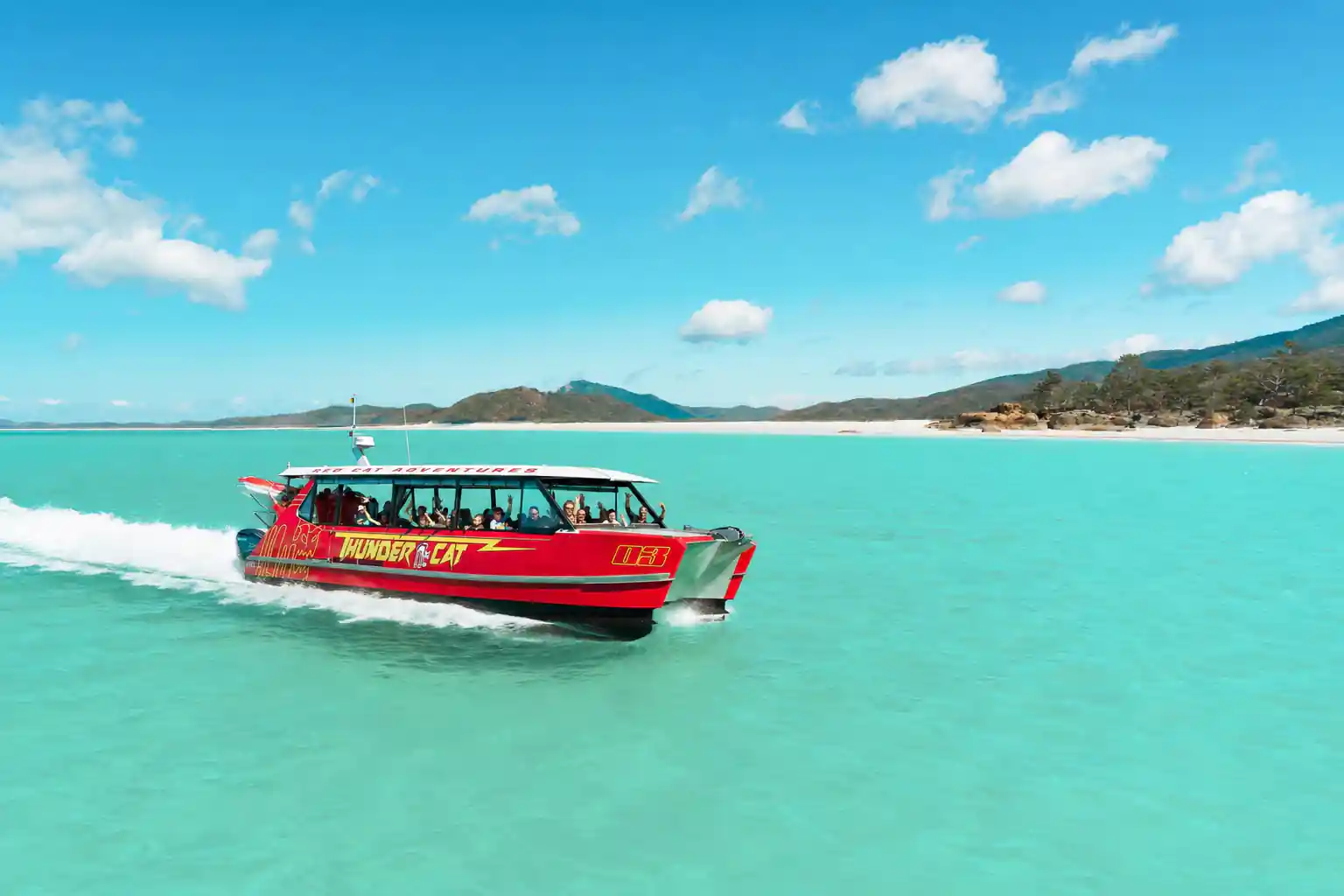
The tour booked for this page is the Airlie Beach: Whitehaven Full-Day Eco-Cruise with Buffet, an eight-hour day with a live English-speaking guide and pickup included.[1] Its route runs from one of 24 pickup location options by catamaran to Hill Inlet Lookout and Whitehaven Beach, then on to Hook Island, before returning to one of 24 drop-off locations.[1]
Speed, fuel and the marine park levy
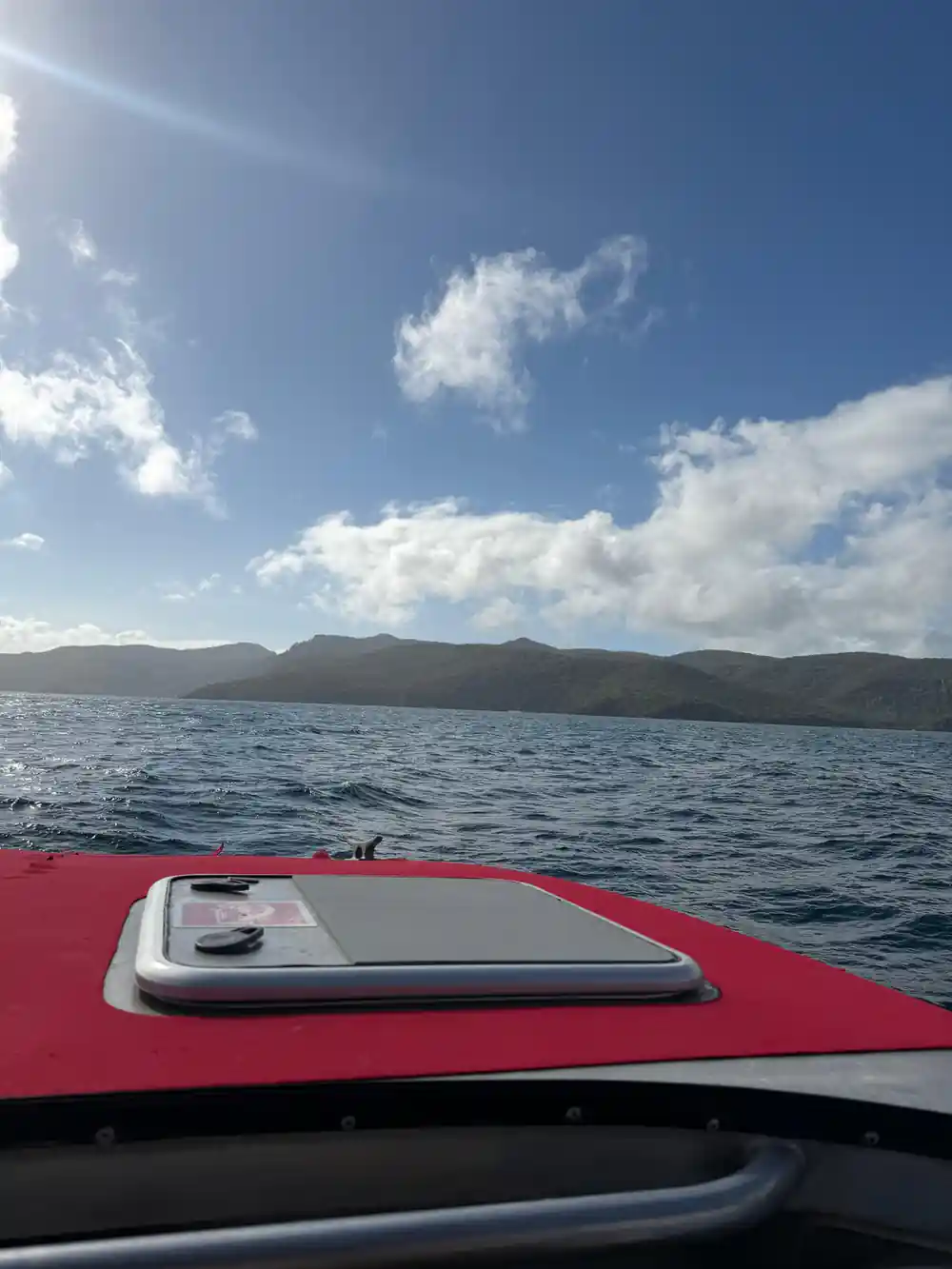
Speed is the quiet trade-off of any island day trip. A quicker crossing buys more time ashore. Catamarans handle that work well, with a wide, stable platform, a steady cruising speed and plenty of deck space for a crowd in wet gear. The ride out and back is usually the calmest part of the day for anyone who is nervous about small boats.
Part of what a marine park trip costs is not the boat's at all. Visitors on most commercial tourism operations in the Great Barrier Reef Marine Park are liable to pay the environmental management charge to the permit holder, who then remits it to the Reef Authority.[2] For a traveller it is a reminder that the water you are crossing is a managed park, with permits and plans that operators work inside all year.
Fuel and speed shape the day as much as the itinerary does. A steady cruise out, a long stationary stop while everyone swims, then the run home is a gentler profile than repeated sprinting between bays. The practical levers are simple: fewer stops with longer stays, a full boat rather than a half-empty one, and a route that does not criss-cross the islands for no reason.
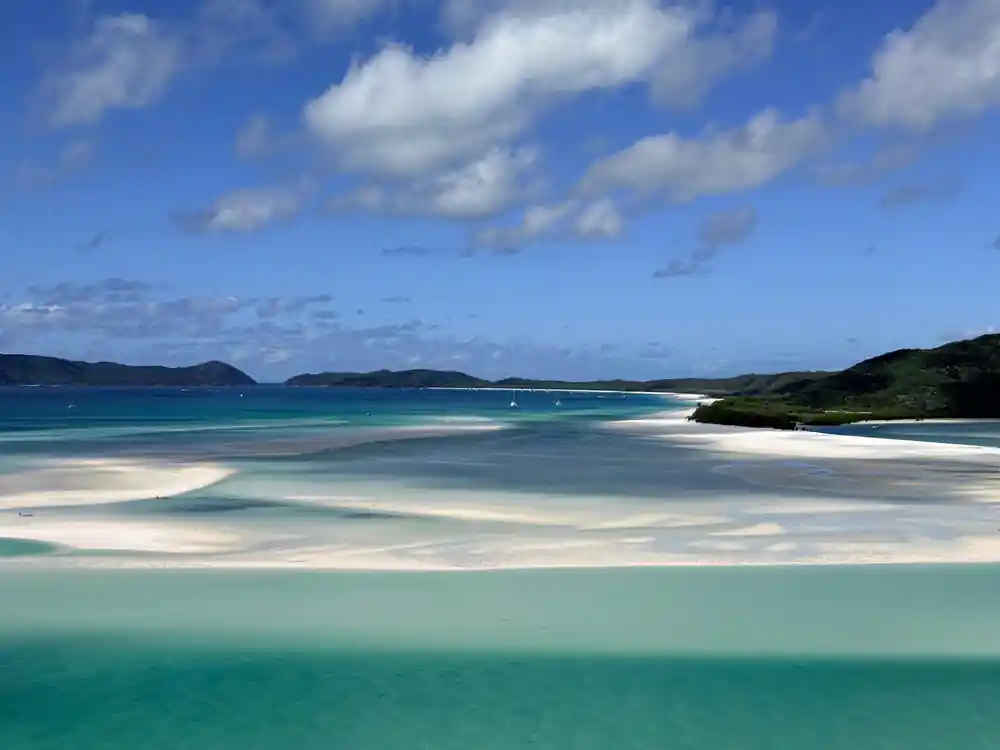
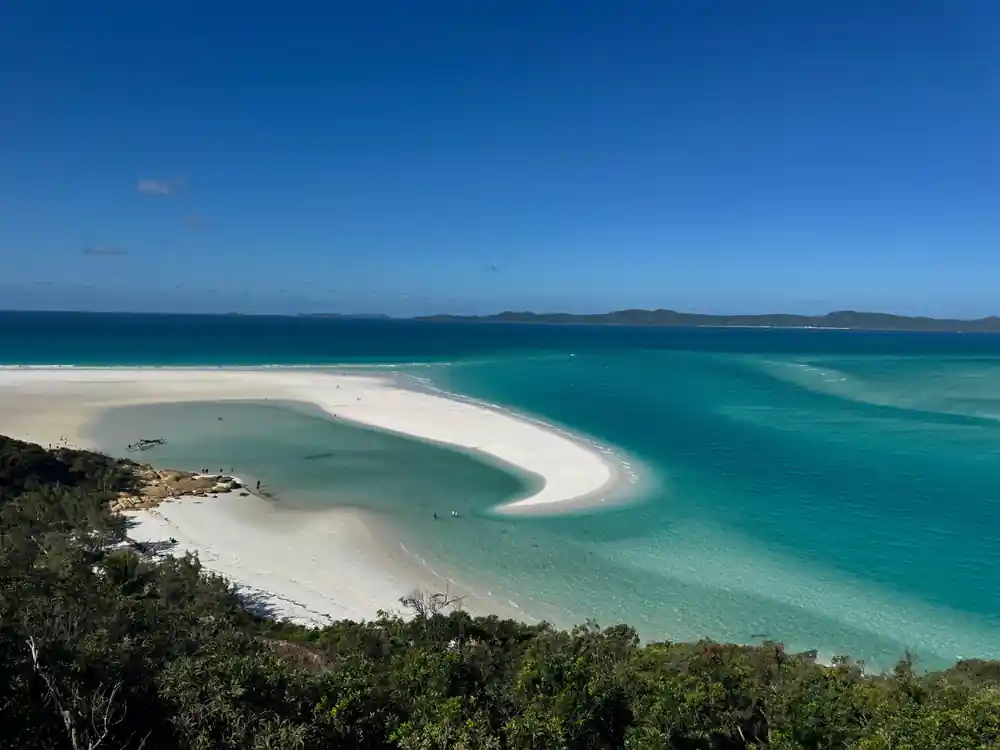
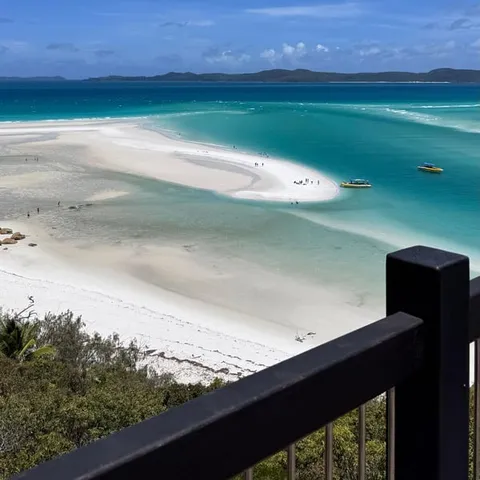
Turquoise water and pale silica sand at Whitehaven Beach, Whitsunday Island
Moorings, anchors and the seafloor
Coral is fragile and slow to grow. Ground tackle dragged across a reef can scrape away years of growth in a single season, so boats working the same popular bays often tie off at fixed moorings instead of dropping anchor. A Whitehaven Beach anchorage filled with day boats is a busy place around midday, and crews time their arrival to fit the gap between other vessels.
The reason to linger at Hill Inlet is the view. It is a must-see spot where swirling sands and turquoise waters form a mesmerising natural phenomenon that changes with the tides.[10] Two visits an hour apart can look like two different places. The lookout rewards a slower itinerary rather than a quick photo stop.
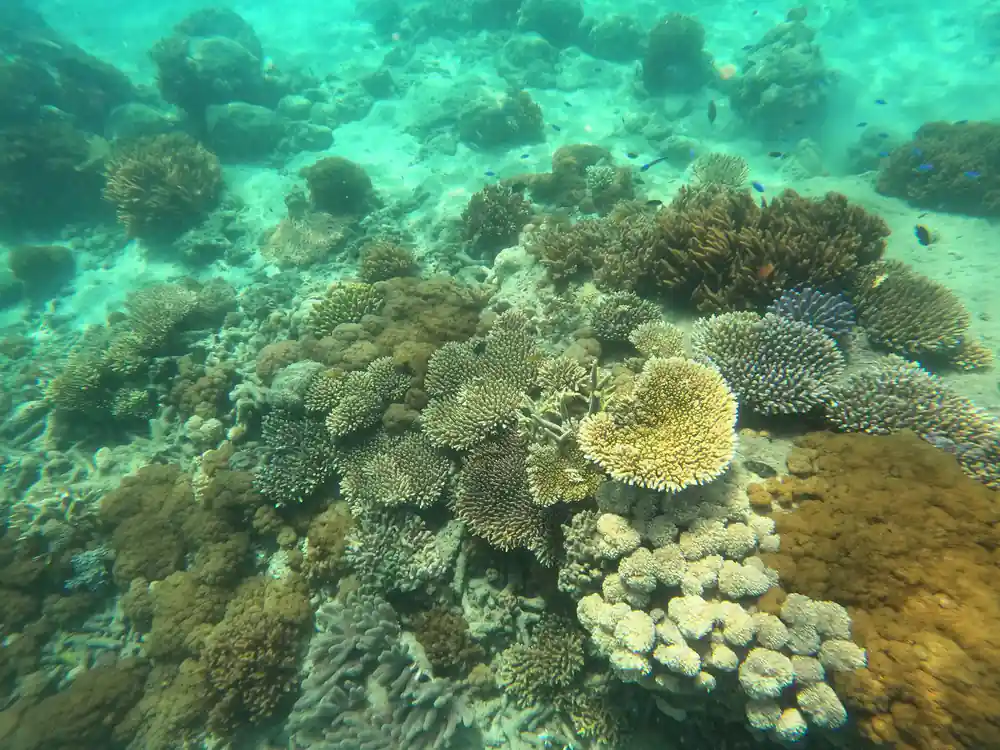
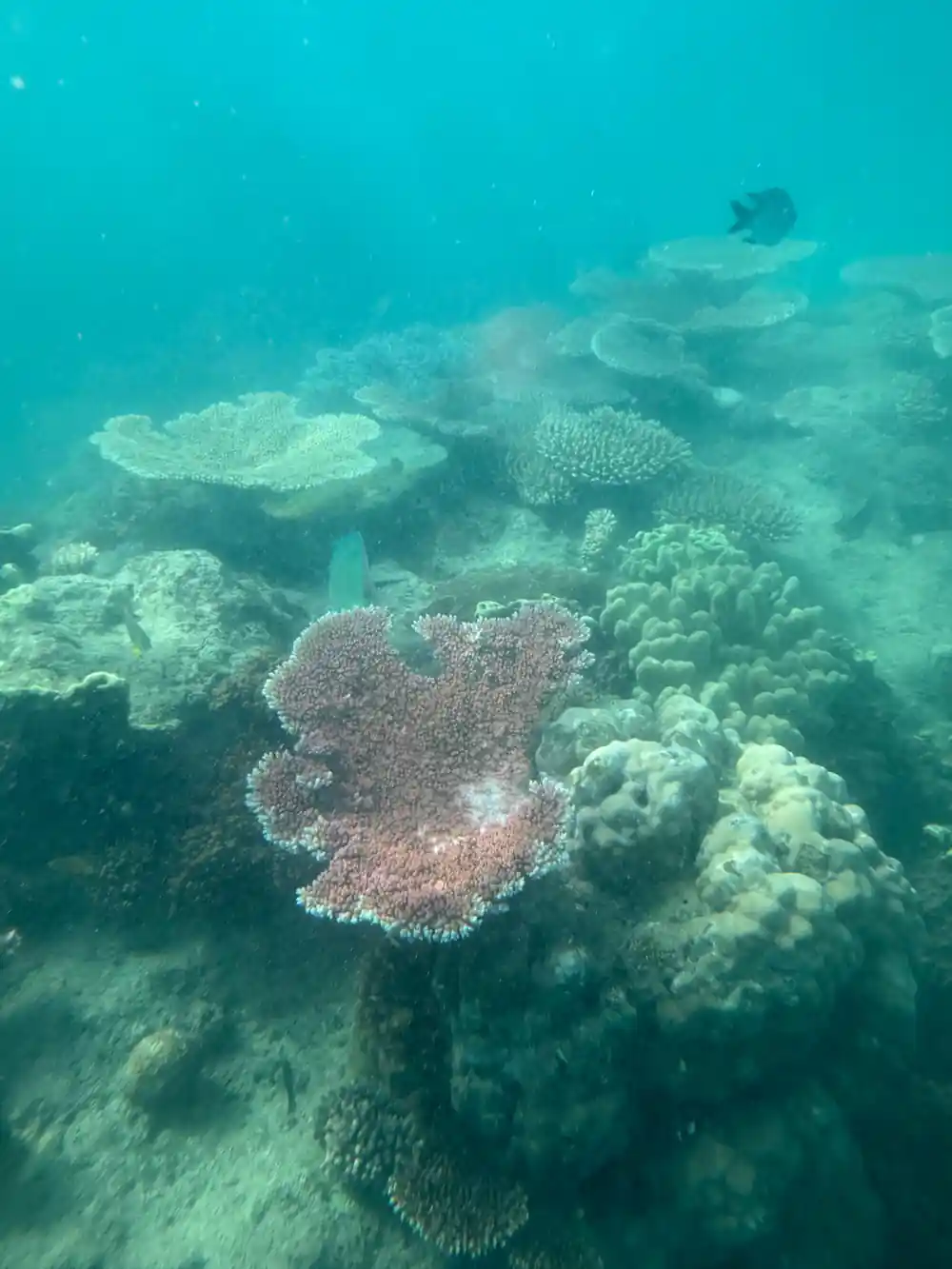
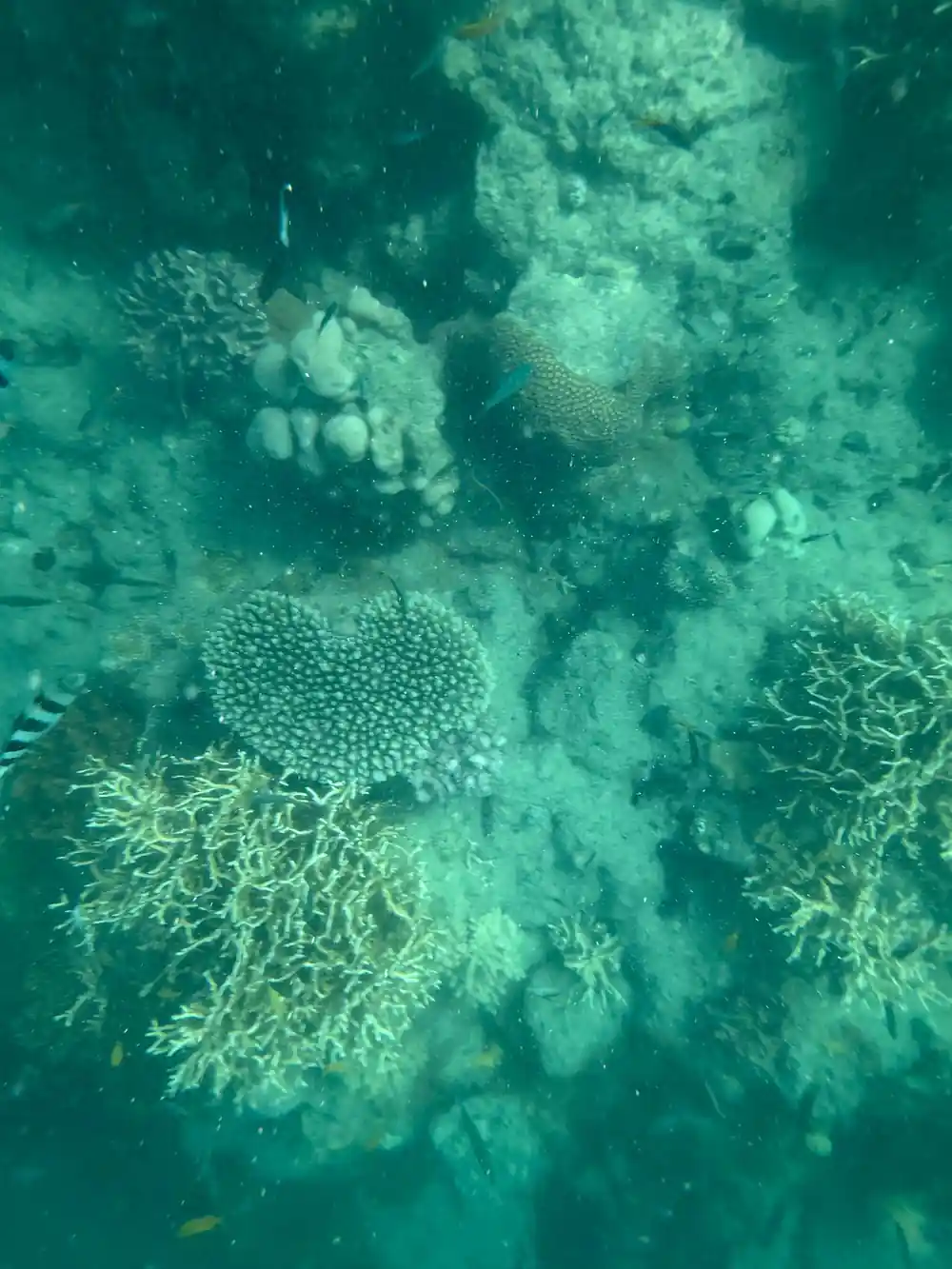
Snorkelling is the other half of a low-impact day. Across the top of Hook Island there is a series of bays that all offer excellent quality snorkelling with beautiful healthy coral and diverse marine life.[11] The eco-cruise puts Hook Island on the route after Whitehaven Beach and Hill Inlet Lookout, so the day mixes sand, lookout and reef in one loop.[1]
Reef-safe habits: fins, glass and sunscreen
Most reef damage from visitors is accidental and easy to avoid. Fins kick coral when swimmers stand up in shallow water, so the usual advice is to float flat, keep your hands to yourself and leave a body length between you and the reef. On the beach, glass and single-use packaging are best left in your bag, since whatever goes ashore usually has to come back on the boat.
Stinger season shapes the swimming plan more than anything else. In the Whitsundays it runs from late October until May.[8] At Whitehaven Beach the water is usually calm, warm and clear, and during stinger season most tours provide protective suits to swim safely.[4] If you are travelling in the warmer months, ask about suits and rash shirts before you book.
Facilities are deliberately thin on the ground, which is part of what keeps the place looking untouched. Public toilets are the only facilities at Whitehaven Beach, at Hill Inlet Lookout and at the campgrounds near South Whitehaven Beach.[9] Campers can stay overnight on Whitsunday Island at the Whitehaven Beach camping area, where sites sit among lowland vine forest and eucalyptus woodland behind the beach and the camping area is suitable for walk-in camping with a hybrid toilet and picnic tables.[12]
from US$175
An eight-hour day with a live English guide, pickup included, stopping at Hill Inlet Lookout, Whitehaven Beach and Hook Island.[1]
Coral, turtles and the wildlife the reef supports
The Whitsundays is a busy marine neighbourhood. Six species of whale and four species of dolphin are officially recorded as calling the area home.[13] On the water that means a trip can turn on something unexpected: a turtle surfacing beside the boat, a ray resting on the sand, a pod moving through the channel.
Underwater, the sheltered bays do the heavy lifting for snorkellers. Across the top of Hook Island there is a series of bays that all offer excellent quality snorkelling with beautiful healthy coral and diverse marine life.[11] Good snorkelling manners matter here. Move slowly, keep your fins off the bottom, and let marine life come to you rather than chasing it.
People have travelled these waters for a very long time. The Ngaro were a seafaring tribe that inhabited the Whitsundays Islands and coastal areas stretching from Cape Conway and down as far as the mountains to the east of Proserpine.[14] Knowing that changes how the islands read from the deck: not empty scenery, but a lived-in seascape with routes, seasons and stories of its own.
Who watches the reef, and how a day is shaped around it
Coral health in the Whitsundays is tracked by marine managers, researchers and the crews who are out there every day. That work feeds back into small decisions: which mooring a boat takes, how long it stays in one bay, whether a snorkel site is left alone for a season. One of the quieter lines on any marine park trip is the environmental management charge. On most commercial tourism operations in the Great Barrier Reef Marine Park, visitors are liable to pay it to the permit holder, who remits it to the Reef Authority.[2]
Season is the other variable a day is built around. The dry season between June and October is the best time to visit the Whitsundays, and September in particular is the best month.[5] Warmer months bring stinger season, which in the Whitsundays runs from late October until May.[8] At Whitehaven Beach, where the water is usually calm, warm and clear, most tours provide protective suits during stinger season so you can swim safely.[4]
None of this is abstract once you are on the water. A guide who knows where the turtles feed, when the tide best fills Hill Inlet and which side of the bay is sheltered will quietly rearrange the day around conditions. The result is a trip that feels relaxed and is actually quite tightly planned.
What a climate-conscious Full-Day Eco-Cruise delivers
The Airlie Beach: Whitehaven Full-Day Eco-Cruise with Buffet is from US$175 and runs eight hours, with a live English-speaking guide and pickup included, details confirmed when you check availability.[1] It is rated 4.78 from 3,065 reviews, with guide 4.9, transportation 4.8 and value for money 4.6.[1] You can reserve now and pay later, and cancel up to 24 hours in advance for a full refund.[1]
The itinerary is a loop rather than a single stop. It begins with one of 24 pickup location options, runs by catamaran to Hill Inlet Lookout and Whitehaven Beach, continues to Hook Island and returns to one of 24 drop-off locations.[1] That structure keeps the day to a handful of places rather than a series of rushed landings.
Practicalities are straightforward. Bring reef-safe sun protection, a hat, a towel and a warm layer for the ride home, and expect to spend most of the day in or near the water. Book early if you are travelling in the dry season, and check the pickup list when you reserve: with 24 options to choose from, there is usually a stop near where you are staying.[1]
GetYourGuide ratings for Whitsunday day trips
Ratings from the listings: 4.78 from 3,065 reviews[1], 4.84 from 2,331[15], 4.77 from 1,007[16], 4.70 from 1,423[7] and 4.15 from 1,661[6].
From-prices for Whitehaven and Whitsunday days
From-prices are GetYourGuide listing prices; the same from-price is shown for children where no separate child rate is given.[1][6][7][15][16]
When to go and when to book
Plan a low-impact day
Choose your month
June to October is the dry season, with September the best month, while stinger season runs from late October until May.[5][8]
Book and check pickup
Reserve now and pay later, with free cancellation up to 24 hours in advance for a full refund.[1]
Pack for the water
Bring a hat, reef-safe sunscreen, a towel and a warm layer. During stinger season most tours provide protective suits to swim safely.[4]
Ashore at Whitehaven
Public toilets are the only facilities, at Hill Inlet Lookout and at the campgrounds near South Whitehaven Beach.[9]
Snorkel with care
Across the top of Hook Island, a series of bays offers excellent quality snorkelling with healthy coral and diverse marine life.[11]
Ready to see Whitehaven Beach and Hill Inlet on a low-impact day
from US$176Reserve now & pay later