At a glance
- A track climbs from the northern end of Whitehaven Beach to Hill Inlet Lookout, where the sand and water pattern shifts with the tides.[1]
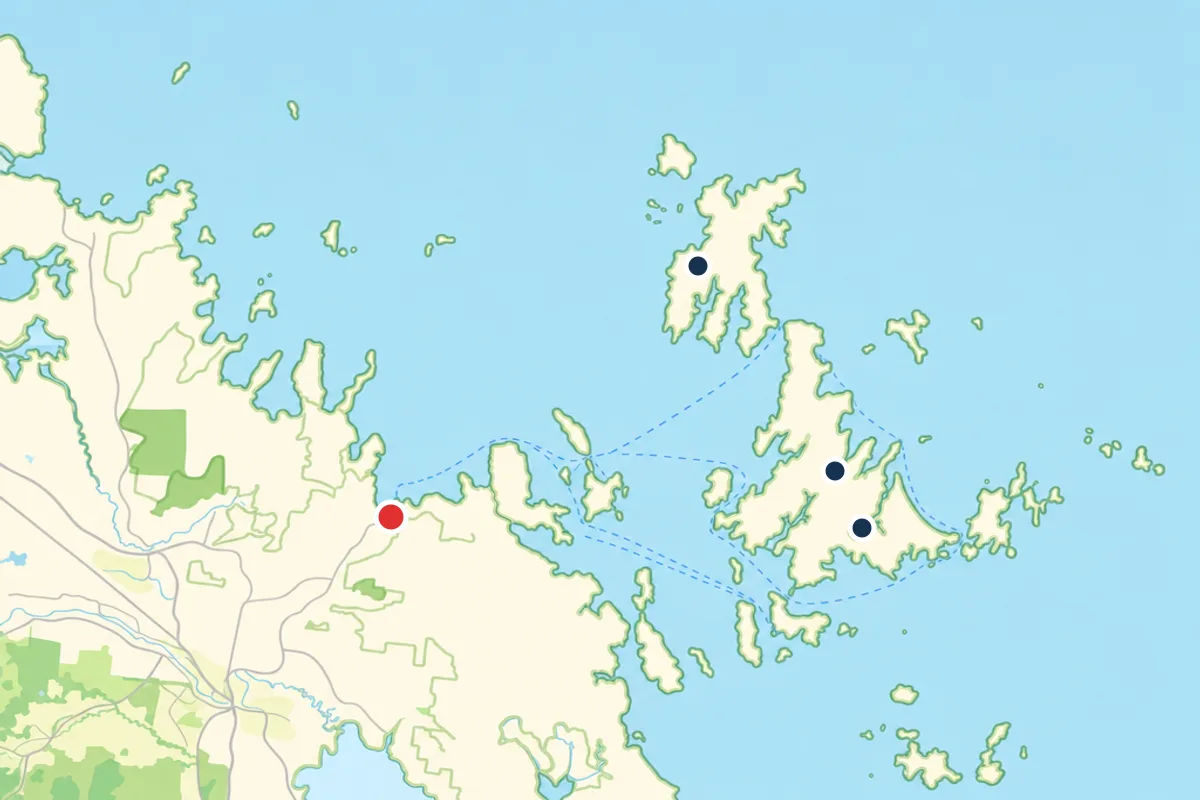
- Whitehaven Beach is approximately 35 km from Airlie Beach by sea, and fast boat tours generally take 60 to 75 minutes to reach it.[2]
- Closed shoes with grip, a hat and sunscreen. There is very little shade on the track or the beach, and sand and steps make thongs awkward.
- Public toilets at Hill Inlet Lookout and the campgrounds are the only facilities at Whitehaven Beach, so carry your own water.[3]
- The dry season runs from June to October, and September is named as the best month to visit the Whitsundays.[4]
- Top choice Full-Day Eco-Cruise from US$175 Duration8 hours[5]Rating4.78 from 3,065 reviews[5]Guide scoreGuide 4.9[5]Value for moneyValue for money 4.6[5]Free cancellationCancel up to 24 hours in advance[5] Check availability
- Snorkel and Hill Inlet from US$174 Duration6.5 hours - 1 day[6]Rating4.84 from 2,331 reviews[6]Guide scoreGuide 4.9[6]Value for moneyValue for money 4.7[6]Free cancellationCancel up to 24 hours in advance[6] See this tour
- Camira Sailing Adventure from US$182 Duration10 hours[7]Rating4.70 from 1,423 reviews[7]Guide scoreGuide 4.8[7]Value for moneyValue for money 4.6[7]Free cancellationCancel up to 2 days in advance[7] See this tour
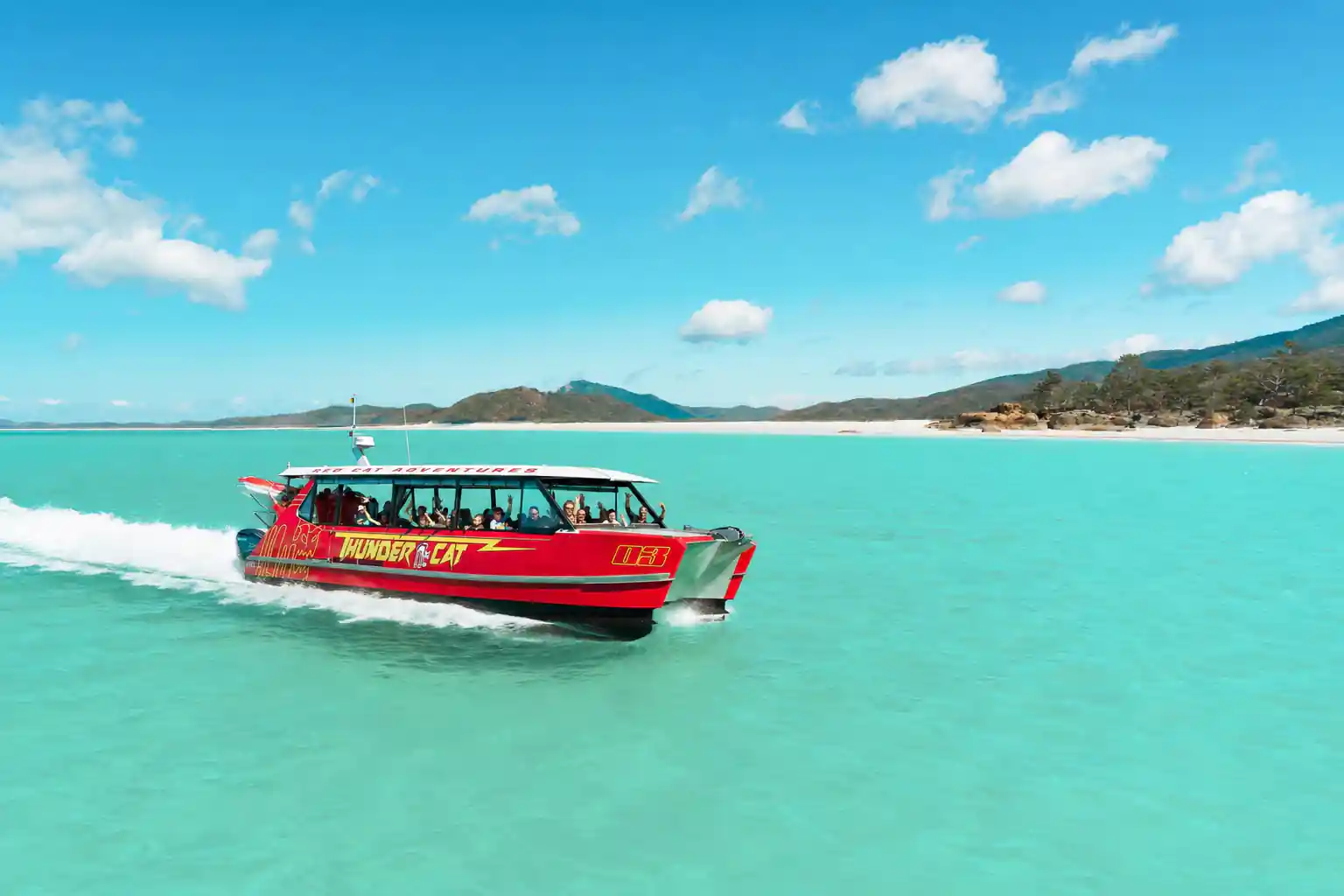
The dry season between June and October is the best time to visit the Whitsundays! Even more specifically, September in particular is the best month.
Is the Hill Inlet Lookout walk worth it?
Getting there and costs
- Two airports serve the Whitsundays daily: Hamilton Island (HTI) and Proserpine (PPP).[8]
- Fast boat tours from Airlie Beach generally take 60 to 75 minutes.[2]
- Most Marine Park tour guests pay the environmental management charge to the permit holder.[9]
- The dry season runs from June to October, with September named the best month.[4]
On the beach and track
The Hill Inlet Lookout Walk: Track and Terrain
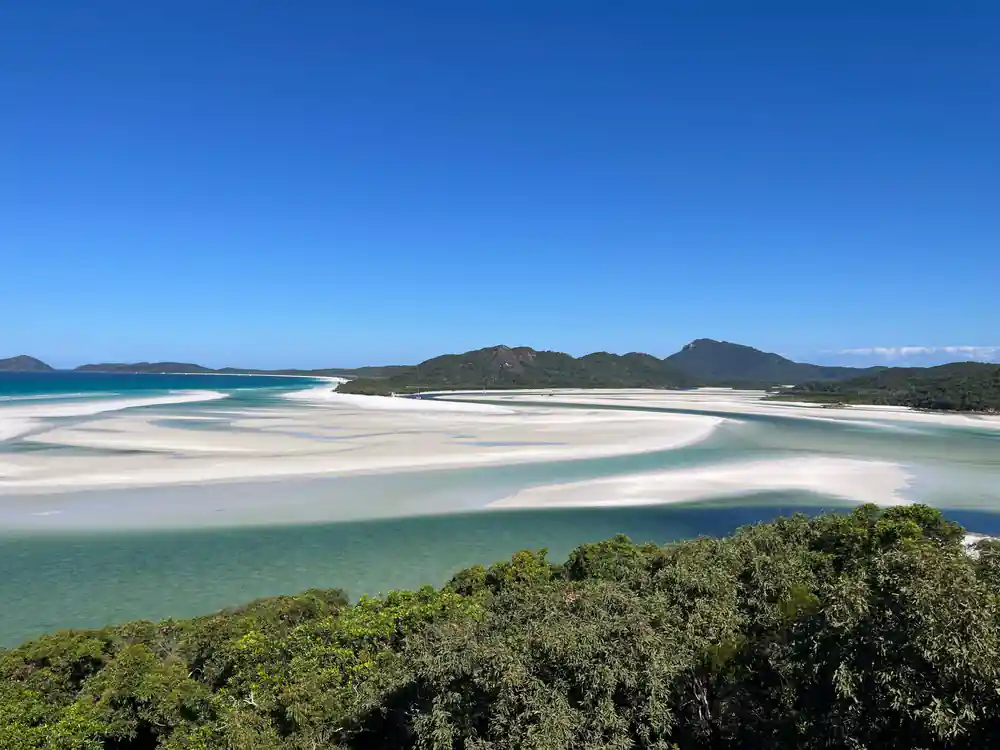
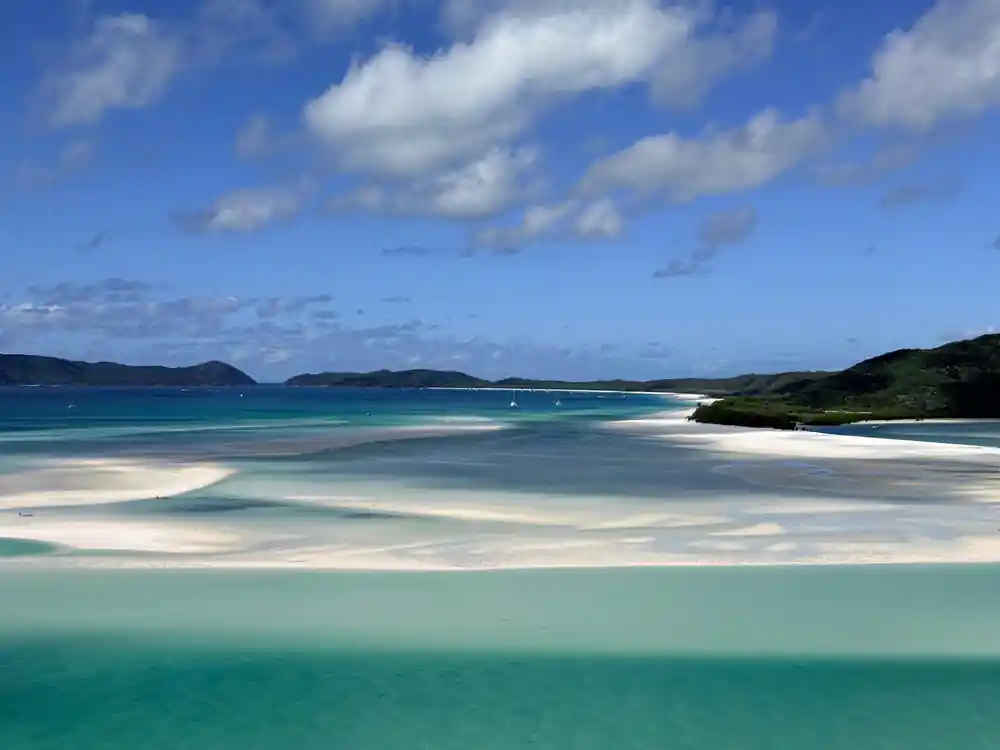
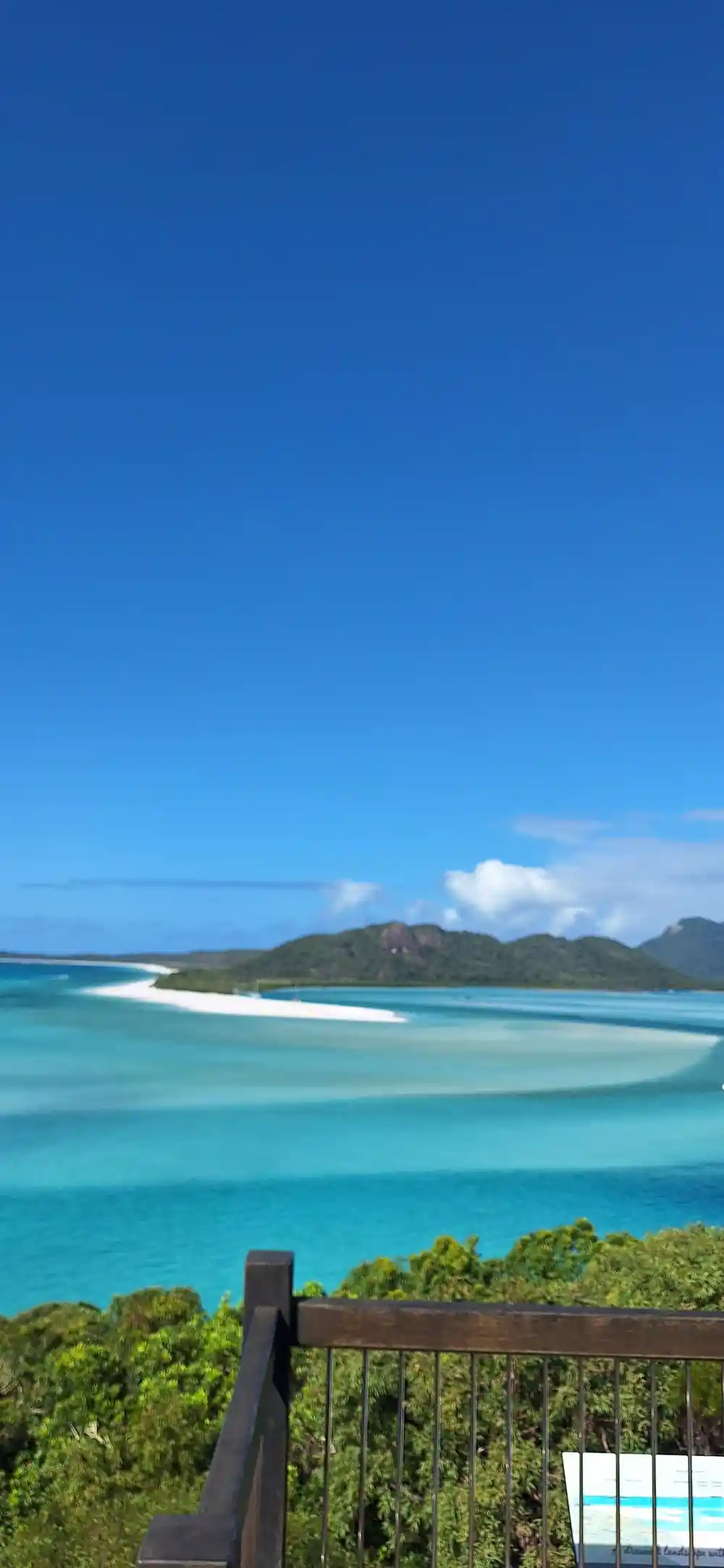
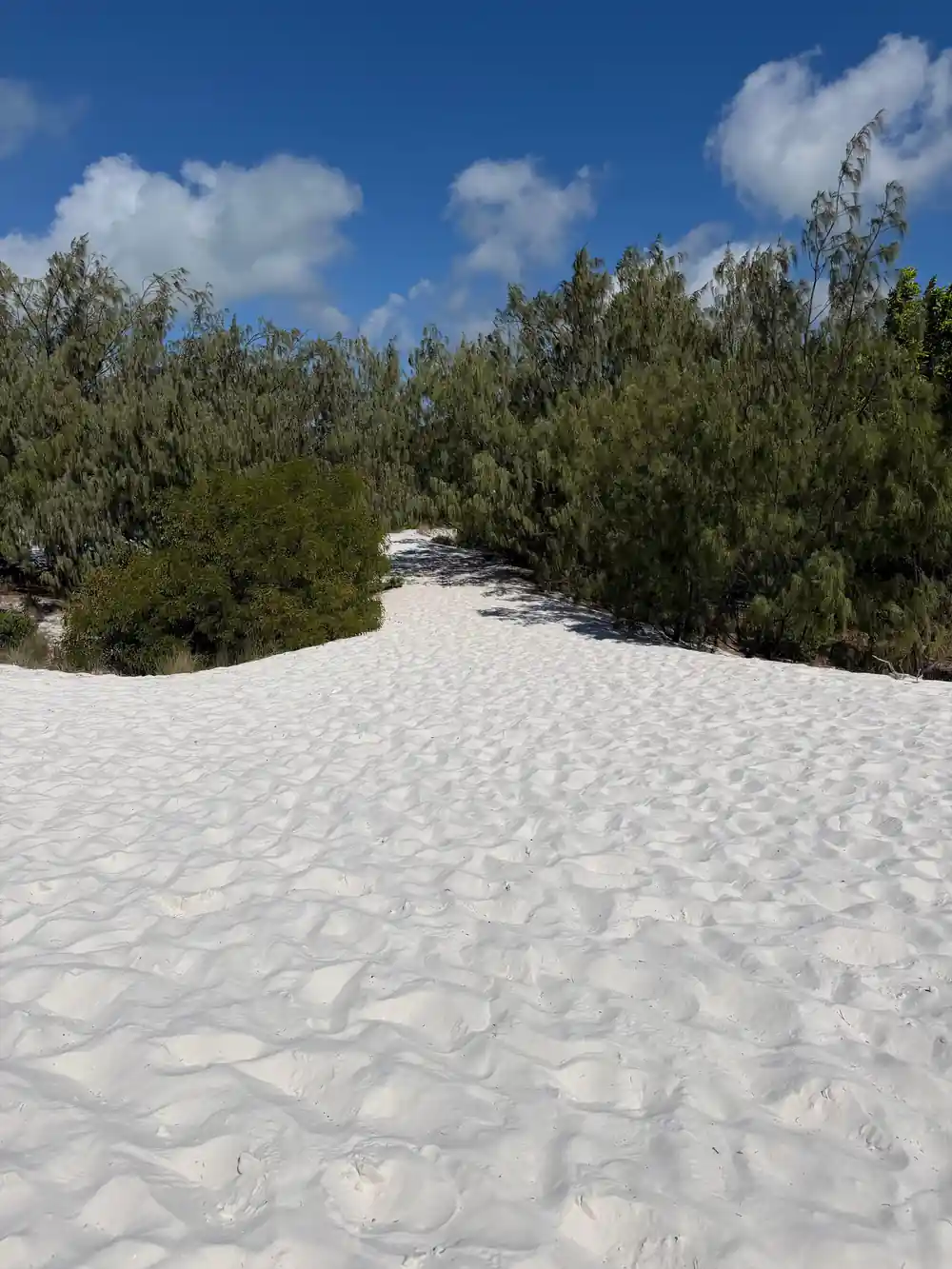
Hill Inlet Lookout is the classic Whitehaven Beach viewpoint, the place where the swirling sands and turquoise water form a pattern that shifts with every tide.[1] The walk up to it begins at the northern end of the beach, where a sandy path leaves the shoreline and ducks into lowland rainforest and eucalyptus woodland. From there the route climbs steadily, part soft sand, part timber boardwalk, part stair, with roots and loose stones underfoot where the track is at its roughest. It is not a long expedition, but it is uphill, and the final stretch is the steepest part of the day.
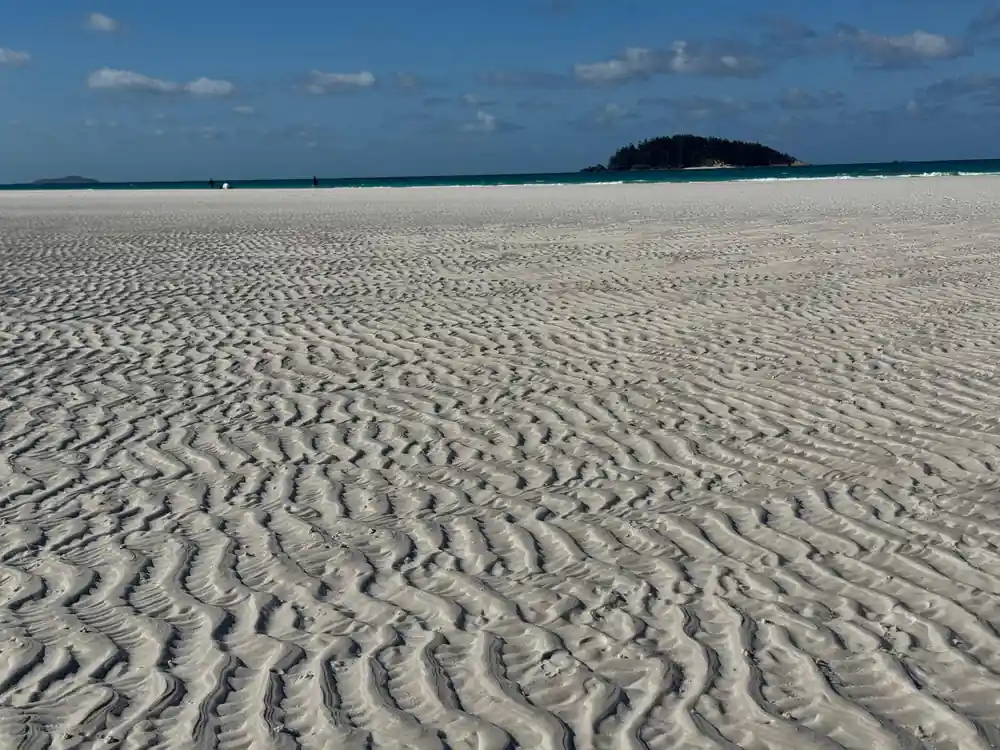
The beach the track climbs away from is a little over four miles long, and its sand is composed of 98 percent silica.[12] It sits approximately 35 km from Airlie Beach by sea, and fast boat tours generally take 60 to 75 minutes to reach it, depending on the vessel and the sea conditions.[2] Treat that crossing as part of the day rather than dead time. The Whitsundays have six species of whale and four species of dolphin officially recorded as calling the area home, and the islands you pass are the same ones the Ngaro, a seafaring tribe, inhabited across the Whitsundays Islands and coastal areas stretching from Cape Conway and down as far as the mountains to the east of Proserpine.[13][14]
It helps to think about the shape of the day before you go. Most full-day boats run a loop that takes in the lookout, a stretch of beach and a snorkel or swim stop, and the walk is usually one block of that loop rather than the whole event. Bring everything you need for the walk with you when you leave the boat, because you may not pass your bag again until you are back on board.
Footwear, Clothing and Sun Protection
Close-toed shoes with grip are the single best thing you can bring. The track mixes soft sand, timber decking and uneven stone, and thongs or loose sandals make the descent awkward. Trainers or light hiking shoes work well. Reef shoes are useful for the beach and the water but give little support on the steps. If you blister easily, a light pair of socks kept for the climb will save your afternoon.
There is very little shade once you are on the beach or the upper platforms, and the tropical sun is strong even when cloud rolls in. A wide-brimmed hat, sunglasses, high-factor sunscreen and a long-sleeved shirt you can pull on are basic kit for the walk. A dry bag or a light backpack keeps a towel, water and a camera safe from spray on the crossing, and a small towel is worth its weight after a swim.
Swimwear under your clothes saves time when the boat stops, and a rash shirt doubles as sun protection on the track. Sand gets into everything, so a zipped pocket for your phone beats an open one. Leave anything you would hate to lose in the bag on the boat.
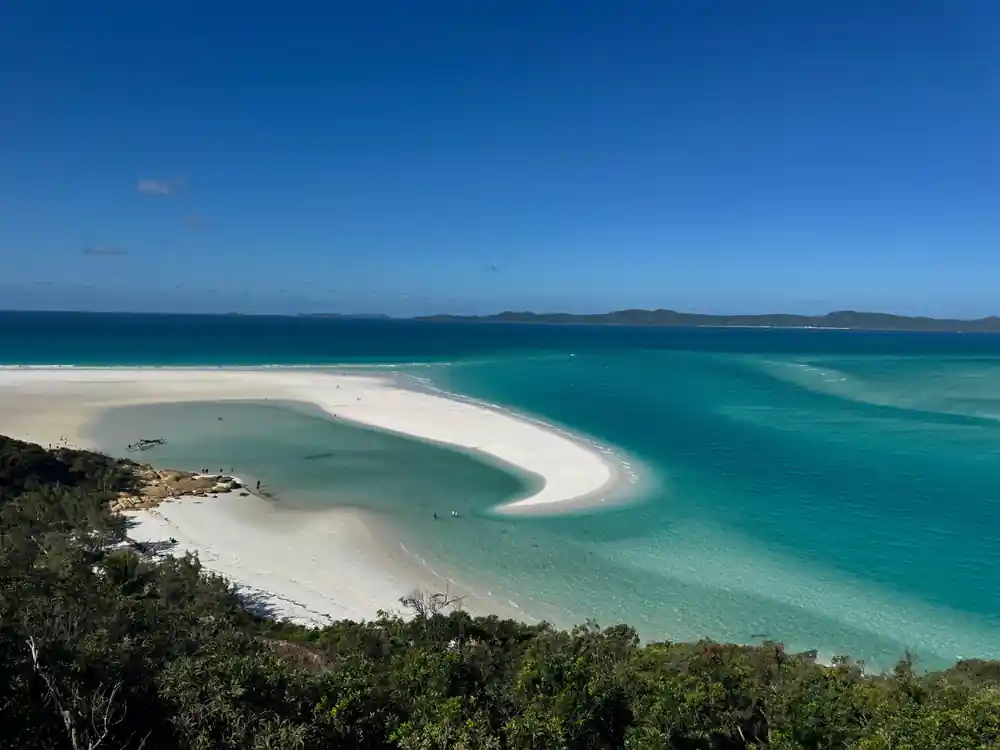
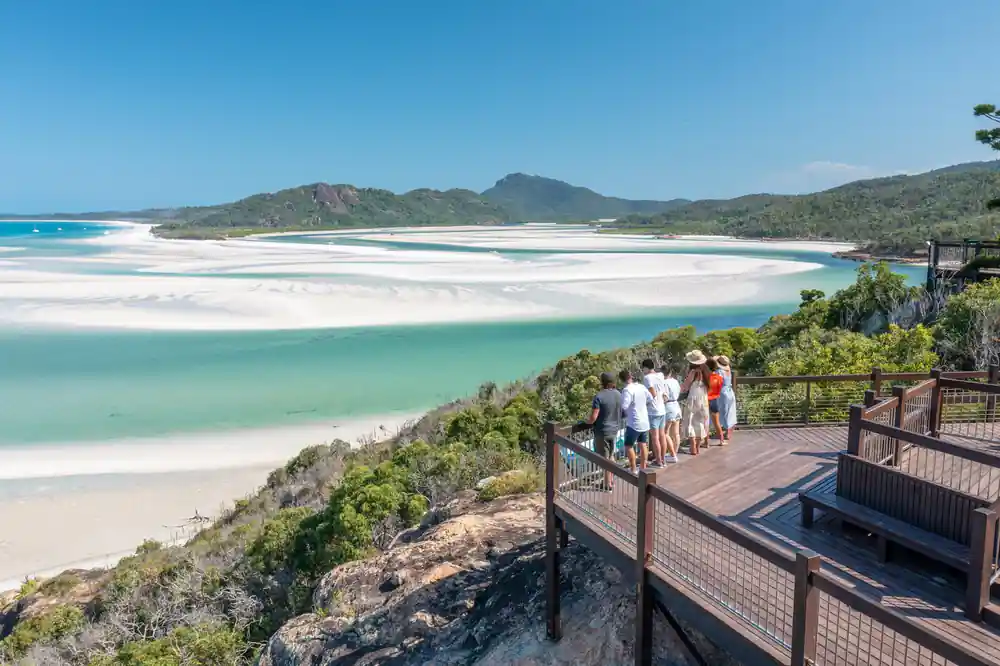
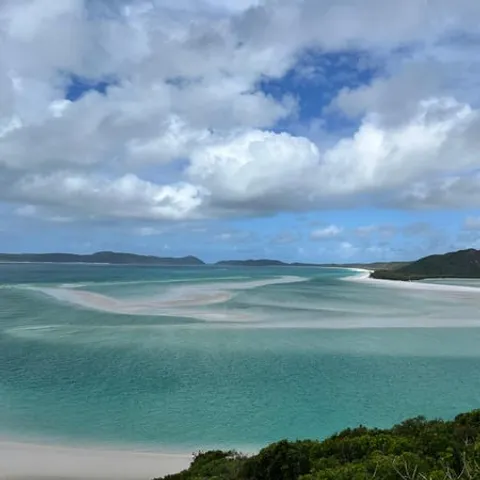
Hill Inlet from the lookout: sand and turquoise water braided by the tide.
Which Viewing Platform Shows the Swirling Sand
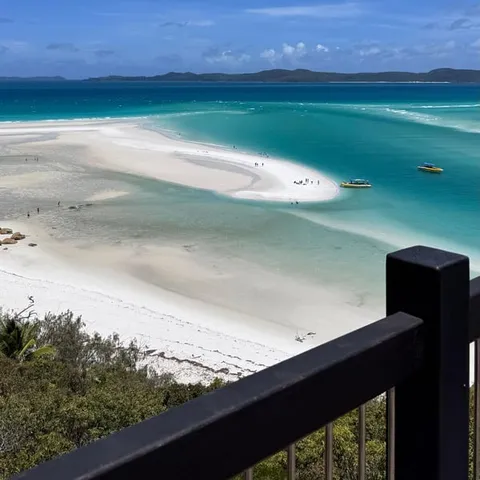
The track serves a series of timber platforms set at different heights, and the highest is the one that delivers the famous view, looking north and down over the inlet where sand and water braid into ribbons.[1] The lower platforms are worth a stop in their own right, especially when the top deck is full, and they give you a different angle on the same shifting pattern. If you have time for only one stop, make it the top, but do not sprint past the others.
The Whitehaven Beach outlook changes with the light, so framing the shot is easier than it looks. Shoot across the inlet rather than straight down the beach, use the curve of the sand as a leading line, and keep a person or a boat in frame for scale so the size of the place reads properly. A polarising filter cuts glare and pulls the turquoise out of the water, and a phone handles the classic wide view perfectly well.
Crowds move in waves as boats arrive, so a platform can empty as quickly as it filled. If a group lands while you are up there, wait a few minutes; the next quiet window is often only a short one away. Crew usually give a rough time to be back at the boat, so keep half an eye on it.
How Tide State Changes the View
The swirling sands and turquoise waters form a natural phenomenon that changes with the tides.[1] That is the whole point of the place rather than a marketing line: the inlet drains and fills, and the channels that carry water across the sand are redrawn each day. No two visits look quite the same.
At low tide the sand flats spread wide and the braided channels are at their most graphic, which is what most photographers are chasing. At high tide more of the sand sits under water, the colours deepen, and the pattern softens into something glassier and more abstract. Tides move through the day, so look up tide times for your date before you travel and think about which way your day falls. No operator can guarantee a tide state, so treat a perfect low-tide view as a bonus rather than a promise.
Wind matters too. A breezy day ruffles the surface and breaks up the colours, while a calm morning leaves the water smooth and bright. Weather changes fast in the Whitsundays, so the view you get is the view the day gives you.
from US$175
The Whitehaven Full-Day Eco-Cruise with Buffet runs 8 hours and is rated 4.78 from 3,065 reviews.[5]
Accessibility and Walking Difficulty
The walk is short but not flat. Expect sand, steps and a steady climb, and expect it to take longer than you think if the day is hot or the track is busy. Anyone with reasonable mobility can manage it at a gentle pace, and there is no shame in stopping on the way up to let people pass and to catch your breath.
It is not suitable for wheelchairs, prams or anyone who struggles with stairs, and you cannot drive to the lookout. If you use a walking aid, ask your operator how the day works before you book, because landing points and timings vary between boats. The eco-cruise from Airlie Beach lists Hill Inlet Lookout as one of its stops, alongside Whitehaven Beach and Hook Island.[5]
If the climb is not for you, the day still works. The same trip gives you time on the sand, and Hook Island has a series of bays across the top of the island that offer excellent quality snorkelling with healthy coral and diverse marine life.[15] You can sit out the walk and still come home with the day's best story.
Shade, Water and Facilities at the Lookout
Facilities are minimal, and it is worth knowing that before you set off. Public toilets are the only facilities at Whitehaven Beach, located at Hill Inlet Lookout and at the campgrounds near South Whitehaven Beach.[3] That short list is worth remembering when you pack. Bring water, bring food if your trip does not include it, and bring a bag to carry your rubbish back to the boat.
Carry more water than you think you need, and carry it up the track rather than leaving it on the sand. Shade is scarce on the beach and patchy on the track, so a hat and a few minutes in the trees are your only cover. If you want more than a day here, you can camp overnight on Whitsunday Island at the Whitehaven Beach camping area in Whitsunday Islands National Park.[11]
Camp sites are nestled among lowland vine forest and eucalyptus woodland behind the beach, and the camping area is suitable for walk in camping, with a hybrid toilet and picnic tables.[11] For day visitors that means the tables and toilets sit near the campgrounds rather than up at the lookout, so plan your break around them. Everything else you need for the day travels in with you.
Photography at the Lookout and Drone Rules
The lookout is one of the most photographed views in the region, and light matters more than gear. Early and late, when the sun is low, the water reads as colour rather than glare and the sand shows its texture. Around the middle of the day the inlet flattens out, though the shallows often show their pattern most clearly then, because the sun is directly overhead.
Drone use is regulated by the national park and marine park authorities, and by the operator whose boat you are travelling on, and the position is not identical in every location. Check the current rules with the relevant authority and with your tour operator before you pack a drone, and follow any instruction from crew or rangers on the day. Flying where you should not can end a trip early.
For everyone else, a phone, a hat and a lens cloth are enough. Wipe spray off the lens before you shoot, keep the horizon level, and take one frame with people in it so the scale reads. Take a few seconds to look up from the screen as well; the view from the platform is the reason you climbed, and it is better with both eyes.
GetYourGuide ratings for Whitsunday day tours
GetYourGuide scores for these four Whitsunday day tours.[5][6][7][16]
What a Whitehaven day costs
US dollar from-prices on these GetYourGuide listings.[5][6][7][16]
When to plan the walk
Plan the Hill Inlet walk
Book the boat
The eco-cruise lists Hill Inlet Lookout, Whitehaven Beach and Hook Island as stops, with pickup options in Airlie Beach.[5]
Pack for the climb
Closed shoes with grip, water, a hat and sunscreen. Toilets at the lookout are the only facilities at the beach, so bring what you need.[3]
Time the tide
Check tide times for your date before you travel, because the sand and water pattern at the inlet changes with the tides.[1]
Climb early
Head up while the day is cool and the platforms are quiet, then swim or snorkel afterwards. Shade is scarce on the track and the beach.
Leave no trace
The Ngaro inhabited these islands and the nearby coast long before tourism.[14] Carry your rubbish back to the boat and stay on the track.
Add the Hill Inlet Lookout walk to your Whitsundays day
from US$176Reserve now & pay later