At a glance
- The dry season from June to October is the best time to visit the Whitsundays, and September is the best month.[1]
- Stinger season in the Whitsundays runs from late October until May, and at Whitehaven most tours provide protective suits from November to April.[2][3]
- Whitehaven Beach is approximately 35 km from Airlie Beach by sea, and the full-day Eco-Cruise runs for 8 hours.[3][4]
- The Whitehaven Full-Day Eco-Cruise with buffet is from US$175, rated 4.78 from 3,065 reviews, with free cancellation up to 24 hours in advance.[4]
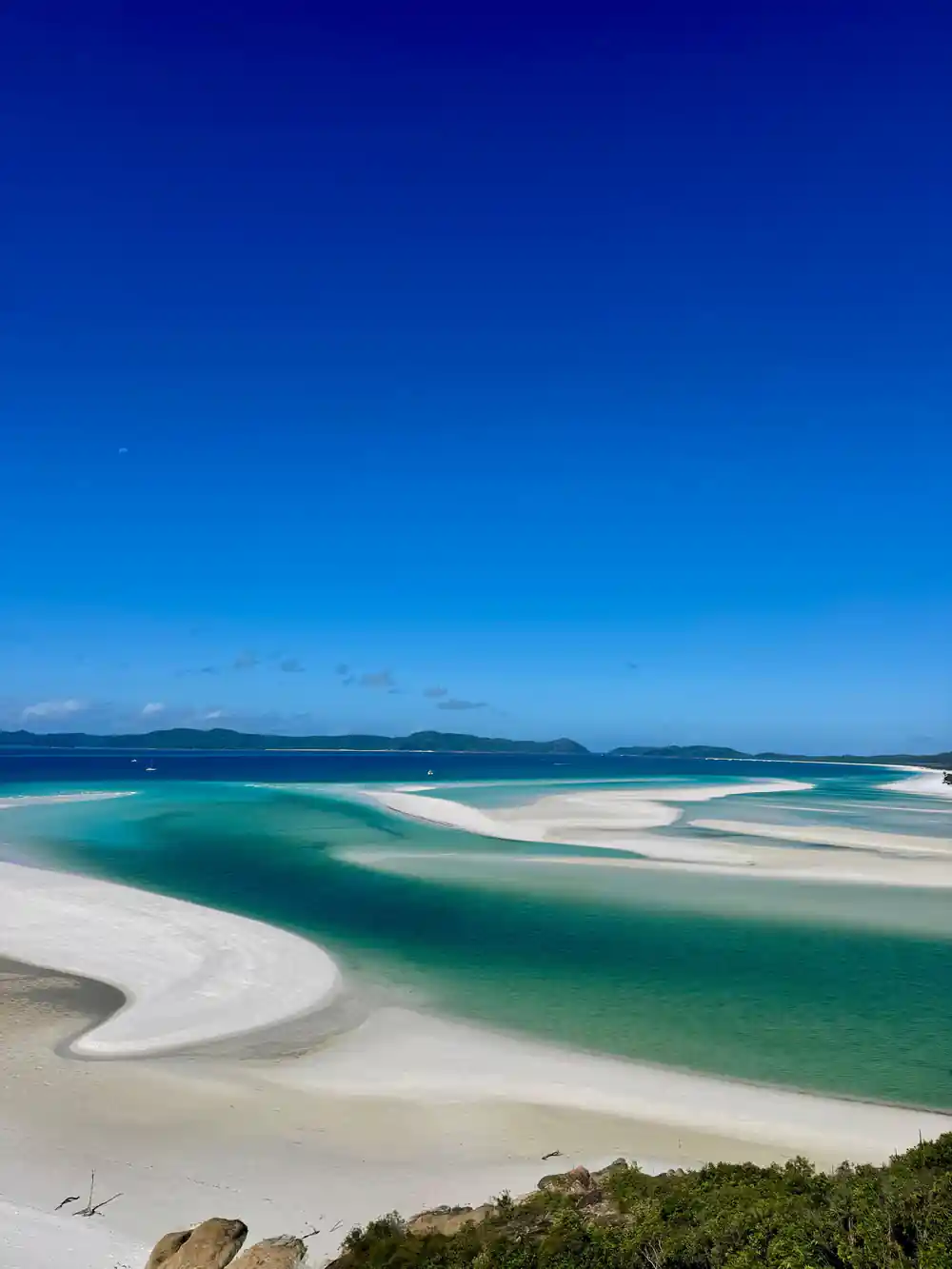
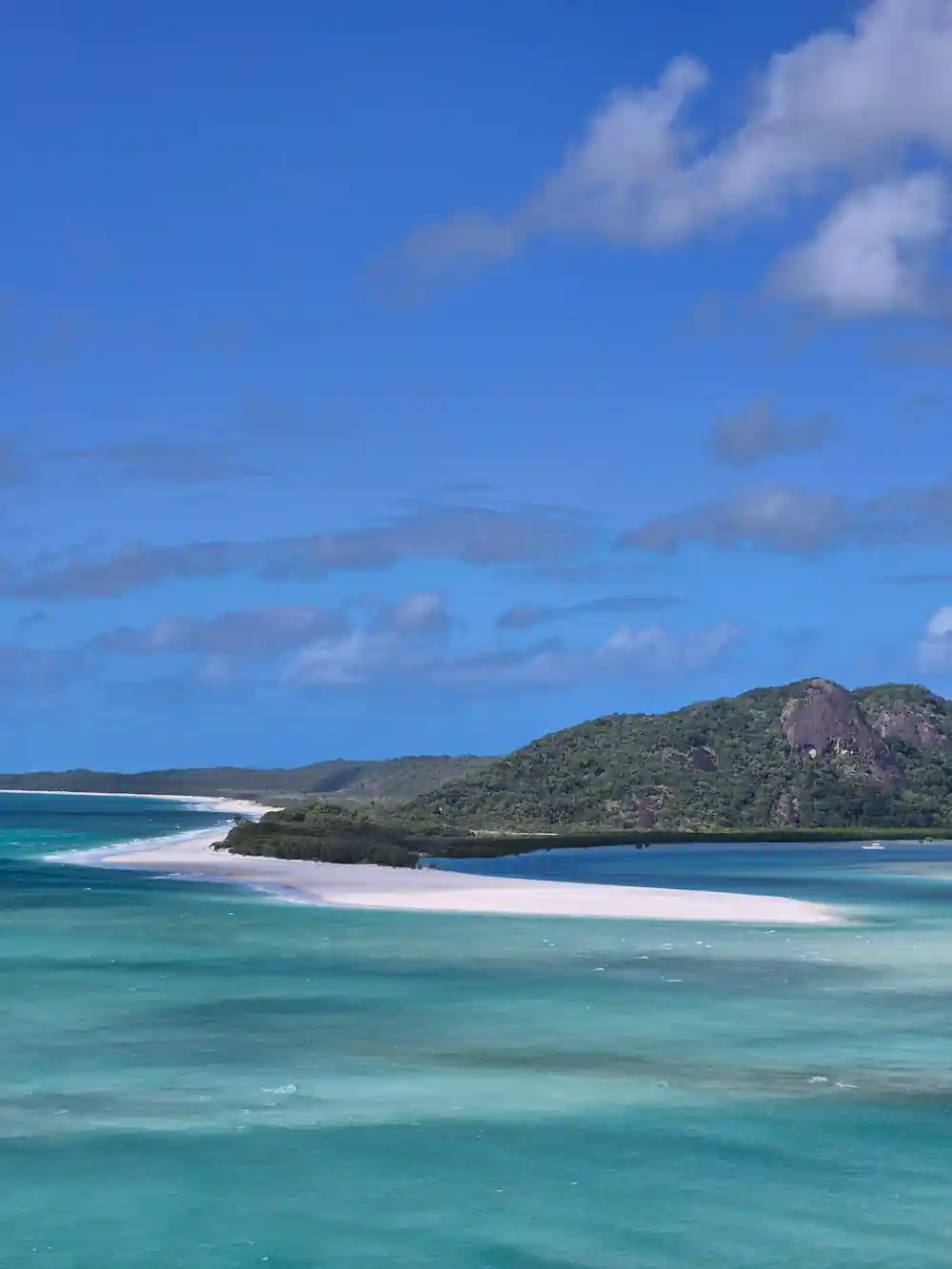
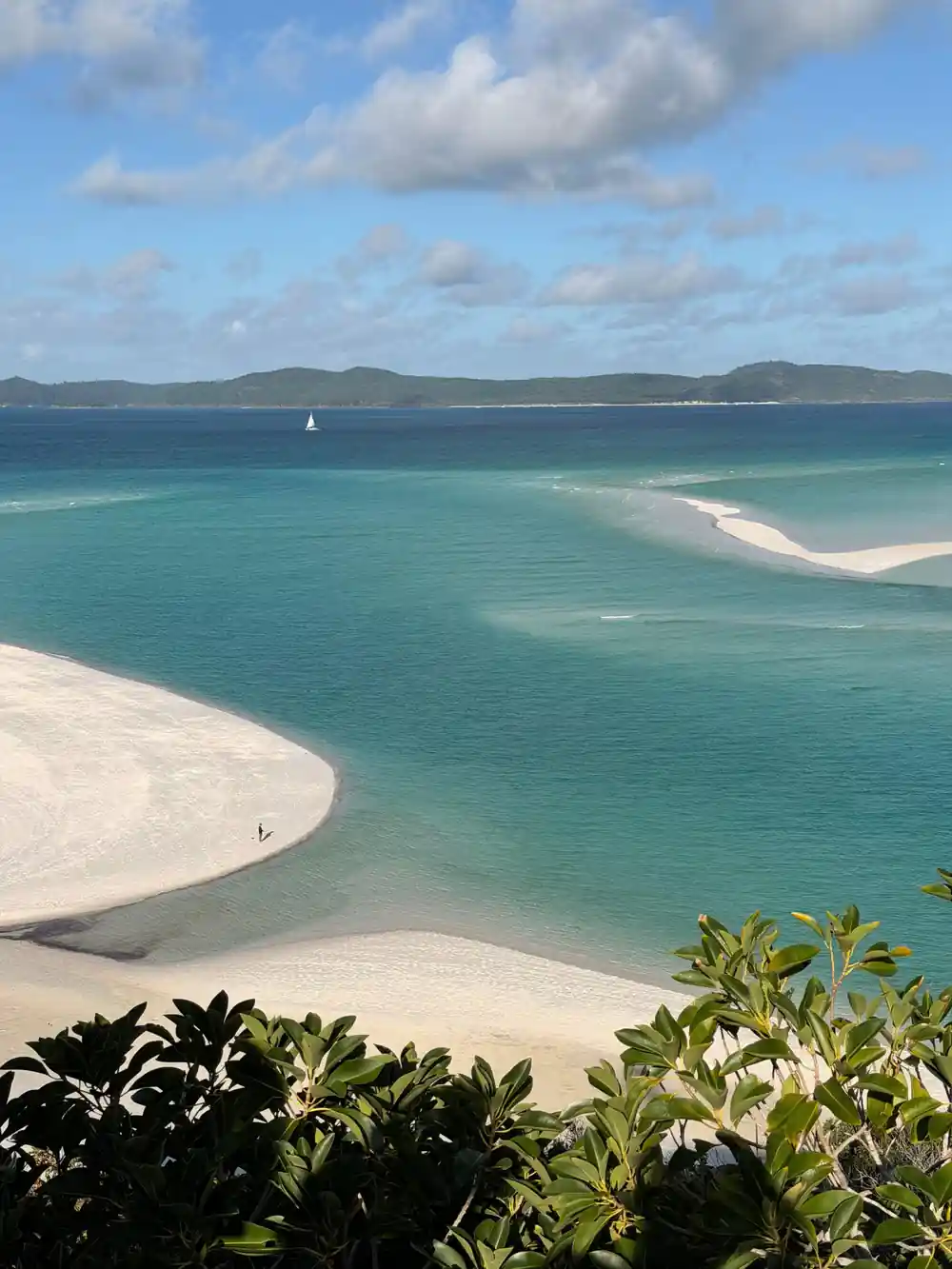
- Hill Inlet Lookout is a must-see spot where swirling sands and turquoise waters form a natural phenomenon that changes with the tides.[5]
- Top choice Eco-Cruise with buffet from US$175 Duration8 hours[4]Rating4.78 from 3,065 reviews[4]CancellationCancel up to 24 hours in advance[4]StopsHill Inlet Lookout and Hook Island[4] Check availability
- Snorkel, inlet and beach from US$174 Duration6.5 hours to 1 day[6]Rating4.84 from 2,331 reviews[6]CancellationCancel up to 24 hours in advance[6]StopsSnorkel, Hill Inlet Lookout, beach[6] See this tour
- Camira sailing day from US$182 Duration10 hours[7]Rating4.70 from 1,423 reviews[7]CancellationCancel up to 2 days in advance[7]StopsWhitehaven Beach and Hill Inlet Lookout[7] See this tour
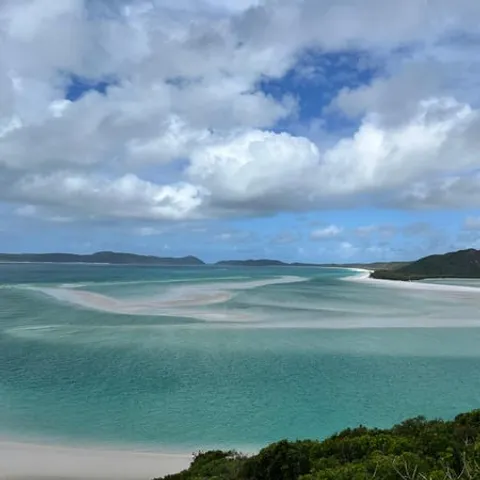
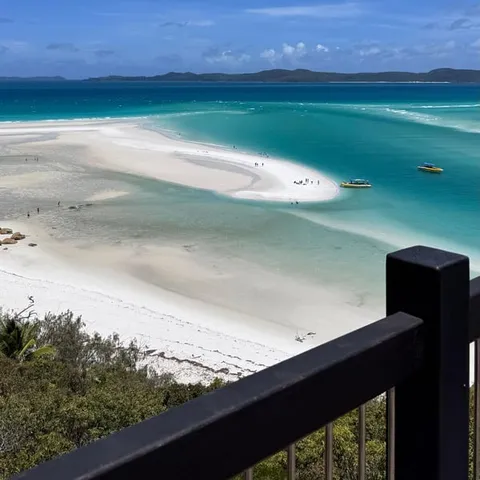
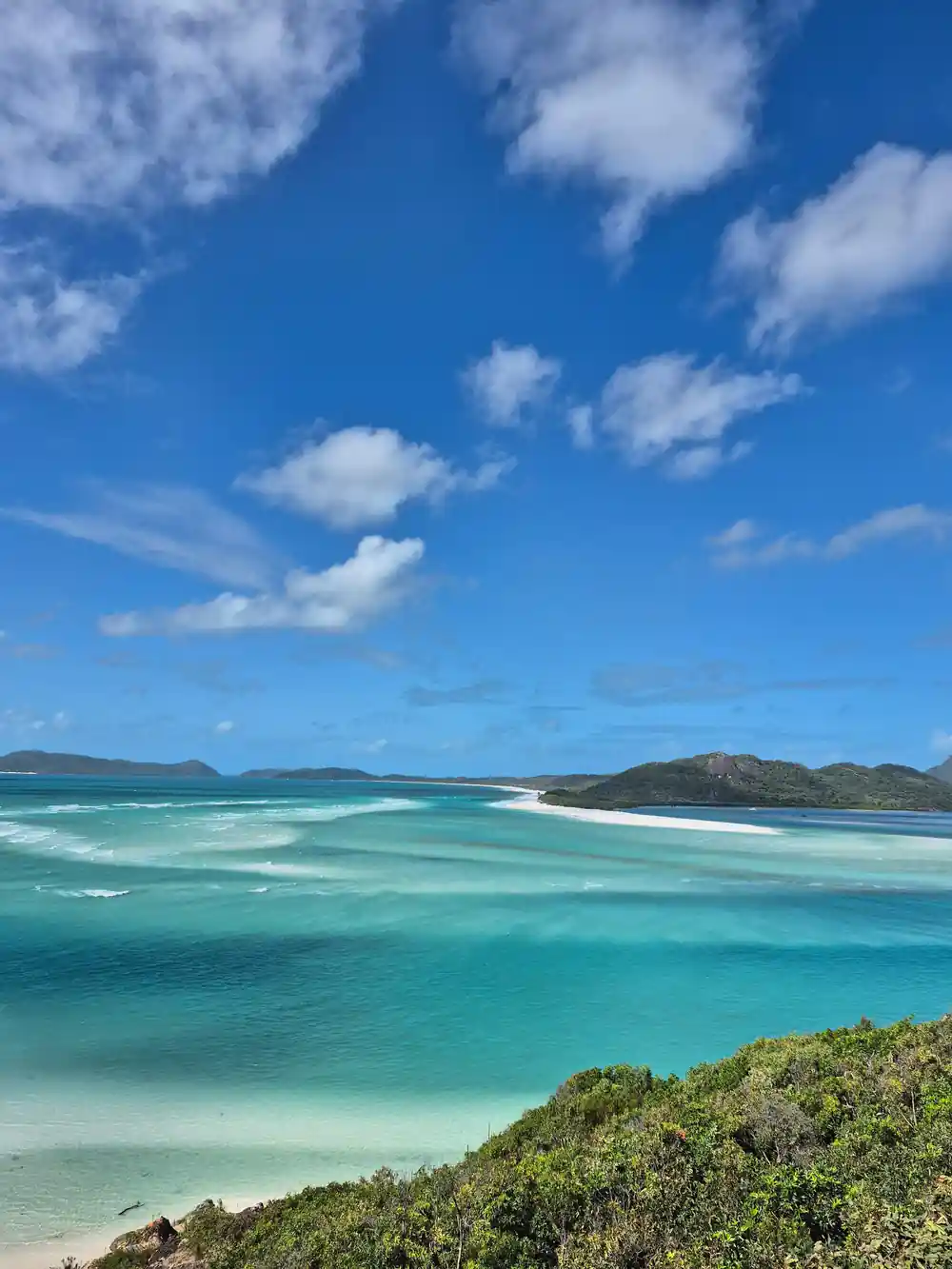
Don't miss the Hill Inlet Lookout, where the swirling sands and turquoise waters form a mesmerising natural phenomenon that changes with the tides.
Our verdict: time your Whitehaven cruise with the dry season
Check before booking
Trade winds and sea conditions across the year
The Whitsundays sit inside the Great Barrier Reef, and the reef takes the sting out of ocean swell long before it reaches the islands. The passage between the mainland and Whitsunday Island often looks like a bathtub on days when the open Coral Sea is choppy, which is why small boats cope so well here. Whitehaven Beach is approximately 35 km from Airlie Beach by sea.[3] That crossing stays tucked behind islands for most of its run, so the ride out is usually the steadiest part of a day on the water.
Through the cooler months the south-easterly trades are the usual pattern, filling in during the morning and easing towards evening. Early departures often get the smoothest run out, while the trip home can be the bouncier half of the day. In the warmer months the wind is less constant, the air is heavier, and showers can build over the mainland ranges before drifting out across the water.
Sea conditions decide how a day feels far more than the calendar does, so look at the forecast rather than the date alone. If you are prone to seasickness, take precautions before you leave the marina, sit low and near the middle of the boat, and keep your eyes on the horizon. A sheltered anchorage can turn a breezy day into a lovely one, and the crew will know where the water lies calmest.
Stinger season: when swimming safety changes
Stinger season in the Whitsundays runs from late October until May.[2] At Whitehaven Beach the water is usually calm, warm and clear, and during stinger season, given as November to April there, most tours provide protective suits to swim safely.[3] The regional window and the beach-specific advice overlap through the warmer months, so a suit is the sensible default across that stretch.
Can you swim at Whitehaven Beach during stinger season? Any date in that warmer stretch falls inside it,[2] and on most tours a protective suit is provided during those months.[3] A stinger suit covers you from ankle to wrist with a hood, so it doubles as sun cover and makes a long snorkel far more comfortable.
Swimming from a tour boat is about following the crew rather than the crowd. Stay close to the vessel, enter the water where you are told, and never pick up anything you cannot identify. Reef-safe sunscreen, a rash shirt under the suit, a hat and plenty of water make a hot day on the sand much easier.
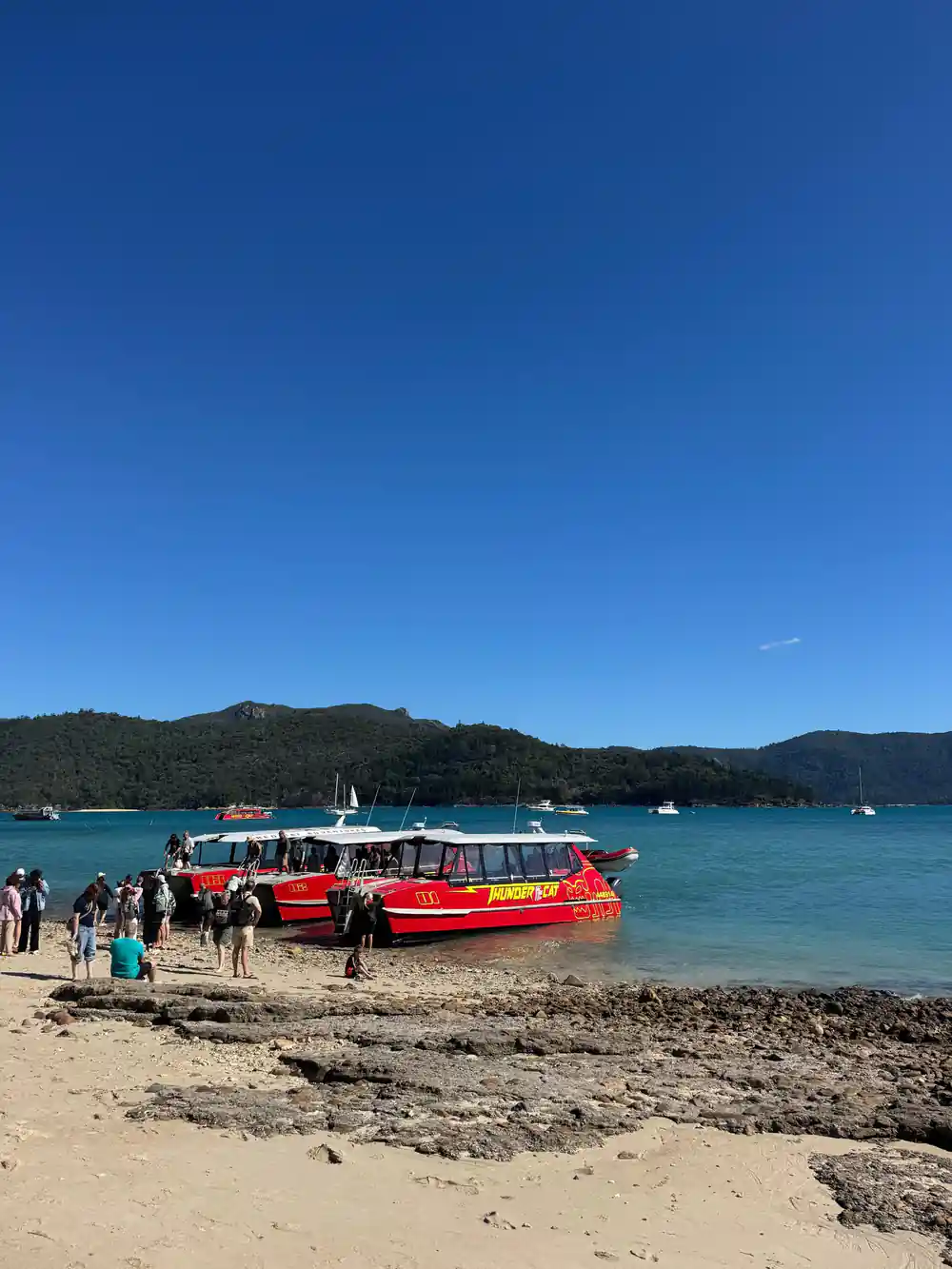
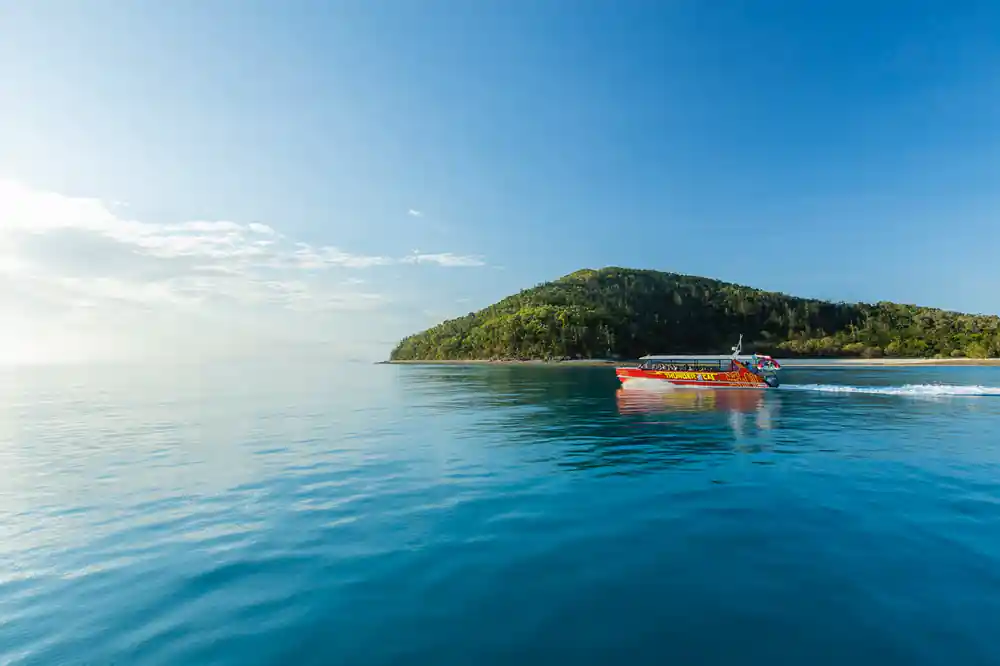
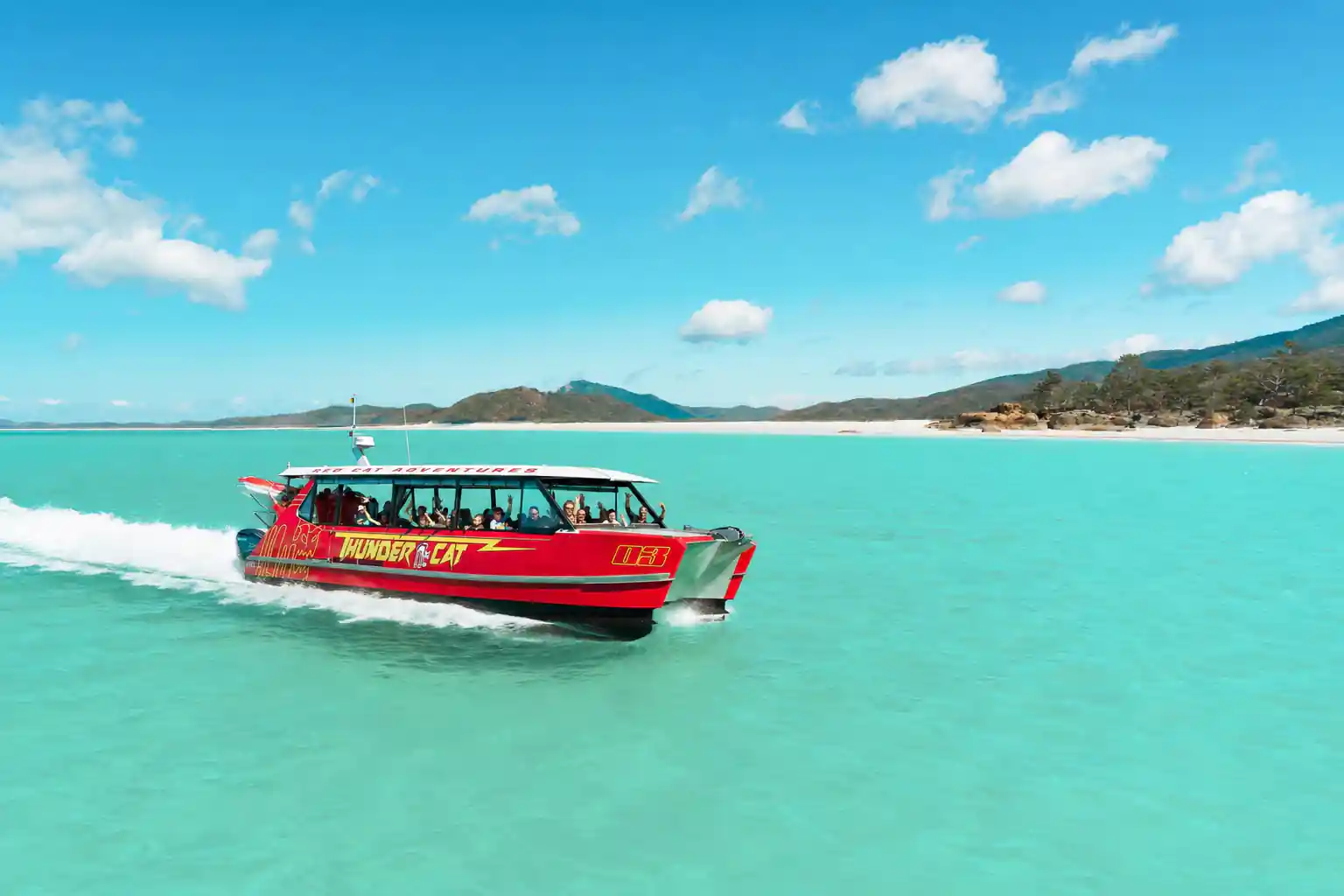
A speedboat cutting across turquoise water on the way to Whitehaven Beach
Whitsundays temperature: winter versus summer
For when to visit Airlie Beach, the advice is refreshingly simple. The dry season between June and October is the best time to visit the Whitsundays, and September in particular is the best month.[1] Those months bring the most reliable sunshine, lighter winds on average and clearer water, which is exactly what a beach day and a lookout stop want.
Winter here is mild rather than cold. Days are comfortable in a t-shirt, evenings on the boat can call for a light jumper, and the water stays warm enough for a long swim. It is the stretch that suits travellers who want to be outdoors all day without the tropics at their most humid, and it lines up with the dry season window.[1]
The warmer months run from late October until May.[2] If you are working out when is the Whitsundays wet season, that warmer stretch is the half of the year to plan around, while the dry season from June to October is described as the best time to visit.[1] Expect high humidity, warm nights, very warm water and afternoon showers that pass through quickly.
How tides reshape your route and timing
Hill Inlet Lookout is a must-see spot, and the swirling sands and turquoise water there form a natural phenomenon that changes with the tides.[5] The pattern you see depends on the state of the tide when you arrive and on how the current is moving the sand at that moment, so the view is different on every visit.
Whitehaven Beach itself is a little over four miles long, and its sand is composed of 98 percent silica.[10] That length matters when you plan: soft sand is slow to walk on, and a boat that anchors at one end of the beach gives you quite a different day from one that lands you near Hill Inlet.
Tides also decide where a boat can sit, so the order of stops can shift from one day to the next. Listen to the briefing rather than assuming a fixed schedule, and if the lookout is the highlight for you, pick a tour that names it. The full-day Eco-Cruise lists Hill Inlet Lookout, Whitehaven Beach and a Hook Island stop.[4]
from US$175
The Whitehaven Full-Day Eco-Cruise with buffet runs for 8 hours and is rated 4.78 from 3,065 reviews.[4]
Whale and marine wildlife timing
Six species of whale and four species of dolphin are officially recorded as calling the Whitsundays home.[11] Sightings are never guaranteed on any given day, but the islands are a rich piece of ocean, and a pair of binoculars earns its place in your day bag for the crossing.
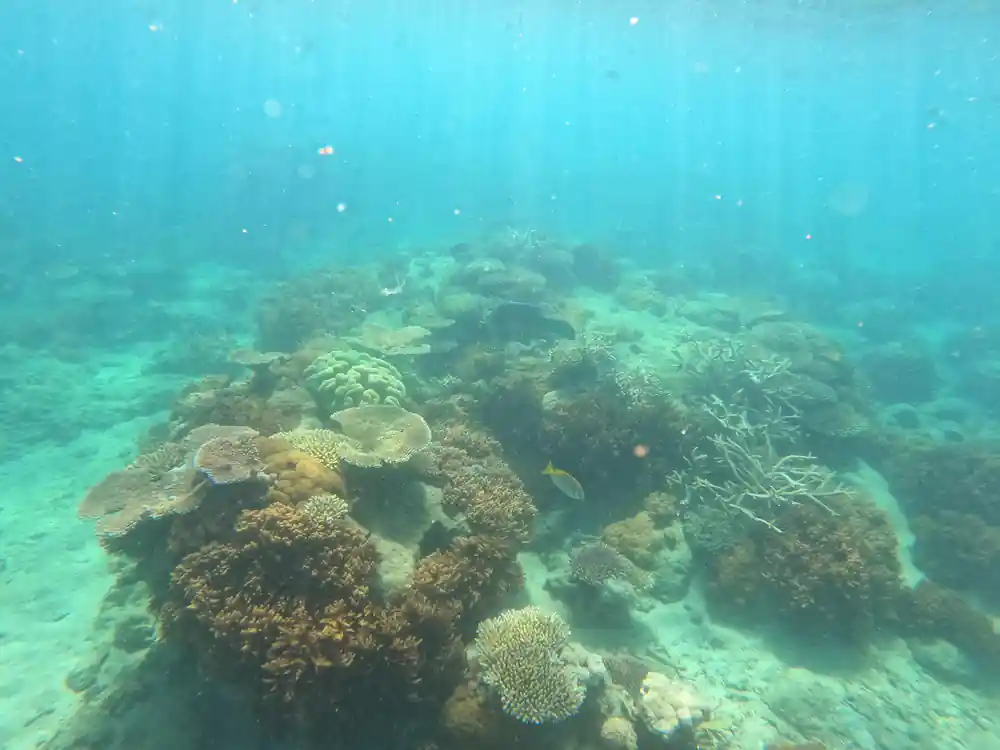
Under the surface, Hook Island is the name to know. Across the top of the island there is a series of bays that all offer excellent quality snorkelling with healthy coral and diverse marine life.[12] The full-day Eco-Cruise includes a Hook Island stop on its itinerary,[4] so snorkellers get time in the water as well as time on the sand.
The Ngaro were a seafaring tribe who inhabited the Whitsundays Islands and coastal areas stretching from Cape Conway down as far as the mountains east of Proserpine.[13] Their country includes the islands you sail through, and shell middens and other cultural sites can be easy to miss underfoot. Look, photograph, and leave everything exactly where it lies.
Peak holiday crowds and beach timing
A little over four miles of sand absorbs a lot of people.[10] Tours tend to cluster around the middle of the day, so an early arrival or a late-afternoon swim usually feels quieter, and walking a few minutes along the beach away from the main landing spot is often all it takes to find space of your own.
Overnight stays are possible rather than only day trips. You can camp on Whitsunday Island at the Whitehaven Beach camping area in Whitsunday Islands National Park, where sites are nestled among lowland vine forest and eucalyptus woodland behind the beach, and the camping area is suitable for walk-in camping with a hybrid toilet and picnic tables.[14] Staying after the last boat leaves gives you the beach at its most peaceful.
Facilities are deliberately thin. Public toilets are the only facilities at Whitehaven Beach, located at Hill Inlet Lookout and at the campgrounds near South Whitehaven Beach.[8] Bring more water than you think you need, carry out every scrap of rubbish, and plan food and drinks around whichever tour you have booked.
Rain and weather: when tours run and when they pause
Tropical weather moves quickly here. A grey morning can clear by lunchtime, and a bright one can turn showery by mid-afternoon. Build some slack into your plan, keep phones and cameras in a dry bag, and treat a forecast more than a few days out as a rough guide rather than a promise.
Flexible booking terms are the simplest protection. The Whitehaven Full-Day Eco-Cruise with buffet offers free cancellation up to 24 hours in advance for a full refund.[4] The Whitsundays and Whitehaven half-day cruise offers free cancellation up to 2 days in advance for a full refund.[15] If you are wondering when is the Airlie Beach wet season, keeping your dates loose through the warmer months and leaning on terms like these is the practical answer.
One small extra to understand: visitors on most commercial tourism operations in the Great Barrier Reef Marine Park are liable to pay the environmental management charge to the permit holder, who remits it to the Reef Authority.[16] If it appears on your booking, that is what it is, and your operator can confirm how it is handled.
Traveller ratings for Whitsundays day tours
Average GetYourGuide scores: 4.78 from 3,065 reviews[4], 4.84 from 2,331 reviews[6], 4.70 from 1,423 reviews[7], 4.15 from 1,661 reviews[15].
From-prices for a Whitehaven day on the water
US dollar from-prices from the GetYourGuide listings: US$175[4], US$174[6], US$182[7].
When to book your Whitehaven cruise
How to time your trip
Pick your month
The dry season from June to October is the best time to visit the Whitsundays, with September the best month.[1]
Check stinger season
Stinger season runs from late October until May in the Whitsundays, so plan on a protective suit if you swim.[2]
Match the tide
The swirling sand patterns at Hill Inlet change with the tides, so the lookout looks different on every visit.[5]
Book with flex terms
The full-day Eco-Cruise allows free cancellation up to 24 hours in advance for a full refund.[4]
Leave the day free
Allow the full 8 hours of the Eco-Cruise itinerary, then keep the evening light rather than stacking plans on top.[4]
Choose your day and book the Whitehaven Eco-Cruise
from US$176Reserve now & pay later