At a glance
- A little over four miles long, with sand that is 98 percent silica, this is the beach people picture when they imagine the Whitsundays.[1]
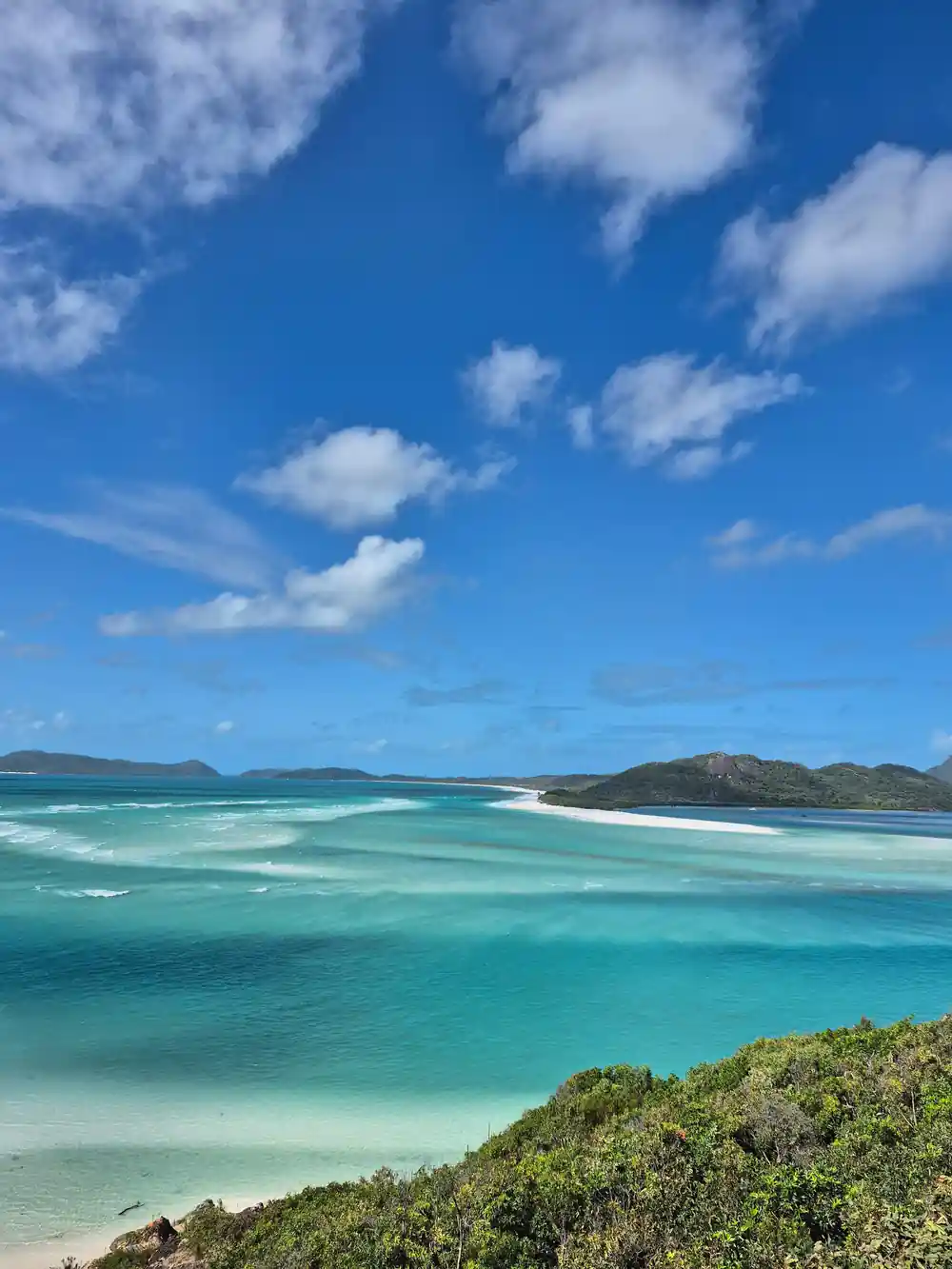
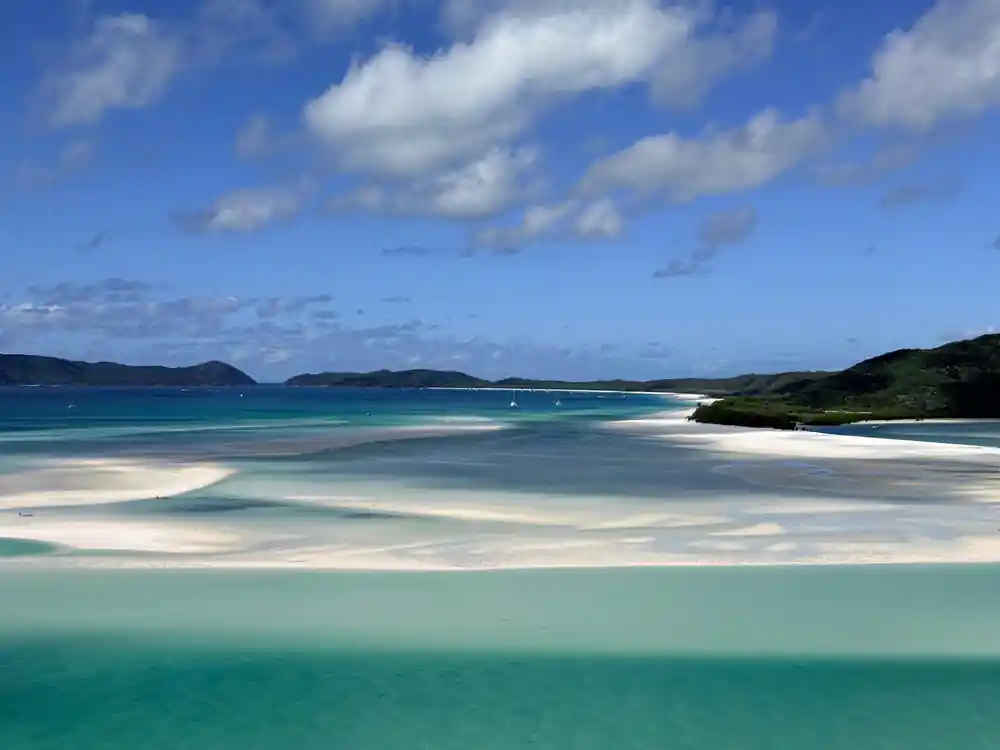
- Hill Inlet Lookout is the classic photo stop, where swirling sand and turquoise water rearrange themselves with every tide.[2]
- Whitehaven Beach lies approximately 35 km from Airlie Beach by sea, and two airports serve the region daily.[3][4]
- The water is usually calm, warm and clear, and most tours hand out protective suits in stinger season from November to April.[3]
- The dry season from June to October is the best time to visit the Whitsundays, and September is named the best month of all.[5]
- Top choice Whitehaven Eco-Cruise from US$175 Duration8 hours[6]Rating4.78 from 3,065 reviews[6]Free cancellationCancel up to 24 hours ahead[6]Recommended forFirst-timers wanting it all Check availability
- Snorkel & Hill Inlet Day from US$174 Duration6.5 hours - 1 day[7]Rating4.84 from 2,331 reviews[7]Free cancellationCancel up to 24 hours ahead[7]Recommended forSnorkellers and view chasers See this tour
- Camira Sailing Day from US$182 Duration10 hours[8]Rating4.70 from 1,423 reviews[8]Free cancellationCancel up to 2 days ahead[8]Recommended forSailors and slow days out See this tour
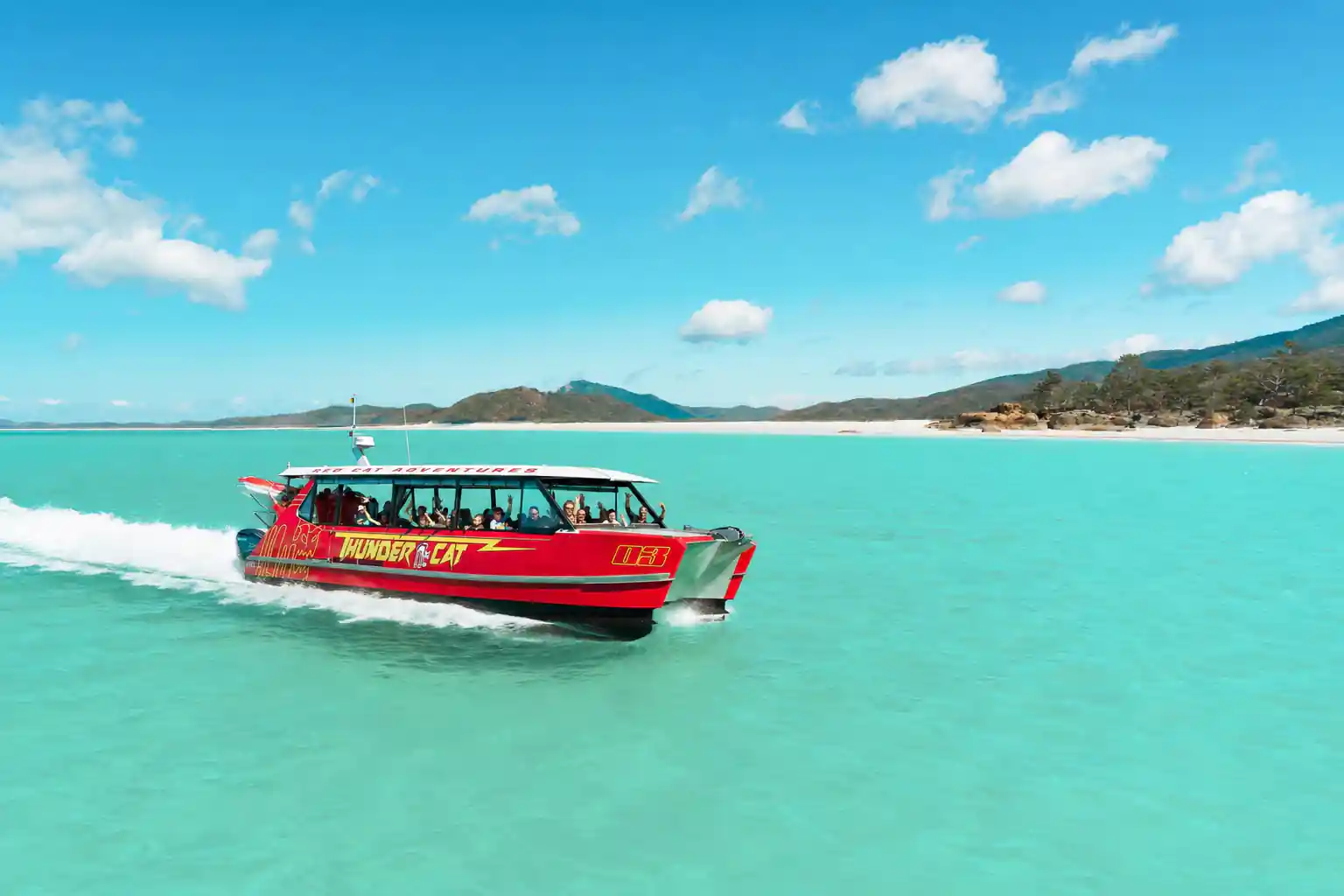
Whitehaven Beach is approximately 35 km from Airlie Beach by sea. Fast boat tours generally take 60 to 75 minutes , depending on the vessel and sea conditions.
Is the Whitehaven eco-cruise worth it?
Check before booking
- Book the eco-cruise, which leaves from Airlie Beach with pickup included.[6]
- Aim for the dry season, June to October, or September if you can choose the month.[5]
- Half-day cruises from US$87, the full-day eco-cruise from US$175.[6][9]
- Two airports serve the region daily: Hamilton Island and Proserpine.[4]
On the day
Almost Pure Silica: What the Sand Is Made Of
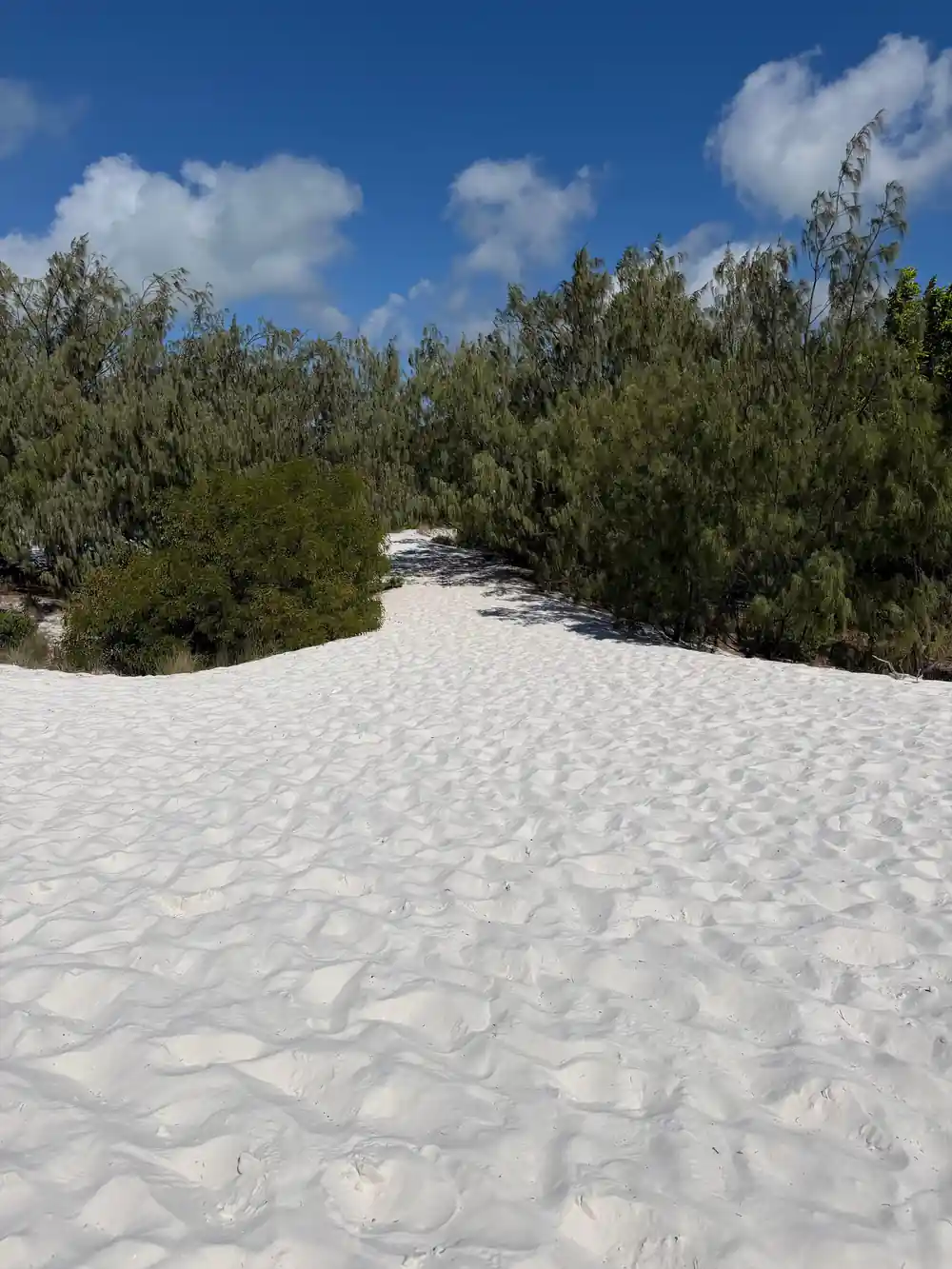
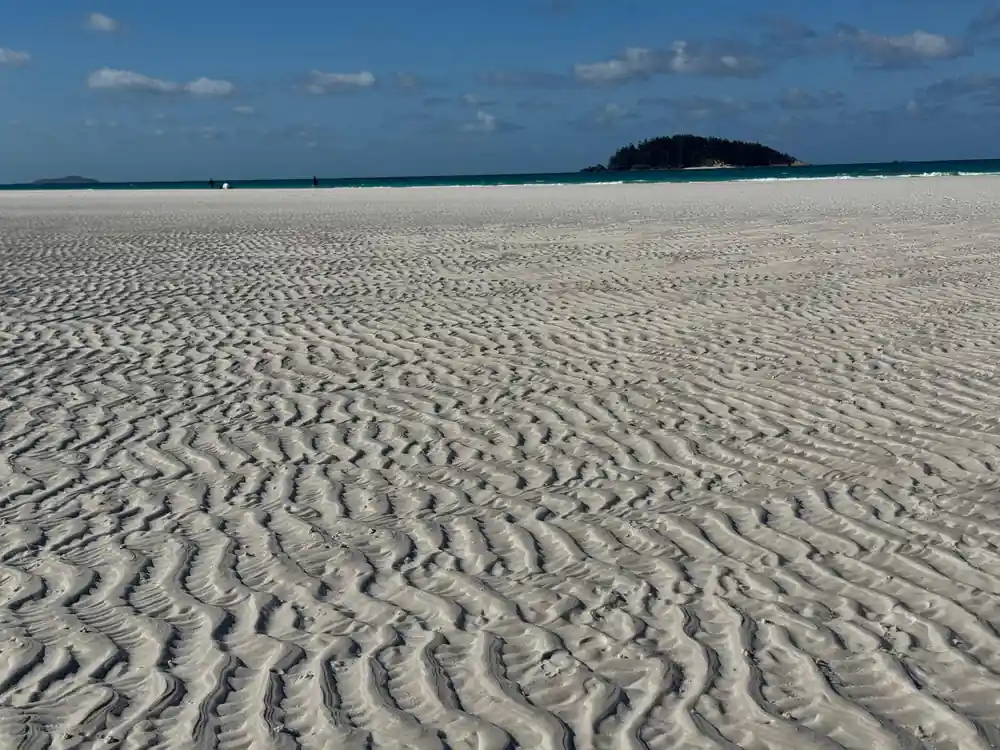
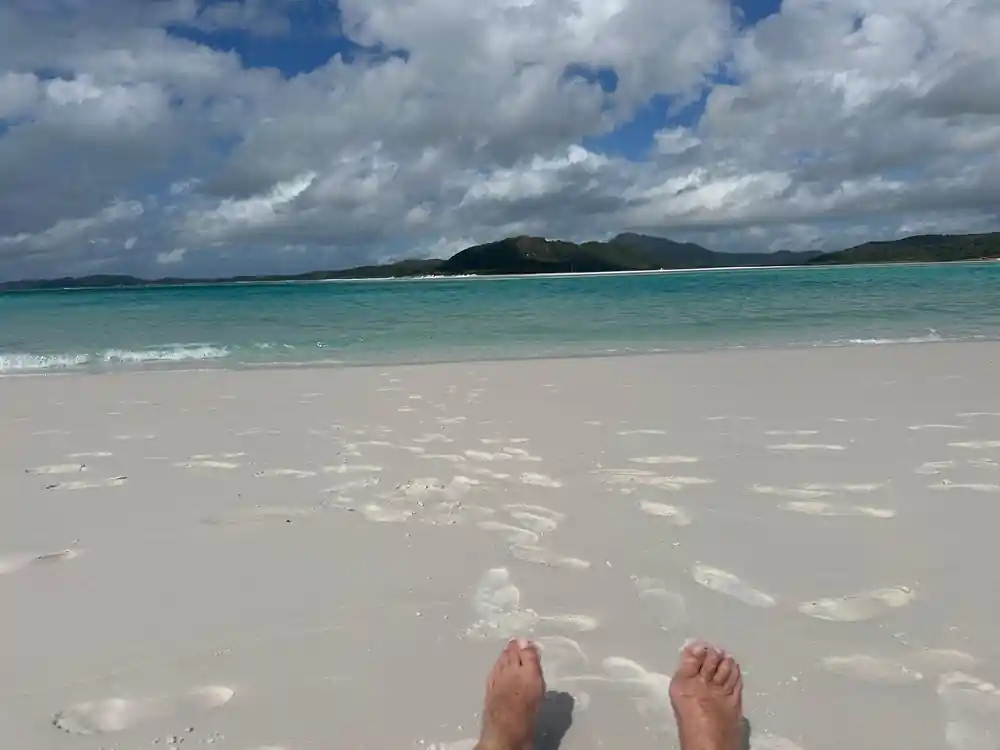
Whitehaven Beach is a little over four miles long, and its sand is 98 percent silica.[1] Silica is the mineral family that includes quartz, and here it arrives as tiny, rounded, almost pure grains rather than the mixed, iron-tinged sand you find on most coasts. That difference is visible from the boat before you land: the beach reads as a bright white ribbon against dark green bush, and the shallow water over it turns a pale, electric turquoise.
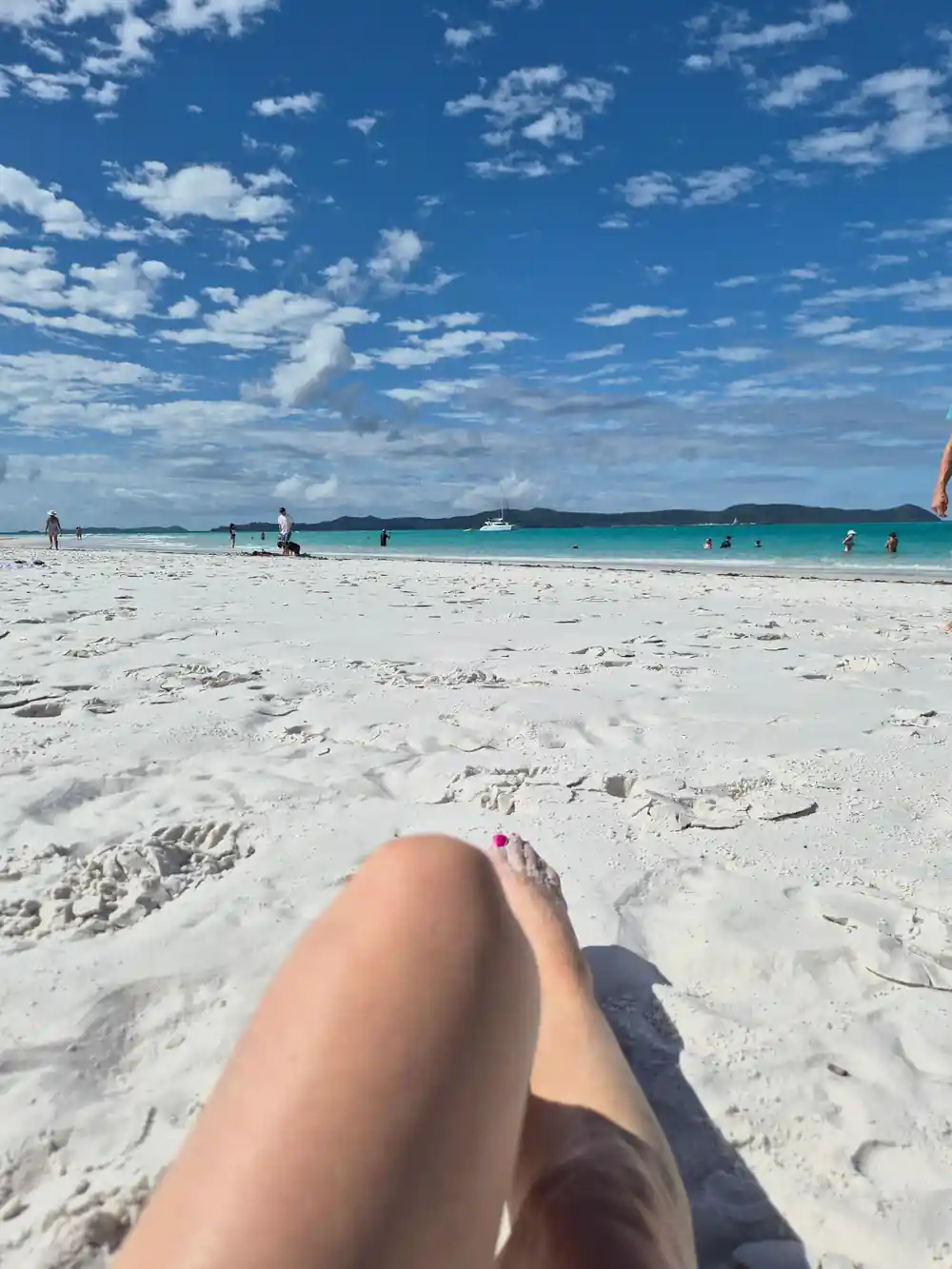
Fine silica grains do not hold heat the way darker mineral sand does, so the surface stays comfortable under bare feet even when the sun is high overhead. It is the quiet trick of the place: it looks scorching and feels cool. Pack sunglasses anyway, because the glare off white sand and flat water is the part most people forget, and on a cloudless day it does not let up.
There is nothing complicated about the geology in practice. Old rock is worn down by weather and water, the hardest grains survive the journey, and tides and currents sort them until the beach is left with a nearly uniform white sand. You do not need any of that to enjoy the place, but it explains why the sand looks and behaves so differently from a typical holiday beach.
Hill Inlet Lookout and the Tidal Swirls
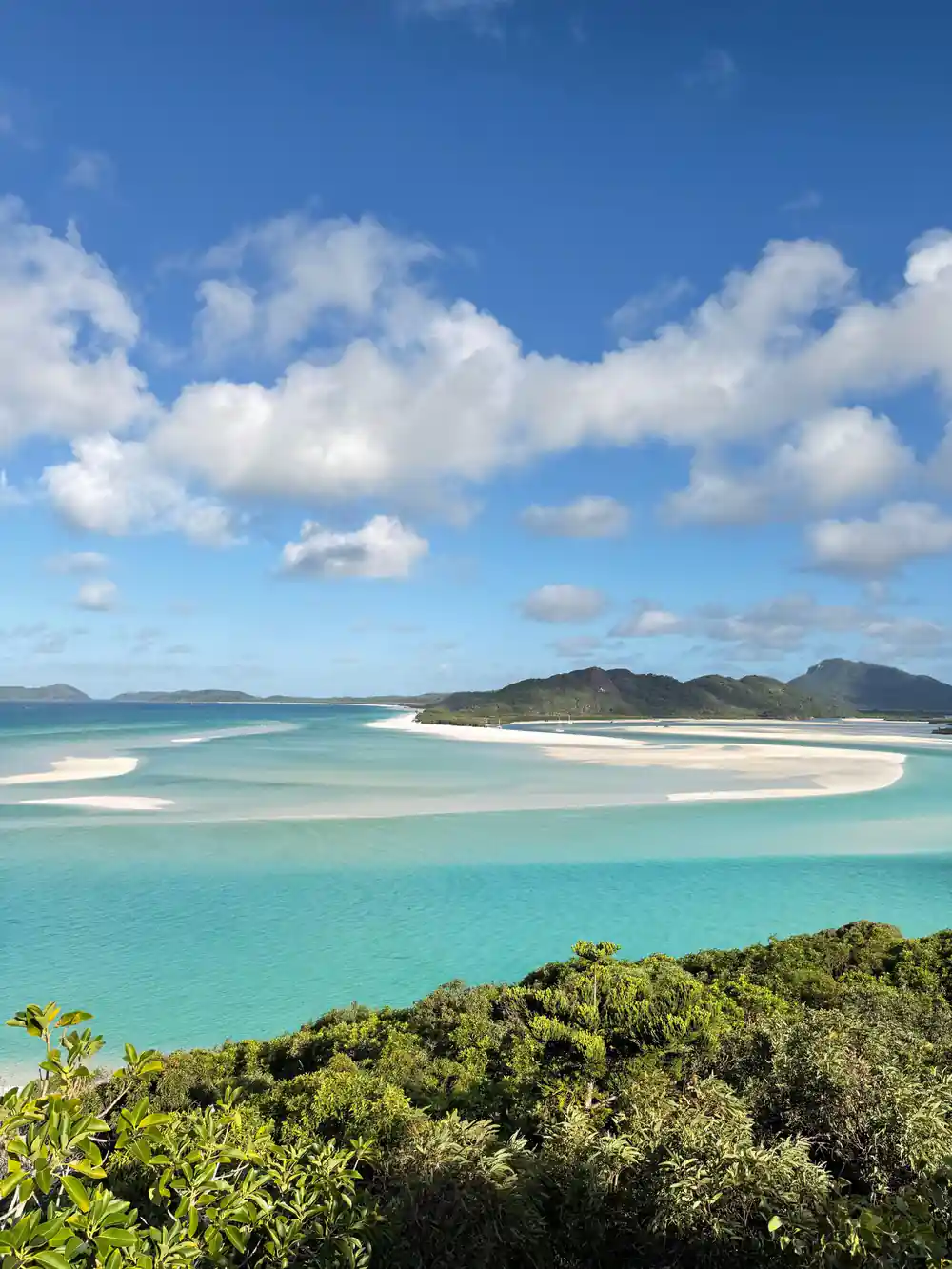
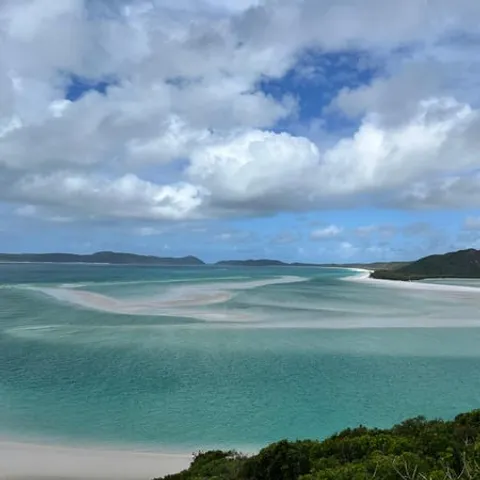
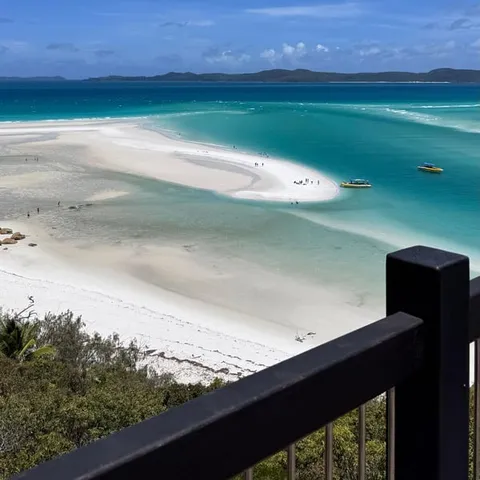
Hill Inlet Lookout is the other half of the Whitehaven story. From above the inlet, swirling sands and turquoise waters form a mesmerising natural phenomenon that changes with the tides, so the pattern below you is never the one the last boatload photographed.[2] Whitehaven Beach and Hill Inlet are usually named in the same breath, and the eco-cruise from Airlie Beach stops at both.[6]
The inlet is a wide, shallow channel where tidal water pushes sand into ribbons, eddies and long pale fingers. At low tide the channels braid across the flats in gold and teal; as the water rises, the pattern smears and reforms. Photographers plan around the tide rather than the clock, and from the lookout you can see the whole sweep of the inlet with the beach running away to the south.
The climb up to the viewpoint is part of the day rather than a separate outing, so keep a little energy in reserve for it and wear shoes with grip. Bring water, expect a few steps, and let yourself stand still for a few minutes once you are up there. The view is the kind that rewards patience more than a quick photo.
The inlet reshapes itself with every tide, so the view is never twice the same.
How Big Is Whitehaven Beach?
The headline fact is easy to remember: a little over four miles of sand, composed of 98 percent silica.[1] That is a long walk in soft, hot ground, and the beach rarely feels busy along most of its length because there is nothing built on it except the bush behind and the water in front.
On a map of the Whitsundays the picture is simple. Whitehaven Beach lies approximately 35 km from Airlie Beach by sea, so the crossing is a proper boat trip rather than a short hop, with the mainland sliding away behind you and the island hills rising ahead.[3] From the water the scale only makes sense: what looks like a short strip from the deck keeps going as the boat tracks along it.
Two airports serve the region daily, Great Barrier Reef Airport on Hamilton Island and Whitsunday Coast Airport at Proserpine, so you can land, sleep, and be on the water the next morning.[4] Keep the two names separate when you plan: the beach is one place and the lookout above the inlet is another, and a good day reaches both.
The Ngaro People, the Islands' First Seafarers
These islands were not empty before tourism found them. The Ngaro were a seafaring tribe who inhabited the Whitsundays Islands and coastal areas stretching from Cape Conway and down as far as the mountains to the east of Proserpine.[12] Their country was water as much as land, and the channels and inlets a day boat uses today were their highways.
Standing on the sand, it is worth holding that in mind. The same sheltered anchorages that make a cruise comfortable made these islands a natural home for people who travelled by canoe and read the tides, and the lookouts above the inlets were useful for reasons that had nothing to do with photographs.
Treat the place as someone's country rather than a backdrop. Stay on the sand, leave the bush and any cultural sites alone, and listen when your crew talks about the history of the islands. The Whitsundays are richer for it, and so is your day.
from US$175
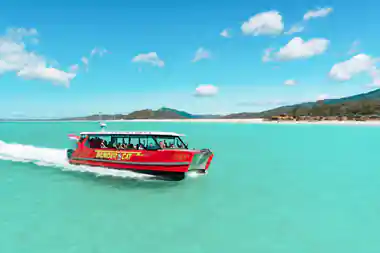
The full-day eco-cruise from Airlie Beach runs 8 hours, includes pickup and stops at Hill Inlet Lookout and Whitehaven Beach.[6]
What You Will and Will Not Find at the Beach
Public toilets are the only facilities at Whitehaven Beach, found up at Hill Inlet Lookout and at the campgrounds near South Whitehaven Beach.[11] That is the whole list. Plan food, water and shade around that, and carry out whatever you carry in.
Camping is possible, and it is a different way to see the place. You can camp overnight on Whitsunday Island at the Whitehaven Beach camping area in Whitsunday Islands National Park, where the sites sit among lowland vine forest and eucalyptus woodland behind the beach and there is a hybrid toilet and picnic tables.[13] You sleep a short walk from the water and wake up before the day boats arrive.
Sand and shells are the beach itself, so photographs travel home better than a jar of white grains. Fill your camera roll, not your pockets, and the beach you came for will still be intact for the next traveller who makes the crossing.
Swimming, Stingers and the Wildlife You May See
At Whitehaven Beach the water is usually calm, warm and clear, which makes it an easy place to swim.[3] There are no stinger nets on the beach itself, and during stinger season, November to April, most tours provide protective suits to swim safely.[3]
Stinger season in the Whitsundays runs from late October until May, so the warm months are the ones to think about.[10] The practical routine is simple: swim where your crew tells you to swim, keep the protective suit on if one is offered, and ask your questions before you get in the water rather than after.
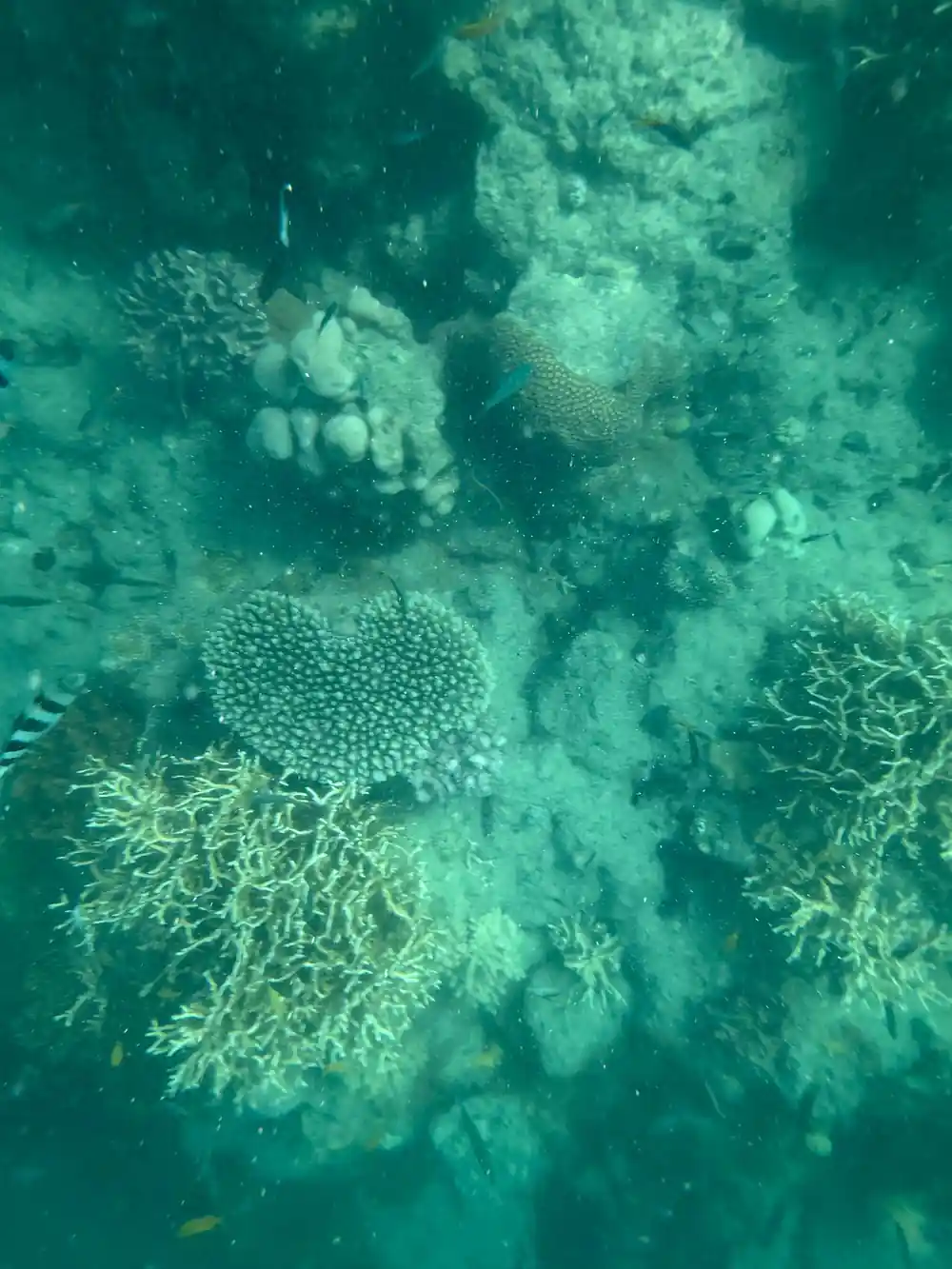
Wildlife makes the day. The Whitsundays has six species of whale and four species of dolphin officially recorded as calling the area home.[14] Sharks share these waters too, and the small reef sharks snorkellers sometimes see are not interested in swimmers; keep your distance, stay with the group, and enjoy the sighting. Snorkelling is part of the appeal as well: across the top of Hook Island there is a series of bays that all offer excellent quality snorkelling with healthy coral and diverse marine life.[15] The full-day eco-cruise includes Hook Island among its stops.[6]
When to Go and What the Eco-Cruise Costs
The dry season between June and October is the best time to visit the Whitsundays, and September is named as the best month of them all.[5] Expect steady breezes, clear water and the kind of light that makes white silica sand look almost too bright to photograph.
Tours run all year. The Airlie Beach: Whitehaven Full-Day Eco-Cruise with Buffet is from US$175, runs 8 hours, has a live tour guide in English, offers pickup, and comes with free cancellation up to 24 hours in advance.[6] Its stops run from 24 pickup location options through a catamaran to Hill Inlet Lookout, Whitehaven Beach and Hook Island, finishing at 24 drop-off locations.[6]
One small extra is worth knowing about. Visitors on most commercial tourism operations in the Great Barrier Reef Marine Park are liable to pay an environmental management charge, which the permit holder collects and remits to the Reef Authority.[16] Beyond that, the day is straightforward: book early, check the tide timing, and turn up with sun protection and a full water bottle.
Whitehaven Beach tours from Airlie Beach
From-prices on GetYourGuide Airlie Beach listings: half-day US$87[9], Snorkel and Hill Inlet US$174[7], full-day eco-cruise US$175[6], Camira sailing US$182[8].
What a Whitehaven day out costs
All amounts are US dollar from-prices as listed. Child rates are not published on these listings, so only adult from-prices are shown.[6][7][8][9]
When to plan your Whitehaven trip
How to plan your beach day
Pick your month
The dry season from June to October is the best window, and September is named as the best month of the year.[5]
Book the eco-cruise
The full-day eco-cruise runs 8 hours from Airlie Beach, with pickup included and free cancellation up to 24 hours in advance.[6]
Pack for sand and sun
Sunglasses, a hat, sunscreen, a towel and shoes with grip. A dry bag for your phone and a light layer for the breeze home.
Time the tide
Hill Inlet changes with the tides, so ask your crew when the lookout stop falls and where the light will be.[2]
Swim smart
Swim where the crew points you, and wear the protective suit if one is offered during stinger season.[3]
Leave no trace
Take photos rather than sand, and keep your rubbish with you until you are back on the mainland.
Ready to see the sand and the swirls for yourself?
from US$176Reserve now & pay later