At a glance
- Hook Island's bays across the top of the island offer excellent quality snorkelling with beautiful healthy coral and diverse marine life.[1]
- Whitehaven Beach is approximately 35 km from Airlie Beach by sea, and fast boat tours generally take 60 to 75 minutes.[2]
- The full-day eco-cruise runs 8 hours, lists Hook Island among its stops, and offers free cancellation up to 24 hours in advance.[3]
- Stinger season in the Whitsundays runs from late October until May, and most tours provide protective suits to swim safely from November to April.[2][4]
- The dry season between June and October is the best time to visit the Whitsundays, and September in particular is the best month.[5]
- Top choice Whitehaven Eco-Cruise from US$175 Duration8 hours[3]Rating4.78 from 3,065 reviews[3]Guide score4.9[3]Free cancellationUp to 24 hours in advance[3] Check availability
- Camira Sailing Adventure from US$182 Duration10 hours[6]Rating4.70 from 1,423 reviews[6]Guide score4.8[6]Free cancellationUp to 2 days in advance[6] See this tour
- Snorkel & Hill Inlet Day from US$174 Duration6.5 hours - 1 day[7]Rating4.84 from 2,331 reviews[7]Guide score4.9[7]Free cancellationUp to 24 hours in advance[7] See this tour
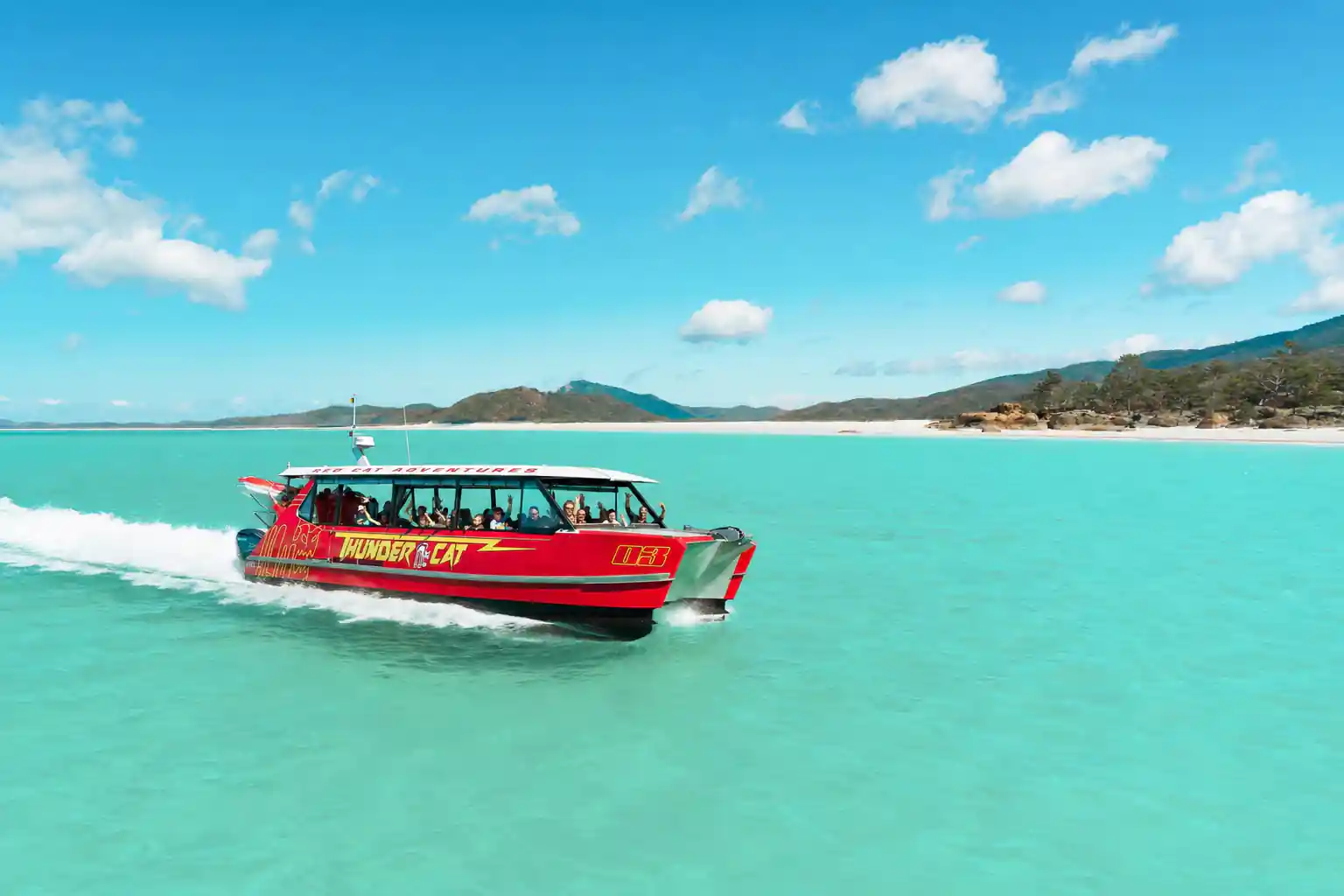
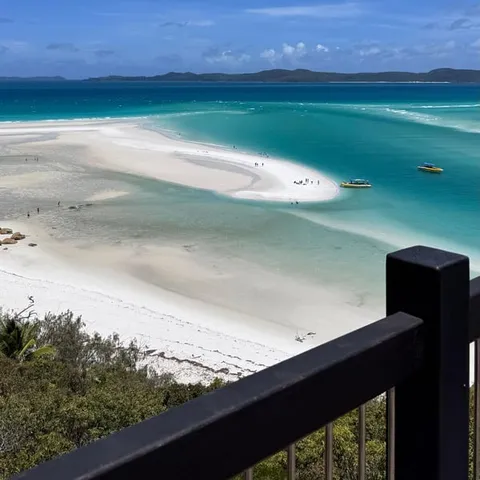
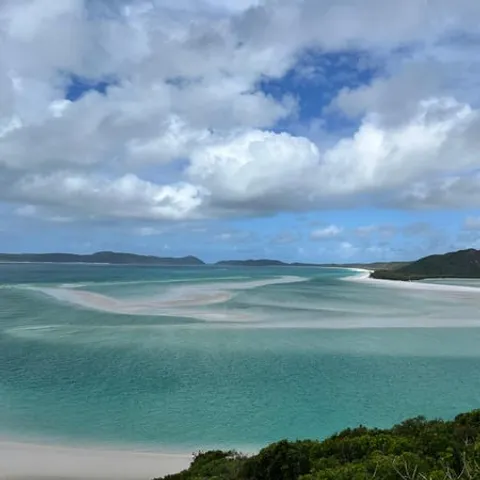
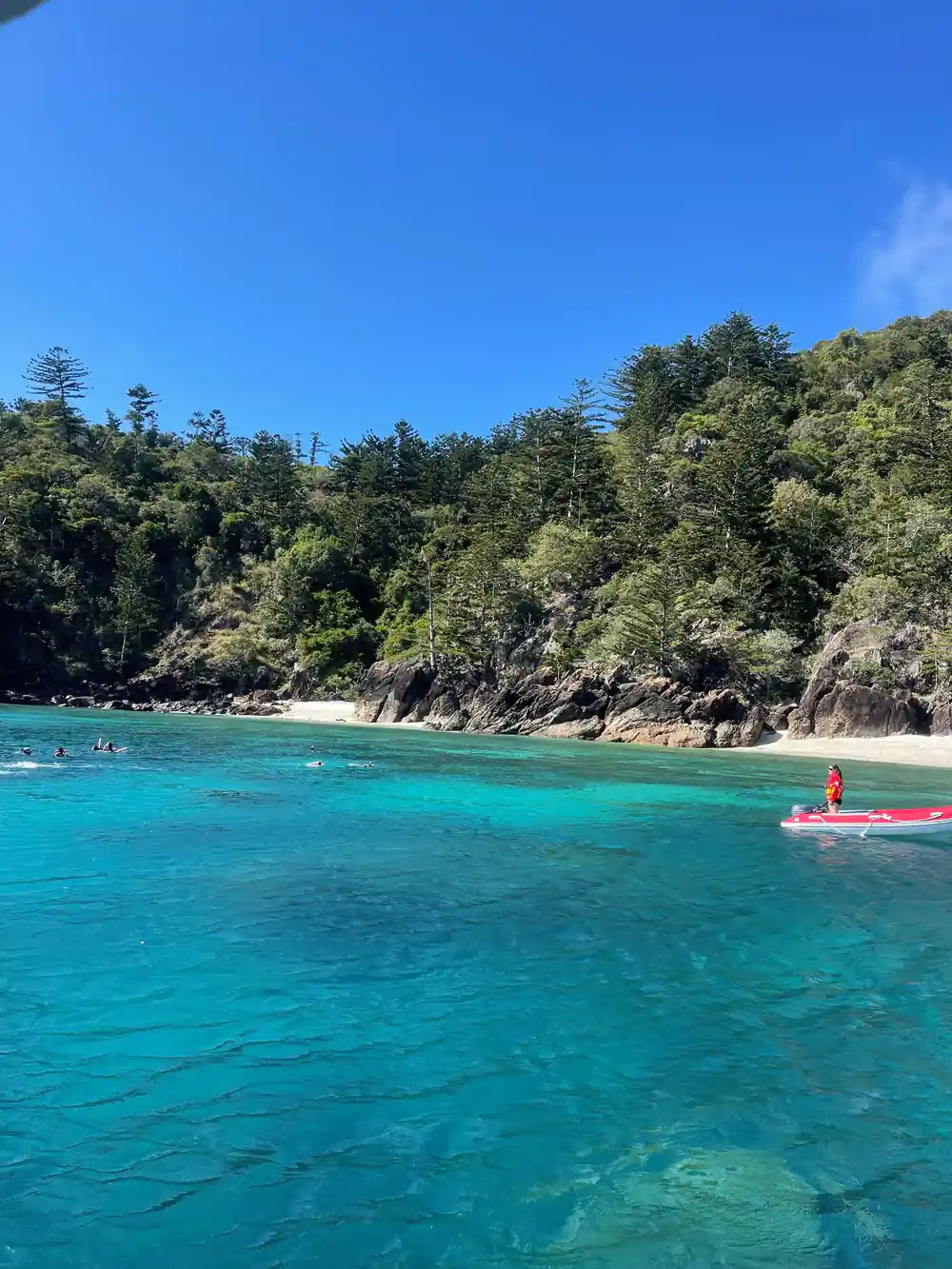
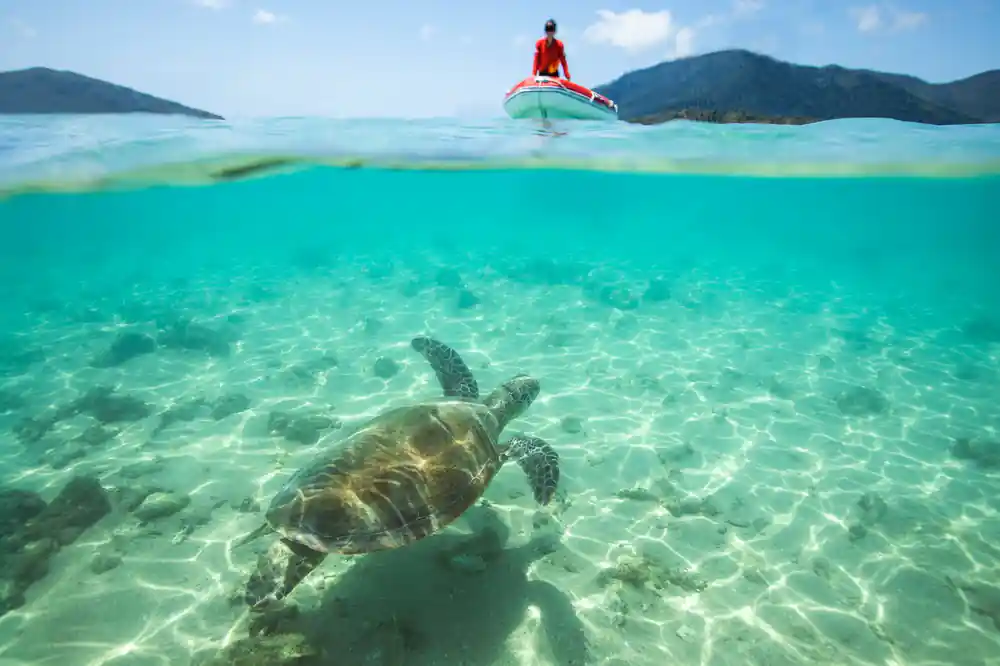
Across the top of Hook Island there is a series of bays that all offer excellent quality snorkelling with beautiful healthy coral and diverse marine life.
Is the Whitehaven eco-cruise the right snorkel day for you?
Getting there and booking
Where the Snorkelling Stops Are
A Whitsundays snorkeling day out of Airlie Beach is rarely a single stop. The islands sit close together, and a good itinerary moves between a lookout, a beach and a sheltered bay where the boat can anchor over coral. The full-day eco-cruise runs a catamaran out from Airlie Beach, calls at Hill Inlet Lookout and Whitehaven Beach, then moves on to Hook Island.[3] That shape matters when you plan your morning: the snorkel stop comes after the walking and the beach time rather than at the start of the day. The boat ride is part of the day out rather than dead time, and a good moment to sort your gear, your sunscreen and your camera.
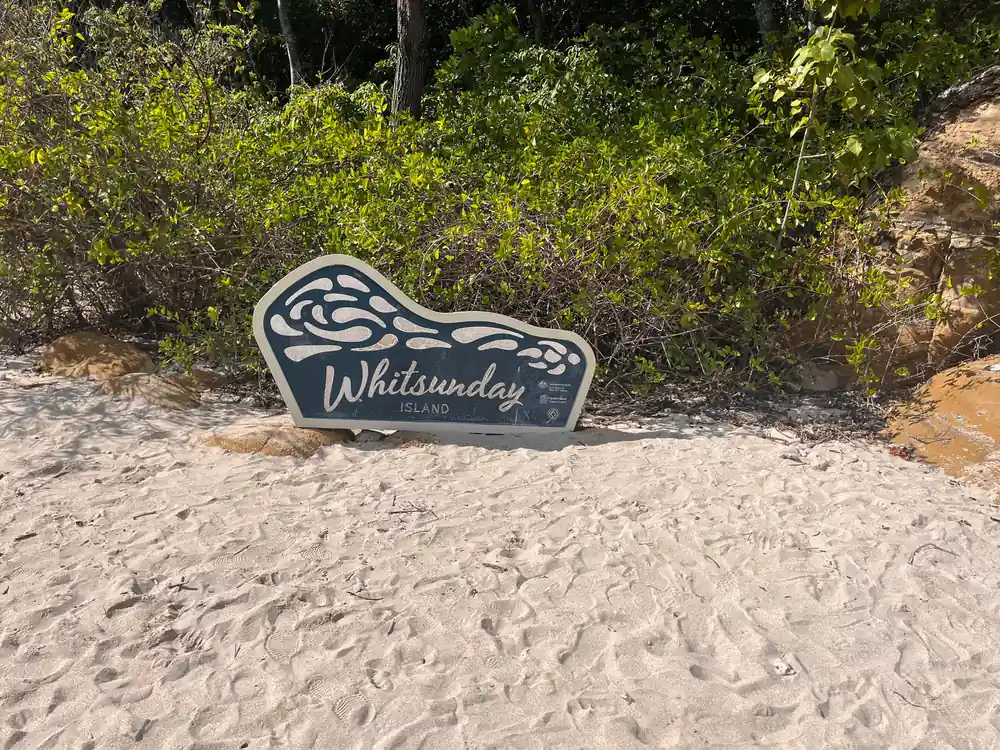
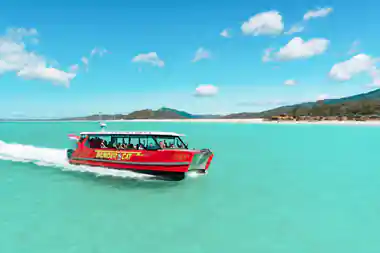
Whitehaven Beach is approximately 35 km from Airlie Beach by sea, and fast boat tours generally take 60 to 75 minutes, depending on the vessel and sea conditions.[2] The crossing is part of the experience. You leave the marina with the town behind you, slide past wooded slopes and quiet anchorages, and get a feel for how exposed the water is that day. The islands sit close together, so the hop across to Hook Island is short, but it is still open water. Sit up on deck if you can; the islands open up ahead and the water changes colour as the bottom shallows. Take a light jacket for the ride out and keep your bag zipped.
Boat trips out to the islands run under park permits, and for most tourism operations, Marine Park visitors participating in a tourist activity are liable to pay the environmental management charge to the permit holder, who remits it to the Reef Authority.[9]
The Main Snorkel Sites: Manta Ray Bay and Luncheon Bay
Across the top of Hook Island there is a series of bays that all offer excellent quality snorkelling with beautiful healthy coral and diverse marine life.[1] Two names come up on snorkelling maps of the island's northern side, Manta Ray Bay and Luncheon Bay. Both sit in the lee of the island, which is what makes them workable on a breezy day, and both have reef close enough to the surface that you can float over it without diving.
This coast has been travelled for a very long time. The Ngaro were a seafaring tribe that inhabited the Whitsundays Islands and coastal areas stretching from Cape Conway and down as far as the mountains to the east of Proserpine.[10] In the water, expect fringing reef in patches and bommies just below the surface, sand channels between them, and small reef fish that gather the moment a boat arrives. Go slowly, keep your fins off the coral and your hands to yourself, and give the fish room to come back around you. Bread and snacks are best left on the boat; reef animals do better on their own food.
If you are here for Whitsundays diving rather than snorkelling, plan that as a separate trip. Dive boats work the outer reef, while an island day like this one keeps you over the shallow fringing reef close to shore, which is plenty for a first look at the corals and the fish that live in them. Non-swimmers can still enjoy the stop from the deck or the shallows near the ladder.
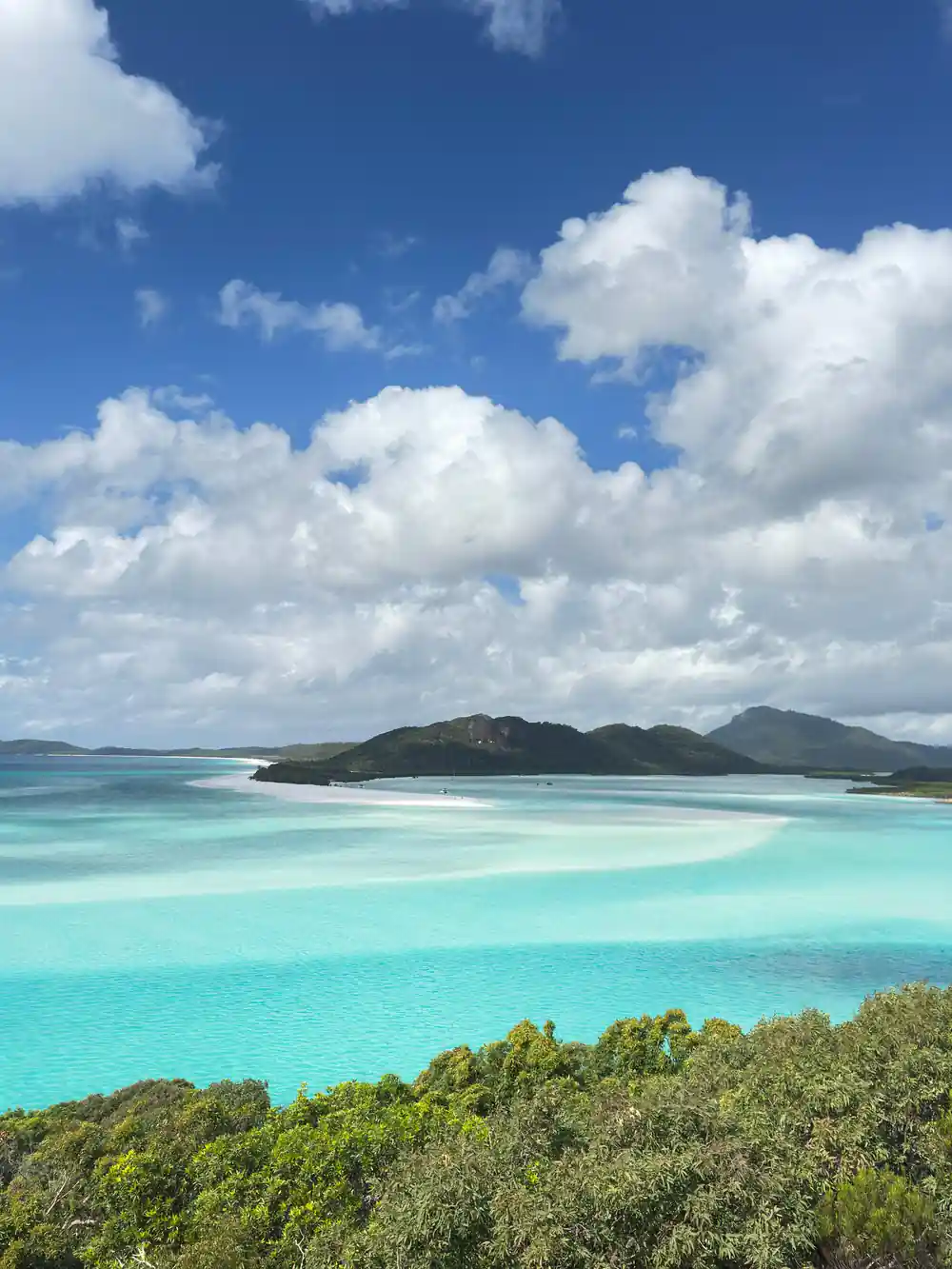
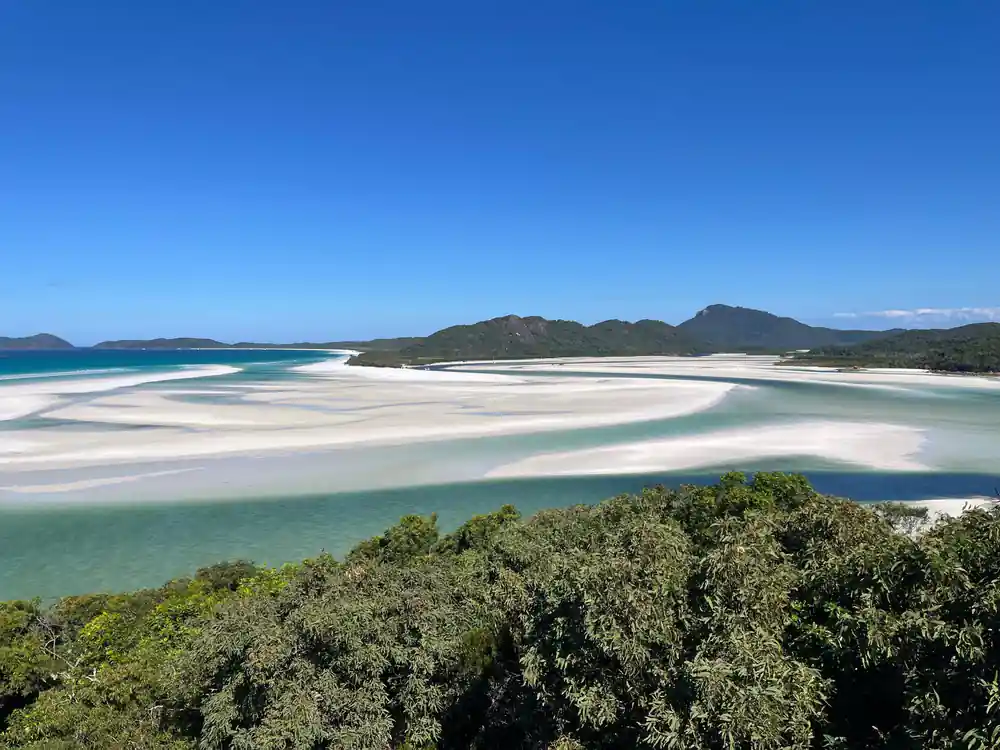
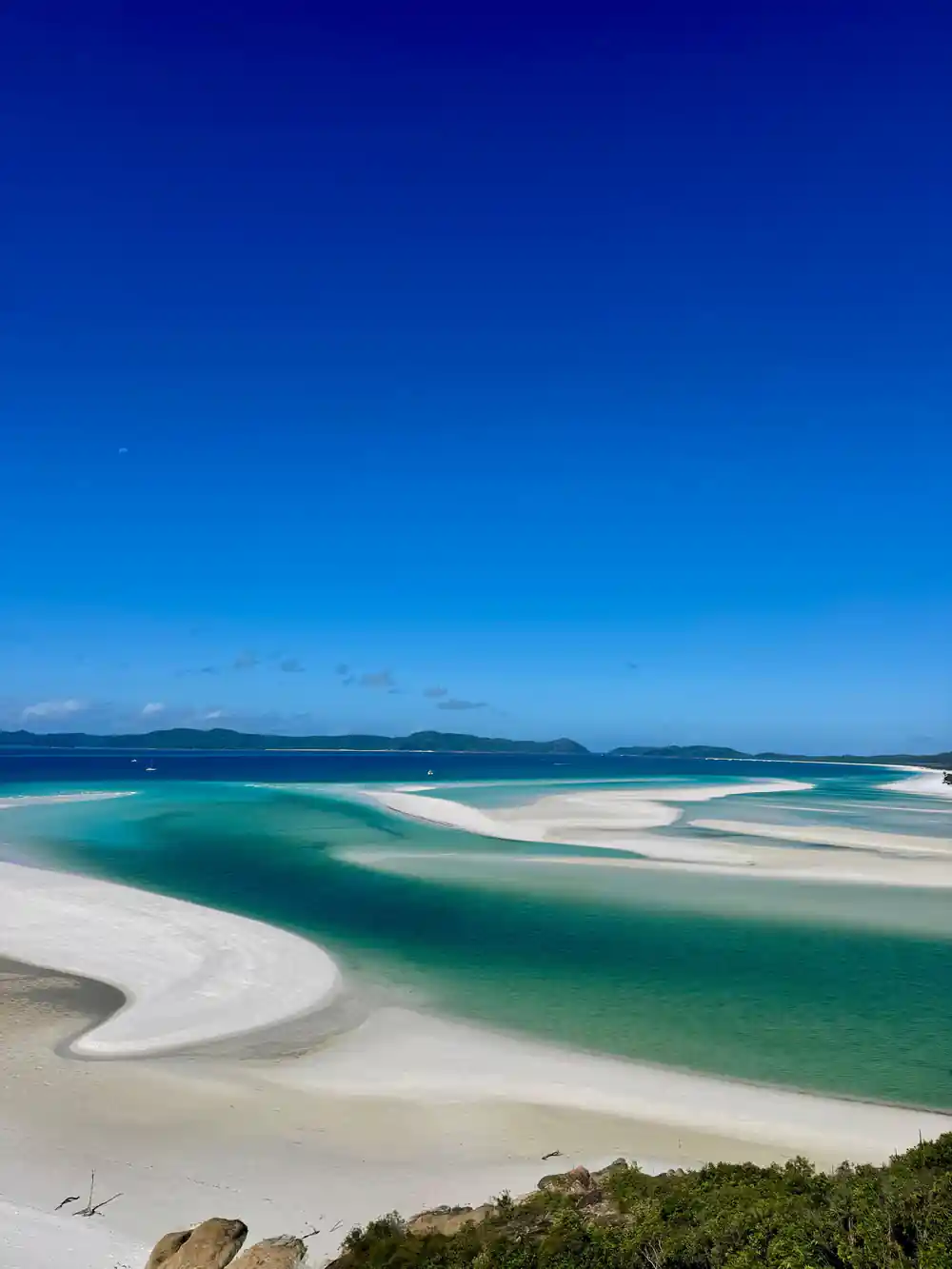
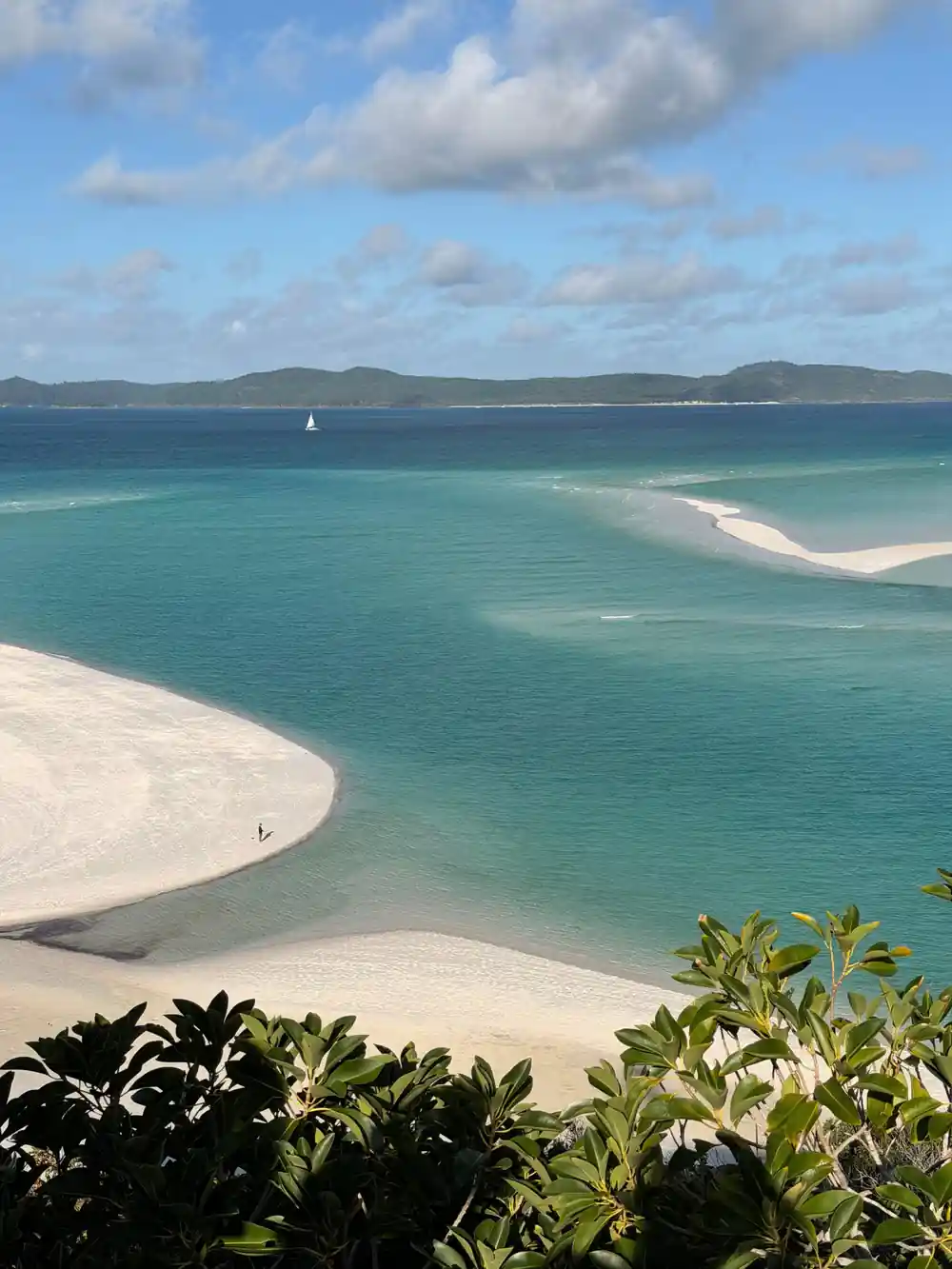
Hill Inlet Lookout, where sand and water redraw the map with every tide.
Why Snorkel Sites Swap on the Day
Hill Inlet Lookout is the classic first call, and it earns its place: swirling sands and turquoise waters form a mesmerising natural phenomenon that changes with the tides.[11] The same tides and wind that redraw the inlet decide which snorkel bays are clear on any given morning. A bay that was glassy yesterday can be stirred up overnight, and one that looks choppy from the boat can be calm once you are tucked behind a headland.
Crews make the call on the day. Ask at the briefing which side of Hook Island they are heading for, and accept that the answer may change before you get there. Good snorkelling depends on light, visibility and shelter, so a move to another bay is usually about finding flatter water rather than shortening the stop. Whichever bay you end up in, you are still snorkelling off a national park island with coral and fish below the boat. Sit back, watch the island slide past, and be ready to get in when the anchor goes down.
Crowd Levels at Popular Bays and How to Dodge Them
Popular snorkel bays fill in waves. Day boats tend to arrive in clusters through the middle of the day, with a quiet stretch earlier in the morning and another once the first groups have turned for home. If your tour gives you room to choose where to swim, getting in early or staying in while others climb back aboard gives you clearer water and more space at the mooring. Small boats can tuck into corners that larger ones cannot, and a smaller group often means a quieter swim.
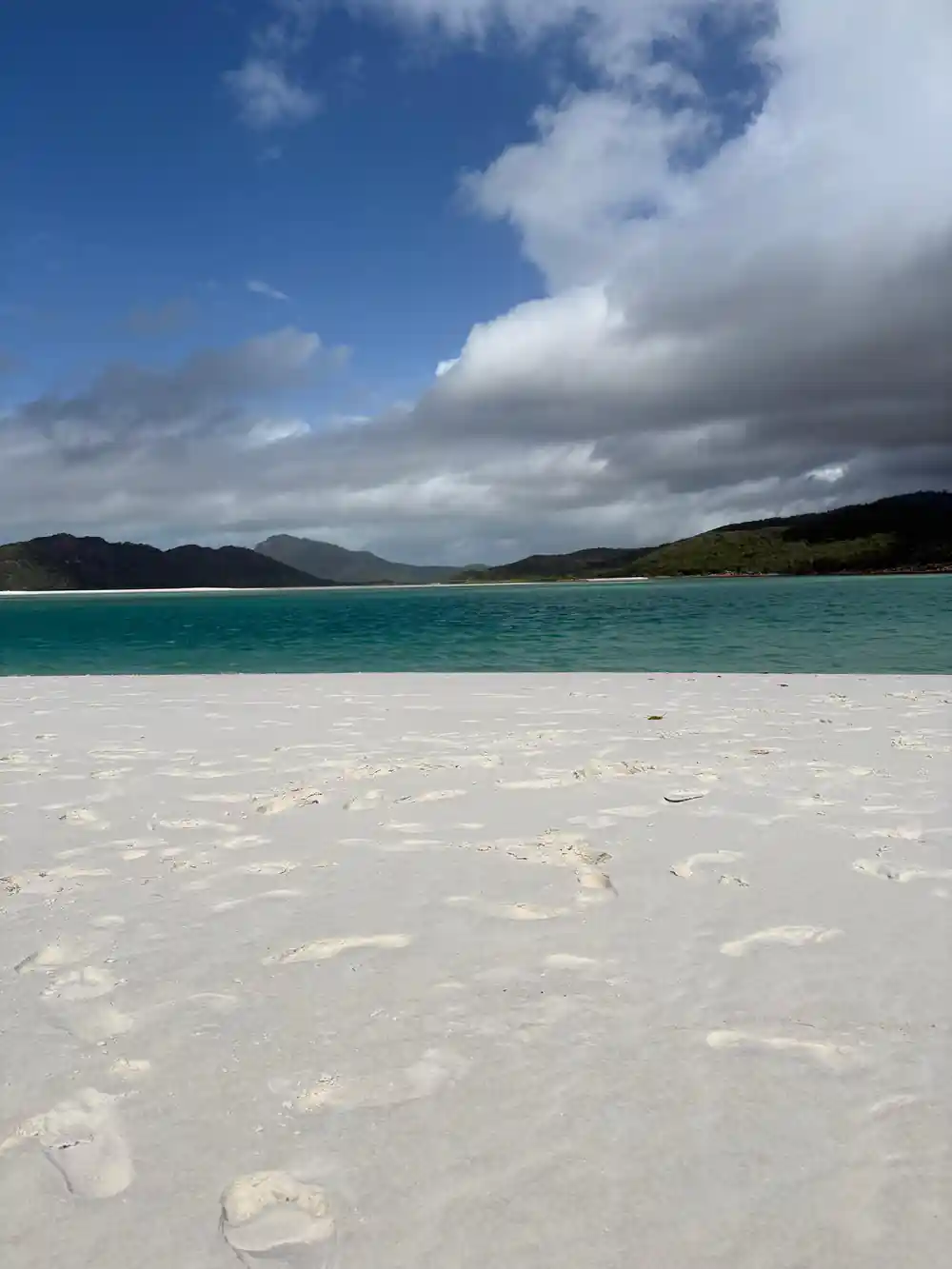
On shore, the only facilities at Whitehaven Beach are the public toilets at Hill Inlet Lookout and the public toilets and picnic tables at the campgrounds near South Whitehaven Beach.[12] Plan around that: carry water, take your rubbish back to the boat, and do not count on shade or a cafe. The dry season between June and October is the best time to visit the Whitsundays, and September in particular is the best month, so book your day early if you are travelling then.[5]
from US$175
The Whitehaven Full-Day Eco-Cruise with Buffet runs 8 hours, is rated 4.78 from 3,065 reviews and lists Hook Island among its stops.[3]
Staying Aboard: Skipping Snorkelling Entirely
You do not have to get wet. On island day trips, plenty of people stay on the boat for the snorkel stop, whether they are not confident swimmers, have small children with them, or simply prefer the view from the deck. The eco-cruise is listed with a buffet, so lunch and shade are on board while others are in the water.[3] Children who are not ready for a mask can still paddle in the shallows or watch the fish from the steps.
If you would rather see the reef without putting your face in it, there are other options out of Airlie Beach. A glass-bottom boat tour runs 1 hour and is listed from US$69.[13] There is a night version as well, an hour long and listed from US$76.[14] Both keep you dry and still put you over coral, which suits anyone who wants the marine life without the mask and fins.
Entry Depths and Water Conditions at Each Site
At Whitehaven Beach the water is usually calm, warm and clear.[2] Entries are simple at the island stops: you step or slide off the back of the boat, or wade in from the sand, and float over reef that sits close to the surface. The depth at these island stops is modest, which is what makes them so good for beginners and families. Keep horizontal, keep your fins away from coral, and come back to the ladder instead of climbing over the side. If you feel the cold quickly, a thin rash vest makes a long session much more comfortable.
Stinger season in the Whitsundays runs from late October until May.[4] During stinger season (November to April), most tours provide protective suits to swim safely.[2] Wearing one over your swimwear is normal here, and it doubles as sun cover on a long day. Whales and dolphins are part of the picture too: six species of whale and four species of dolphin are officially recorded as calling the Whitsundays home.[15]
The Horn and Whistle: How the Snorkel Session Ends
Snorkel sessions end the same way almost everywhere: a shout, a whistle or a change in the engine note, and a slow procession back to the ladder. Crews count heads as people come aboard and again once everyone is settled, so stay where you can be seen and answer to your name. If you are the last one in the water, expect a friendly call and swim back rather than drifting. Give your mask a rinse and hang your gear where it can dry in the sun.
Then it is the run home. The eco-cruise lists 24 pickup location options and 24 drop-off locations, so know your stop before you board in the morning.[3] Dry off, find your shoes, and keep a layer handy for the ride back. Airlie Beach is a short walk from most drop-off points, and after a day of salt water, sand and sun, a plain, unhurried dinner tends to be exactly what you want.
How long the island day trips run
Durations as listed on GetYourGuide for these tours[3][6][16][17][18].
What a day out from Airlie Beach costs
Amounts are US dollar from-prices of GetYourGuide listings[3][6][7][17]. Child from-prices are not listed, so the same figure is shown.
When to go and when to book
How the snorkel day runs
Pickup around Airlie Beach
The cruise lists 24 pickup location options, so find the stop nearest your accommodation and be ready when the driver arrives.[3]
Cross to the islands
The catamaran runs out from Airlie Beach. Whitehaven Beach is approximately 35 km away by sea, and fast boats take 60 to 75 minutes.[2]
Hill Inlet Lookout first
The lookout comes before the beach, and the swirling sands and turquoise waters change with the tides.[11]
Whitehaven Beach time
A little over four miles of 98 percent silica sand, with water that is usually calm, warm and clear.[2][19]
Hook Island snorkel
Bays across the top of Hook Island offer excellent quality snorkelling with healthy coral and diverse marine life.[1]
Back to Airlie Beach
The boat returns to the marina and drops off at the listed locations.[3]
Pick your day and your snorkel stop on Hook Island
from US$176Reserve now & pay later