The short version
- Public toilets at Whitehaven Beach are up at Hill Inlet Lookout and at the campgrounds near South Whitehaven Beach, and nowhere else on the sand.[1]
- You can camp overnight on Whitsunday Island at the Whitehaven Beach camping area, with walk in camp sites behind the beach.[2]
- Whitehaven Beach is a little over four miles long, and its sand is composed of 98 percent silica.[3]
- Whitehaven Beach is approximately 35 km from Airlie Beach by sea, and two airports serve the Whitsundays daily.[4][5]
- Stinger season runs from late October until May, and most tours provide protective suits so you can swim safely.[4][6]
| Hill Inlet Lookout | South Whitehaven camp area | Whitehaven Beach | |
|---|---|---|---|
| Toilets | Public toilets up at the lookout[1] | Public toilets and picnic tables[1] | No toilets on the sand itself[1] |
| Picnic tables | Not one of the facilities here[1] | Picnic tables by the camp sites[1] | None here either[1] |
| Overnight camping | Not a camp site | Walk in camp sites behind the beach[2] | Camp sites sit behind the beach[2] |
| What you see | Swirling sands that shift with the tides[7] | Lowland vine forest and eucalyptus trees[2] | 98 percent silica sand[3] |
The only facilities you will find at Whitehaven Beach are public toilets up at Hill Inlet Lookout and public toilets and picnic tables at the campgrounds near South Whitehaven Beach.
The rules that matter on Whitehaven's sand
Before you sail
On the island
- Toilets are at Hill Inlet Lookout and the campgrounds near South Whitehaven Beach.[1]
- Wear the stinger suit if you swim between late October and May.[6]
- Keep music low, give other groups space and follow the signs at the landing.
- Leave the sand, shells and coral where you find them and carry your rubbish out.
Toilets at Whitehaven Beach: Where to Find Them
The honest answer to the Whitehaven Beach toilets question is that they are not on the famous stretch of sand. The only facilities you will find at Whitehaven Beach are public toilets up at Hill Inlet Lookout and public toilets and picnic tables at the campgrounds near South Whitehaven Beach.[1] Everything else for the day travels with you: water, food, sun cream and a bag for your own rubbish. On a day cruise the boat is your base, so build the toilet stop into the day rather than leaving it to chance, and use the block when the walk takes you past it.
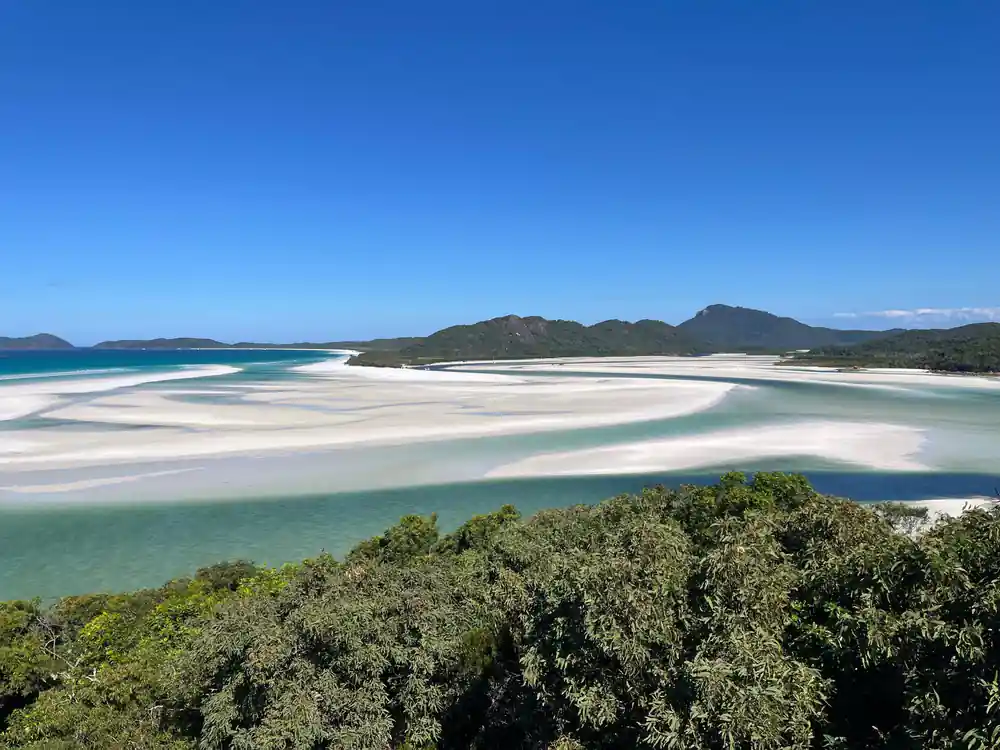
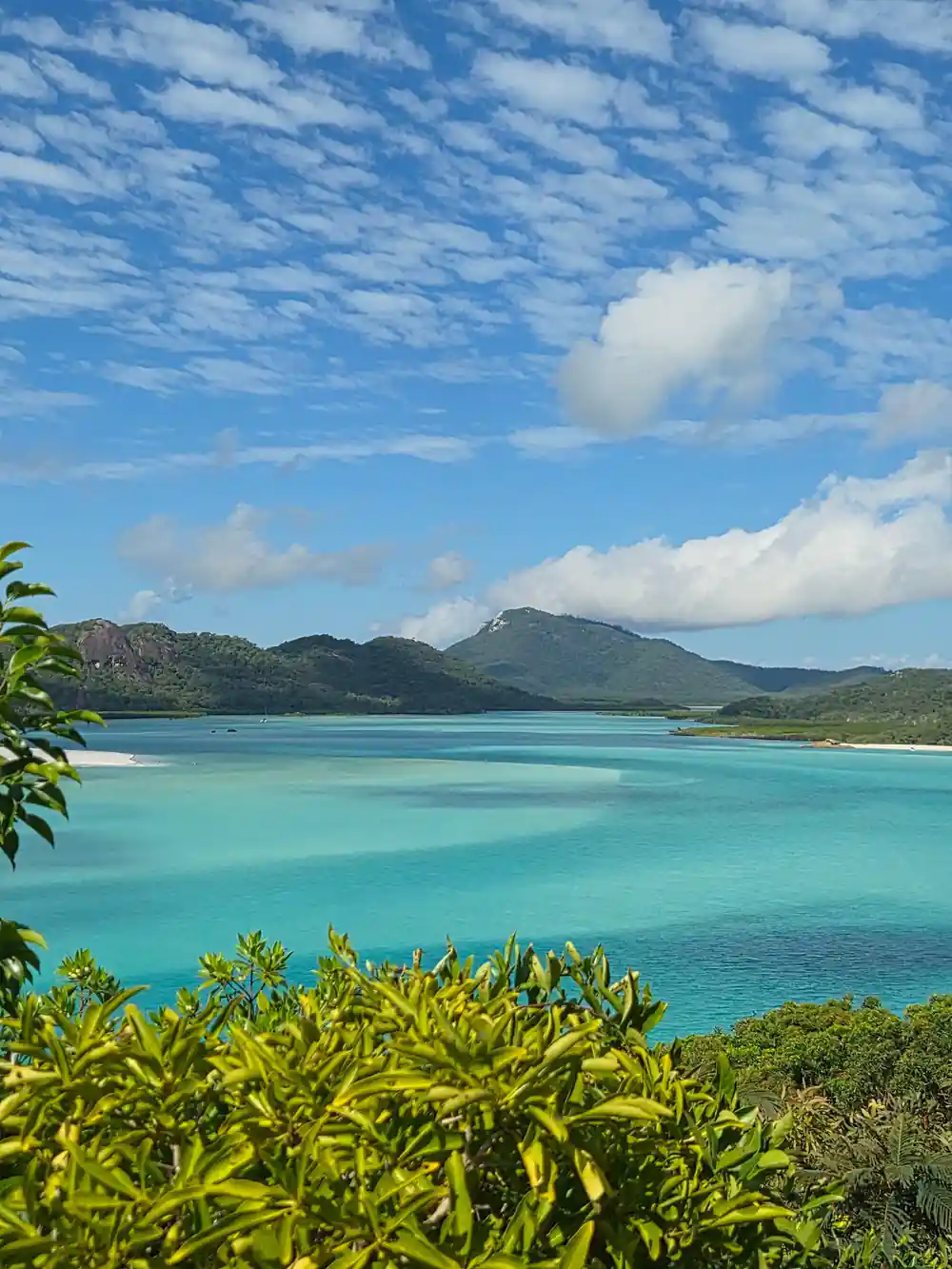
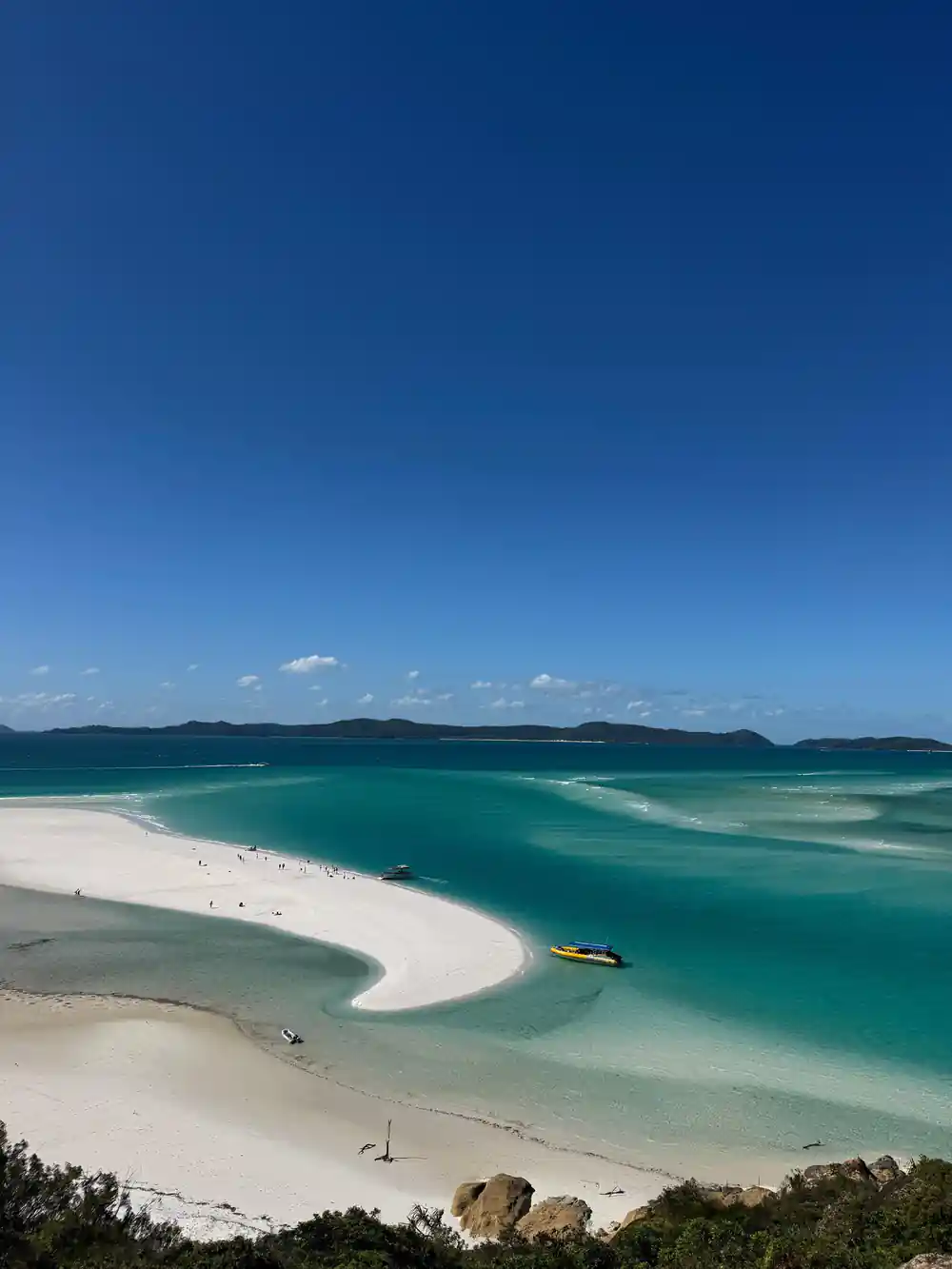
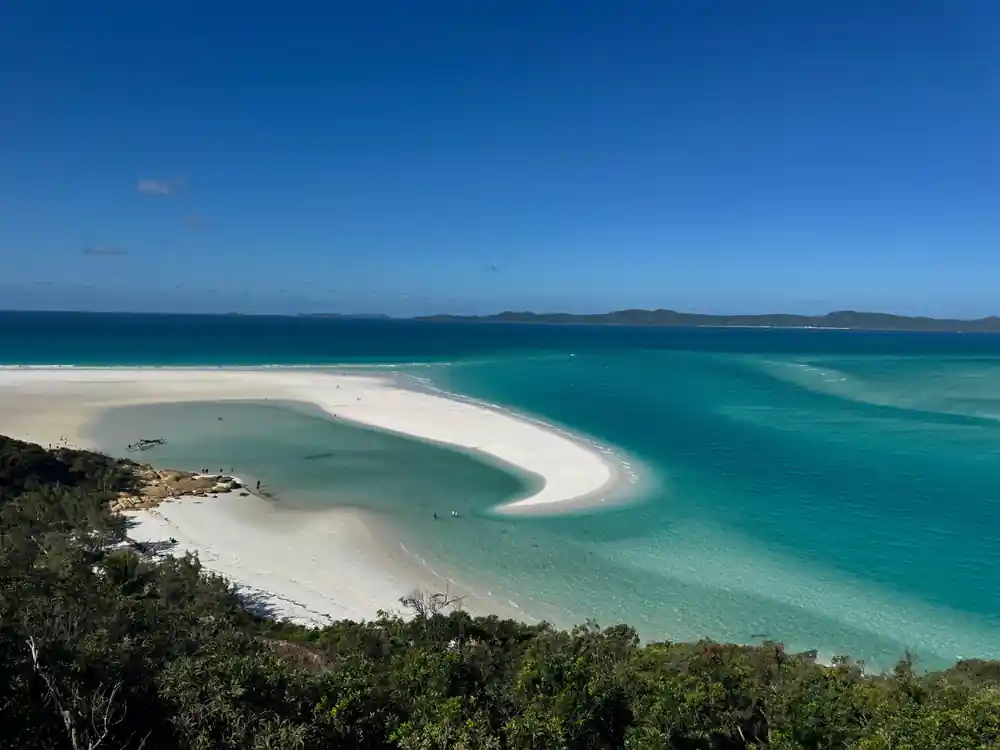
Hill Inlet Lookout is the must see stop above the beach, where swirling sands and turquoise waters form a mesmerising natural phenomenon that changes with the tides.[7] The toilet block sits with that view, so a comfort stop doubles as the best photograph of the day. Expect a bush walk rather than pavement, wear shoes you can actually walk in, and take your chance when your guide offers it. Once the group is back down on the sand there is nothing there but beach, bush and water.
Can You Camp on Whitehaven Beach?
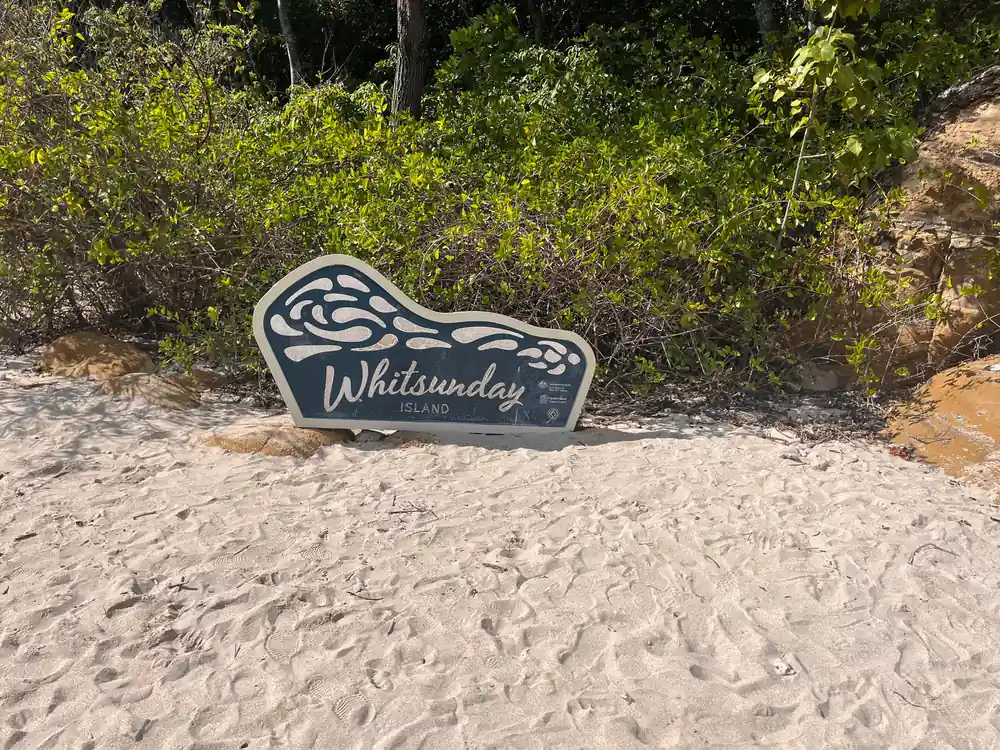
Yes. You can camp overnight on Whitsunday Island at the Whitehaven Beach camping area in Whitsunday Islands National Park.[2] The camp sites are nestled among lowland vine forest and eucalyptus woodland behind the beach, and the camping area is suitable for walk in camping.[2] Facilities include a hybrid toilet and picnic tables.[2] So the shape of the night is a quiet patch of island behind the sand, reached on foot with everything on your back, and a morning that day trippers on the first boat never see.
Walk in camping means planning like a hiker rather than a hotel guest. Carry your own water, food that keeps, a sleeping set up that suits the season, and a bag strong enough to take every scrap of rubbish back off the island with you. Check the Queensland national parks booking service for current rules, fees and closures before you commit, and ask your boat operator where walk in campers are dropped off on the day you travel. The Whitsundays is national park country, so the less you leave behind, the better the next camper's night.
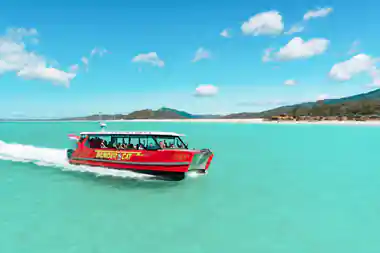
A red speedboat cuts across the turquoise channel on the way to Whitehaven's silica sand.
Silica Sand, Shells and Coral: Hands Off
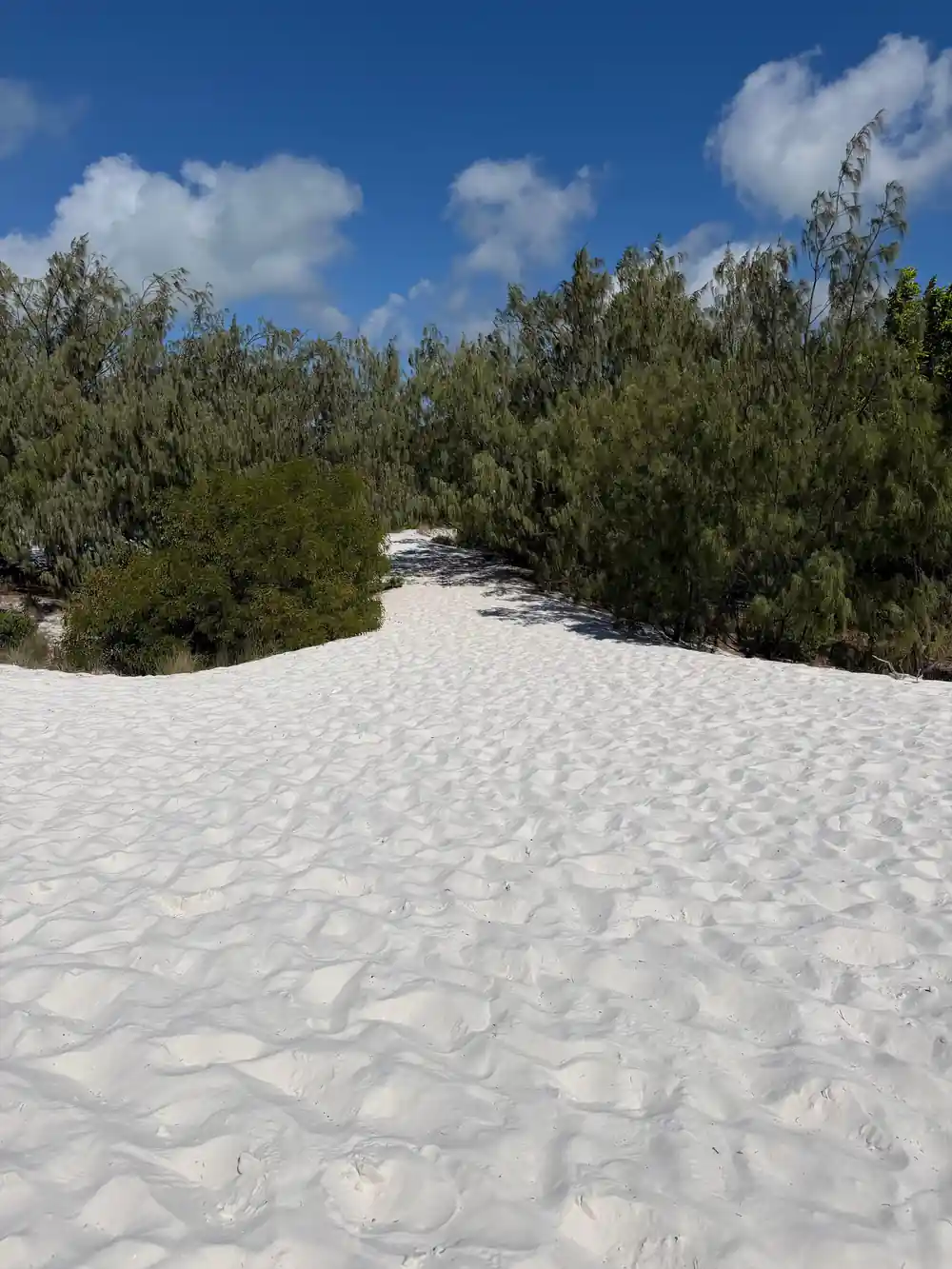
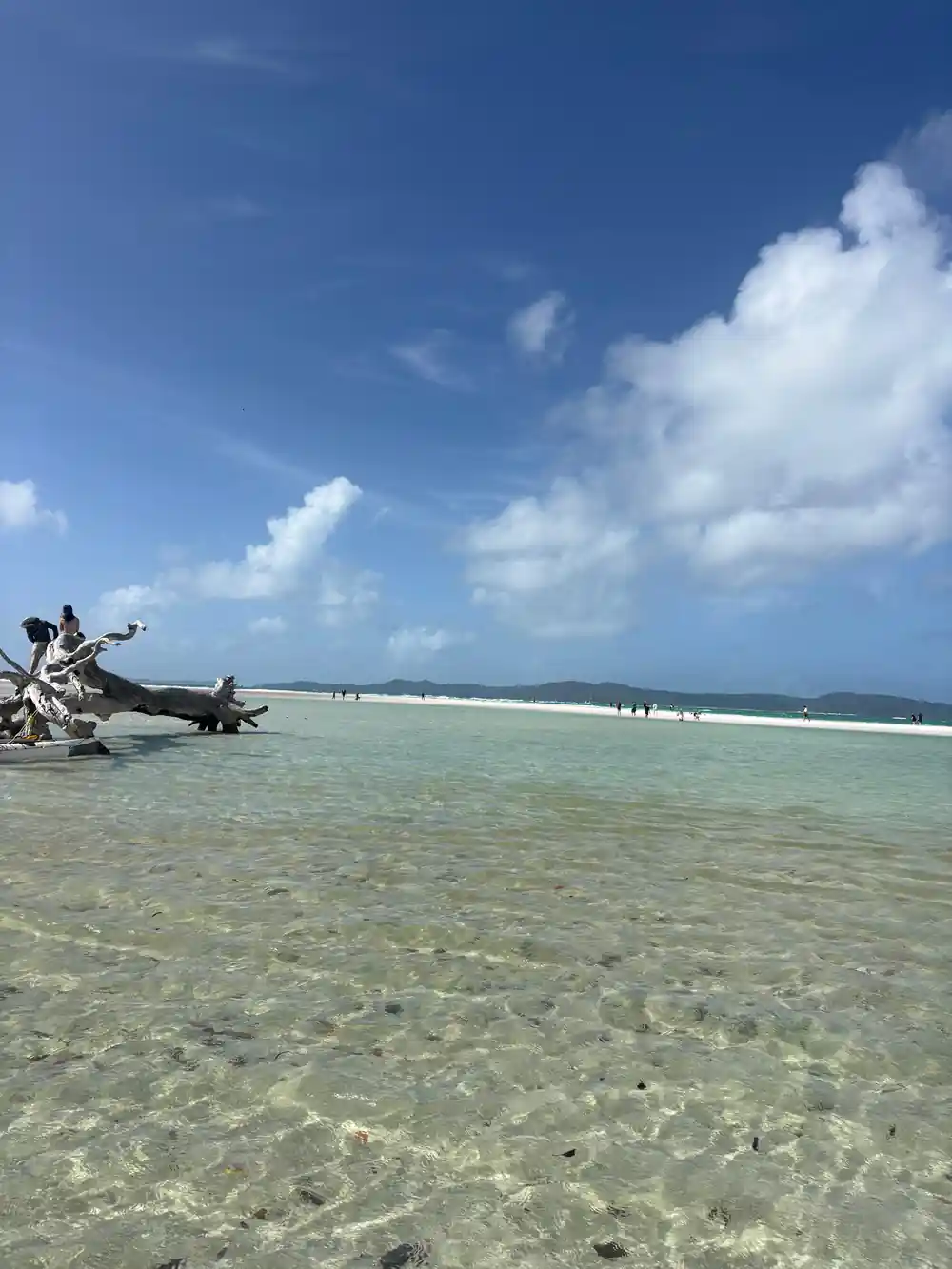
Whitehaven's sand is the reason people cross the world to see it. A little over four miles long, the beach is composed of 98 percent silica sand.[3] It squeaks underfoot, stays cool enough to walk on in the middle of the day, and rinses off skin and towels far more easily than ordinary beach sand. The etiquette is simple. Enjoy it with your feet, your camera and your towel, and leave the grains where the tide put them.
Shells, coral fragments and driftwood look like souvenirs, but they are the beach's structure and the island's habitat. Take photographs instead. If you are snorkelling or swimming, keep your hands off the coral, keep your fins up and away from it, and give turtles, rays and reef fish room to move off on their own. The Whitsundays has six species of whale and four species of dolphin officially recorded as calling the area home, and the same courtesy applies on the surface: watch, do not chase.[10]
If you want to sleep out here, the camp site behind the beach is the place for it, and everything else on the sand is scenery. Treat the beach the way you would a friend's living room. Take nothing, leave nothing, and the next boatload of visitors gets exactly the sand and the water you did.
Pack It In, Pack It Out
With public toilets up at Hill Inlet Lookout and public toilets and picnic tables at the campgrounds near South Whitehaven Beach as the only facilities on the beach, everything else is yours to manage.[1] Bring a bag for your rubbish and use it for the small things: wrappers, bottle tops, fruit peel, wet wipes, hair ties. Food scraps attract birds and goannas, and a goanna that learns to raid day bags becomes a problem for every group that comes after yours.
Drinks are best sorted with your operator before you sail. Ask what you may bring on board, whether anything is poured for you during the day, and whether glass is a sensible idea on a boat and a beach where everyone is barefoot. Whatever you carry onto the island, carry back off it, bottles and cans included. There are no bins on the sand, so an untouched looking beach depends on every visitor carrying their own rubbish home.
from US$175
The full-day eco-cruise with buffet is the tour booked from here, with pickup from 24 locations and free cancellation 24 hours ahead.[8]
Walking Paths, Lookouts and Staying on Track
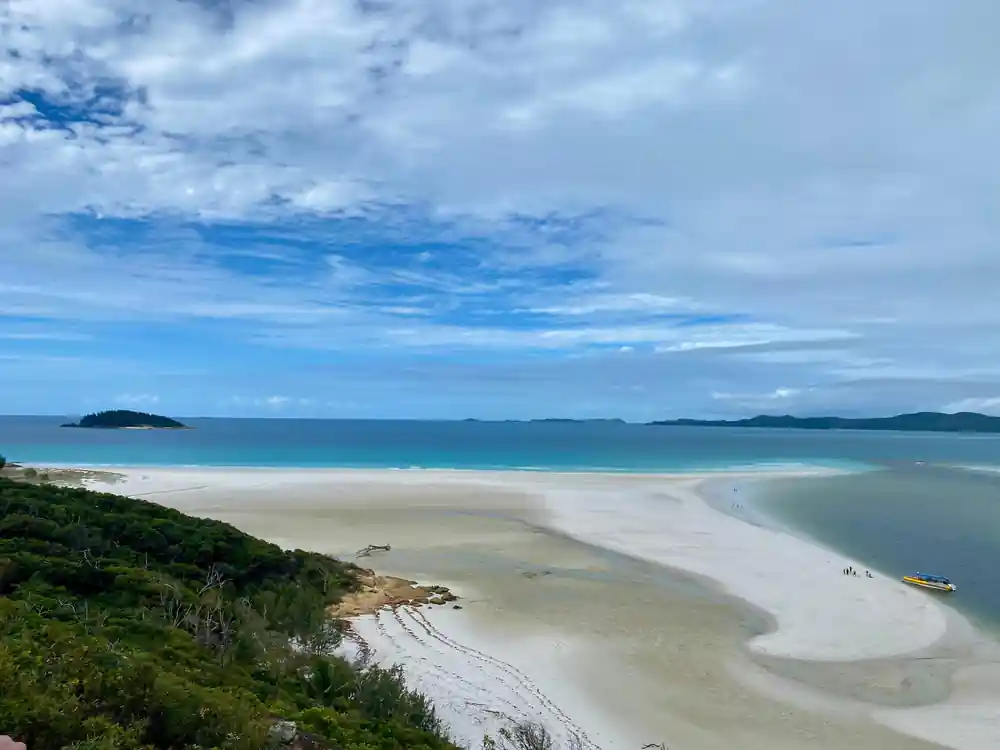
Whitehaven Beach is approximately 35 km from Airlie Beach by sea, so the day starts with a crossing and the walking comes later.[4] At Hill Inlet, the track from the landing to the lookout climbs through bush to a platform above the water. It pays to keep to the track and the boardwalk rather than cutting across the vegetated slopes, which are fragile and slow to recover, and to wear closed shoes rather than thongs.
Check the signs at the landing and follow your guide's route. Park notices on the day are the ones that matter, and areas of the national park do close from time to time for nesting birds, cultural sites or rehabilitation work. If you are walking without a guide, tell someone where you are going, carry water, and plan to be back before the heat builds. There are no shops or drinking water taps on the island, so pack more than you think you need.
Swimming, Stingers and the Reef
The water at Whitehaven is usually calm, warm and remarkably clear, which is exactly why people swim here.[4] Stinger season in the Whitsundays runs from late October until May, and during those months most tours provide protective suits to swim safely.[4][6] Ask what your boat provides before you book, and if a suit is handed to you, wear it properly rather than peeling the hood back for a photograph. Suits cover you from neck to ankle, so get the fit right and keep the hood up.
Stick to the area your crew marks out, watch the tide, and stay with the group rather than swimming off alone because the water looks glassy. Snorkelling around the island's reef edges rewards patience. Across the top of Hook Island there is a series of bays that all offer excellent quality snorkelling with beautiful healthy coral and diverse marine life.[11] Float, breathe slowly, and let the fish come to you rather than finning after them.
Drones, Dogs and Sharing the Island
Two questions come up constantly, and both are best answered by the people who manage the place. Drone rules in national parks and over the marine park change, so check current conditions with the park authority and your operator before you pack one. Whether Whitehaven Beach is dog friendly belongs in the same conversation: this is national park island country reached by boat, so arrange pet care at your Airlie Beach accommodation rather than planning to bring a dog across on the day boat.
The rest is ordinary courtesy. The Ngaro were a seafaring tribe that inhabited the Whitsundays Islands and coastal areas stretching from Cape Conway and down as far as the mountains to the east of Proserpine, and this is country with deep cultural meaning.[12] Keep music low, give other groups room on the sand and at the lookout, and remember that sound travels on an open beach. The reef has its own housekeeping, too: for most tourism operations, Marine Park visitors taking part in a tourist activity are liable to pay the environmental management charge to the permit holder, who then remits it to the Reef Authority.[9]
Hours on the water, by tour
From-prices for a Whitehaven day
Per person US dollar from-prices as listed on GetYourGuide.[8][13][15][16] The listings show no separate child rate, so the child column repeats the adult from-price.
When to plan your Whitehaven day
Your day on Whitehaven
Book and check your pickup
The eco-cruise lists 24 pickup locations, and free cancellation runs up to 24 hours in advance.[8]
Pack light and reef friendly
Water, a hat, sun cream, a towel, a dry bag and a bag for your own rubbish. There is nowhere on the beach to buy anything.
Use the lookout stop
Public toilets sit up at Hill Inlet Lookout and at the campgrounds near South Whitehaven Beach.[1]
Swim as the crew advises
Wear the stinger suit if one is offered, stay inside the marked area and keep your hands off the coral.
Leave only footprints
Take bottles, wrappers, food scraps and shells back to the boat and off the island with you.
Make your Whitehaven day easy with the full-day eco-cruise
from US$176Reserve now & pay later