At a glance
- Swimmers, a quick-dry towel, a rash shirt, a brimmed hat and a small dry bag cover almost everything a Whitehaven day asks of you.
- Stinger season in the Whitsundays runs from late October until May, and most tours provide protective suits during stinger season (November to April).[1][2]
- Reef-safe sunscreen, a lip balm and sunglasses earn their place on a boat day, and reapplying after every swim matters more than the brand you buy.
- One pair of shoes for the water and one dry pair with grip is the simplest plan for beaches, reef walks and the sandy track up to the lookout.
- The Whitehaven Full-Day Eco-Cruise with Buffet runs 8 hours, with pickup included and free cancellation up to 24 hours in advance.[3]
- Top choice Whitehaven Eco-Cruise from US$175 Duration8 hours[3]Rating4.78 from 3,065 reviews[3]Free cancellationUp to 24 hours in advance[3]Route highlightsHill Inlet, Whitehaven and Hook Island Check availability
- Full-Day Camira Sail from US$182 Duration10 hours[4]Rating4.70 from 1,423 reviews[4]Free cancellationUp to 2 days in advance[4]Route highlightsWhitehaven Beach and Hill Inlet Lookout See this tour
- Snorkel and Hill Inlet from US$174 Duration6.5 hours - 1 day[5]Rating4.84 from 2,331 reviews[5]Free cancellationUp to 24 hours in advance[5]Route highlightsSnorkelling, Hill Inlet and Whitehaven See this tour
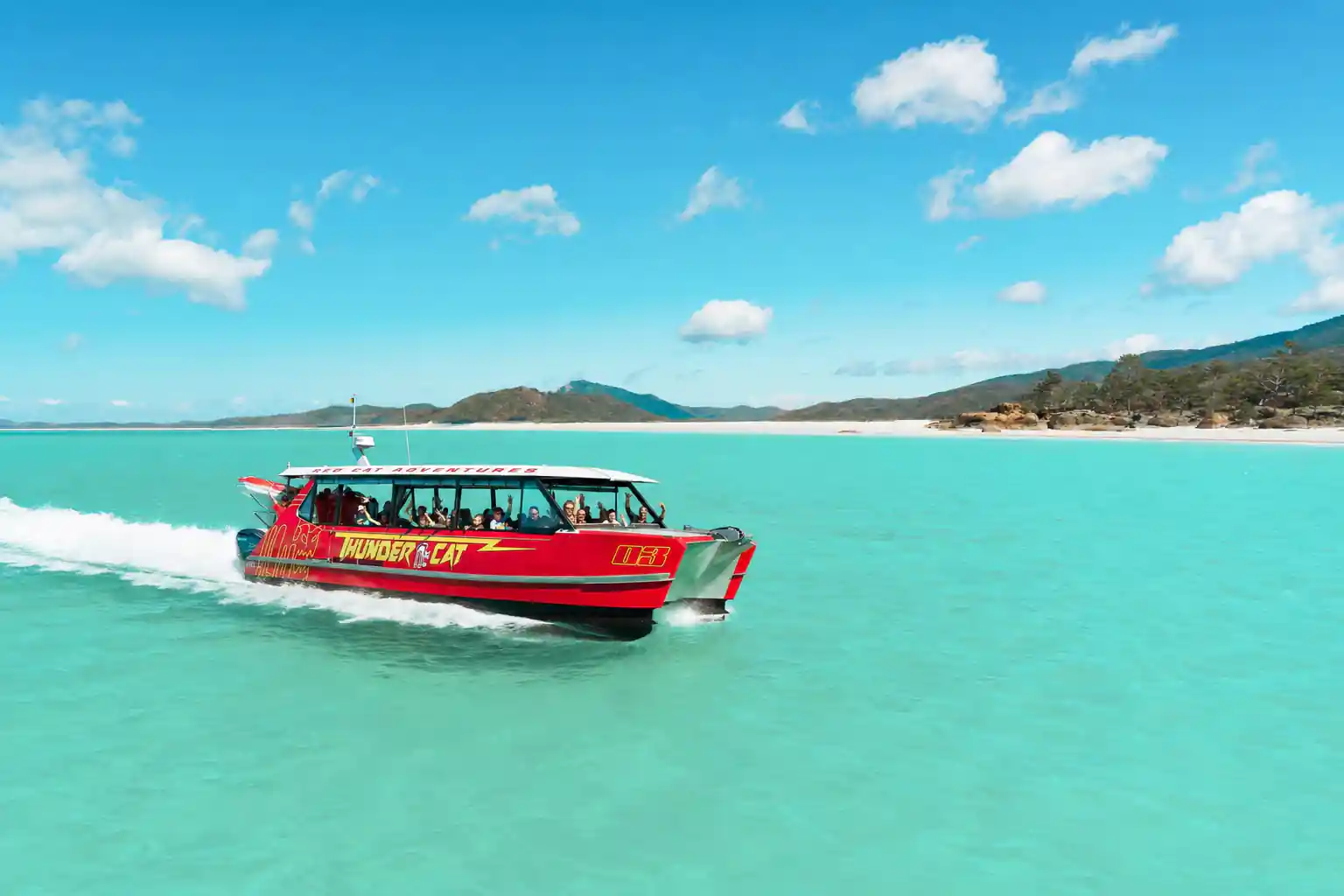
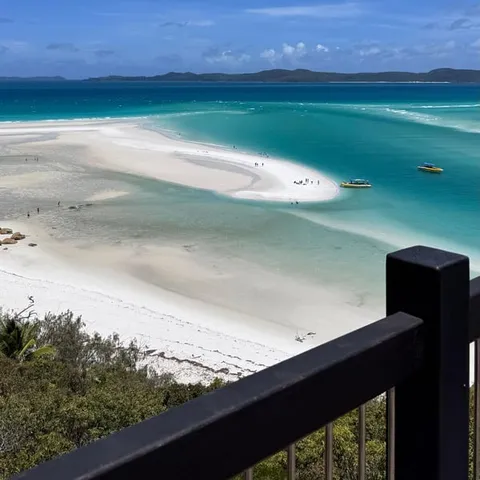
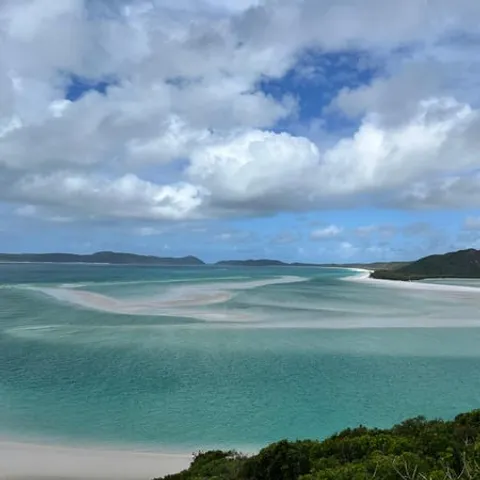
Stinger season in the Whitsundays runs during the warmer months of the Australian year, from late October until May.
Pack it once, enjoy the whole day
In your day bag
- Reef-safe sunscreen, a lip balm and sunglasses with a strap
- Swimmers, a quick-dry towel and one spare dry shirt
- A long-sleeve rash shirt to snorkel in and wear home
- A small dry bag for your phone, keys and cards
Before you leave Airlie Beach
- Your pickup point and time, confirmed the day before you travel
- The booking reference and the name the booking is under
- A wide hat with a chin strap for the wind on deck
- A warm layer for the shaded run back to the marina
The day bag: swimmers, towel, rash shirt
A day out at Whitehaven is one long sunlit stretch with a few short bursts of activity, and the bag that works is small, soft and water friendly. Swimmers go on under your clothes before you leave Airlie Beach, a quick-dry towel sits at the top of the bag, and one dry shirt waits for the ride home. Add a light long-sleeve rash shirt for snorkelling, a wide hat with a chin strap, sunglasses you can tie on, and a refillable water bottle. That is genuinely the whole kit. A soft bag also squashes into a locker or under a seat far more easily than a rigid one.
Cruise Whitsundays what to bring advice usually starts with swimmers and a towel, and that is still the honest core of it. The rest is comfort. The Whitehaven Full-Day Eco-Cruise with Buffet runs 8 hours, with pickup included and 24 pickup location options listed.[3] Pack something you can carry up a ramp, along a pontoon and down a beach yourself.
There are no shops at Whitehaven. The only facilities at Whitehaven Beach are public toilets at Hill Inlet Lookout and public toilets and picnic tables at the campgrounds near South Whitehaven Beach.[6] Anything you want mid-trip, from snacks to a spare towel to a dry pair of shorts, has to travel out with you from Airlie Beach. A small bottle of fresh water for rinsing sand off your feet is a nice extra.
Stinger suits, wetsuits and what crews hand out
Stinger season in the Whitsundays runs from late October until May.[1] At Whitehaven Beach the water is usually calm, warm and clear, and during stinger season (November to April) most tours provide protective suits to swim safely.[2] In practice you step into a stinger suit or a light wetsuit on board, wear your swimmers underneath, and snorkel with your skin covered. If you feel the cold badly, ask about a thicker suit before you leave the marina.
Suits are deliberately tight at the neck, wrists and ankles, warm in the water and cooler in the wind when you climb back out. Bring a rash shirt to wear underneath, both for comfort and to keep your own clothing out of the sun. Leave your own wetsuit at home unless you feel the cold badly, and rinse everything in fresh water at the end of the day before it goes back in the bag.
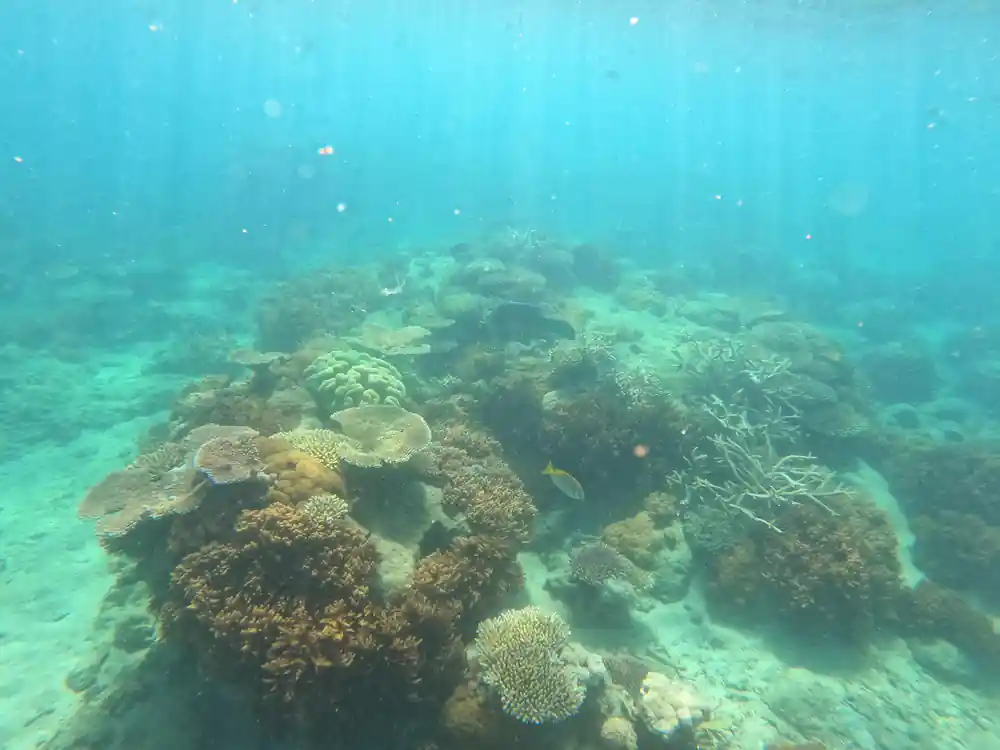
Snorkelling at Hook Island happens at a series of bays across the top of the island that offer excellent quality snorkelling with healthy coral and diverse marine life.[7] Coral is alive and sharp, so float with your fins up rather than standing on it, keep your hands to yourself, and take nothing off the reef but photographs.
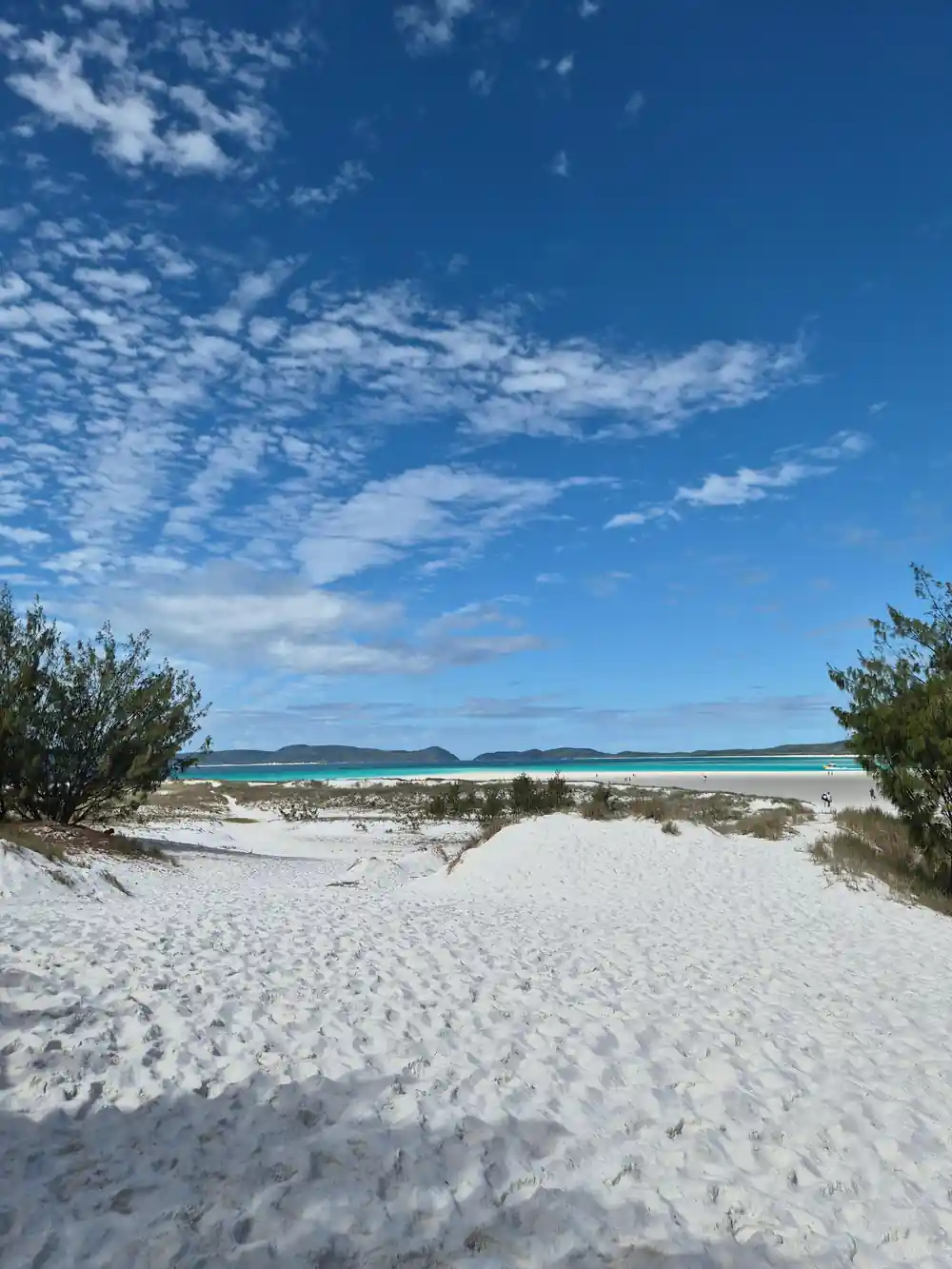
White sand, shallow turquoise water and a day that runs at boat speed.
Sun protection: Airlie UV, reef-safe sunscreen, shade
Airlie UV is the part most first-timers underestimate. You spend the day on the water, on bright sand and in the open, and shade on a boat runs out quickly once everyone wants it. Pack reef-safe sunscreen, a lip balm, a wide hat with a chin strap and a long-sleeve rash shirt, then reapply after every swim rather than once at breakfast. Sun on the water is not the same as sun on a city street, and it reflects off every surface around you.
Whitsundays UV does not care that you are on holiday, and it does not stop at the boat. Whitehaven Beach is a little over four miles long, and its sand is composed of 98 percent silica.[8] Sand that pale and water that bright are the surfaces that send light back at your face, which is worth remembering when you decide between a cap and a brim.
Reef-safe and mineral formulas are the sensible choice on any trip that puts you in a marine park, and a small tube in your pocket is worth more than a big one left in the bag. Apply before you board, reapply across shoulders, ears and the backs of your knees, and remember that a long-sleeve top blocks more than any cream can. A hat that covers your ears is worth more than a stylish one that does not.
Keeping your phone, cards and keys dry
A dry bag is the single most useful thing in your day pack. Phones, keys, cards, a spare shirt and your towel all fit in a small one, and it floats if it goes over the side. If you would rather not buy one, a couple of zip-lock bags inside a drawstring bag will get you through the crossing. Choose one with a shoulder strap and a roll top rather than a zip you have to fight with wet hands.
Think about how you will carry a phone on the beach and on the lookout track. A lanyard or a small crossbody pouch keeps both hands free for the ladder, the ramp and the handrail, and it means you are not putting a phone down on wet sand to take a photograph. Salt water and sand work their way into charging ports, so keep phones bagged on the boat and rinse the outside of the bag later.
A card covers most things in Airlie Beach, and a little cash is handy for a coffee on the way to the marina or a cold drink afterwards. Do not leave valuables loose in a beach bag on the sand, and do not trust a waterproof pouch you have never tested. A quick check with a tissue and a sink at home saves a phone.
from US$175
The eco-cruise is the tour booked from this site, rated 4.78 from 3,065 reviews and running 8 hours.[3]
Footwear for lookouts, beaches and reef walks
You need two kinds of shoe and no more: something you can wear in the water, and something dry with grip. Old trainers or reef shoes handle the shallow wade at the beach, while thongs or sandals are fine for the deck and the sand. Keep the dry pair in a bag so you can change once you are back on the boat. If you plan to walk the lookout track barefoot, think again, because hot sand and buried roots make for slow going.
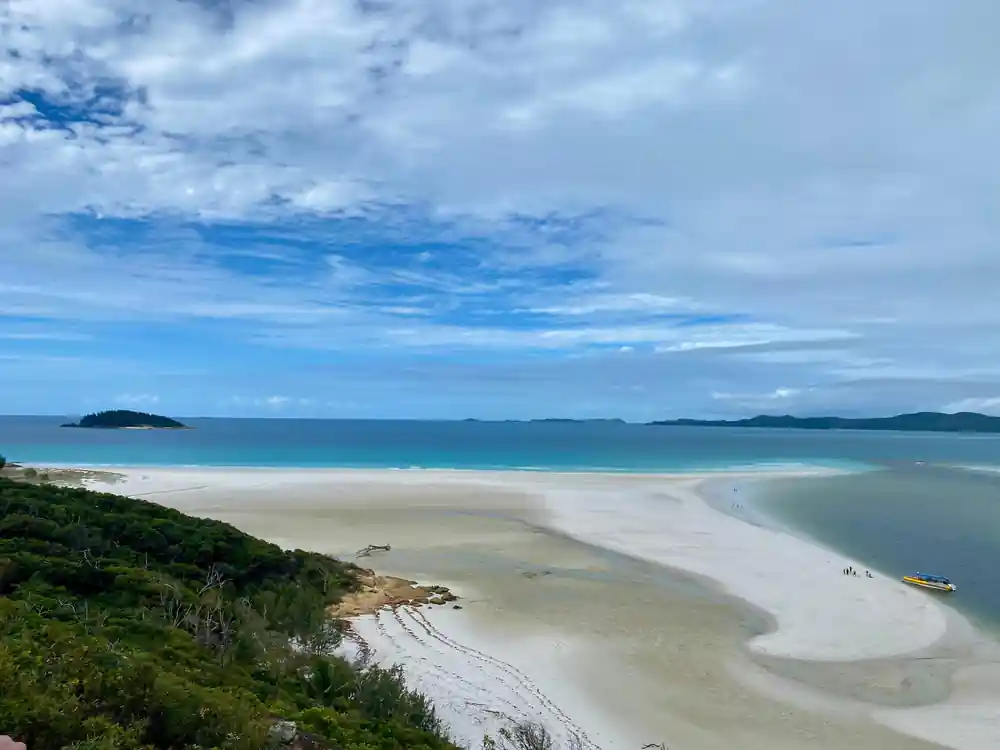
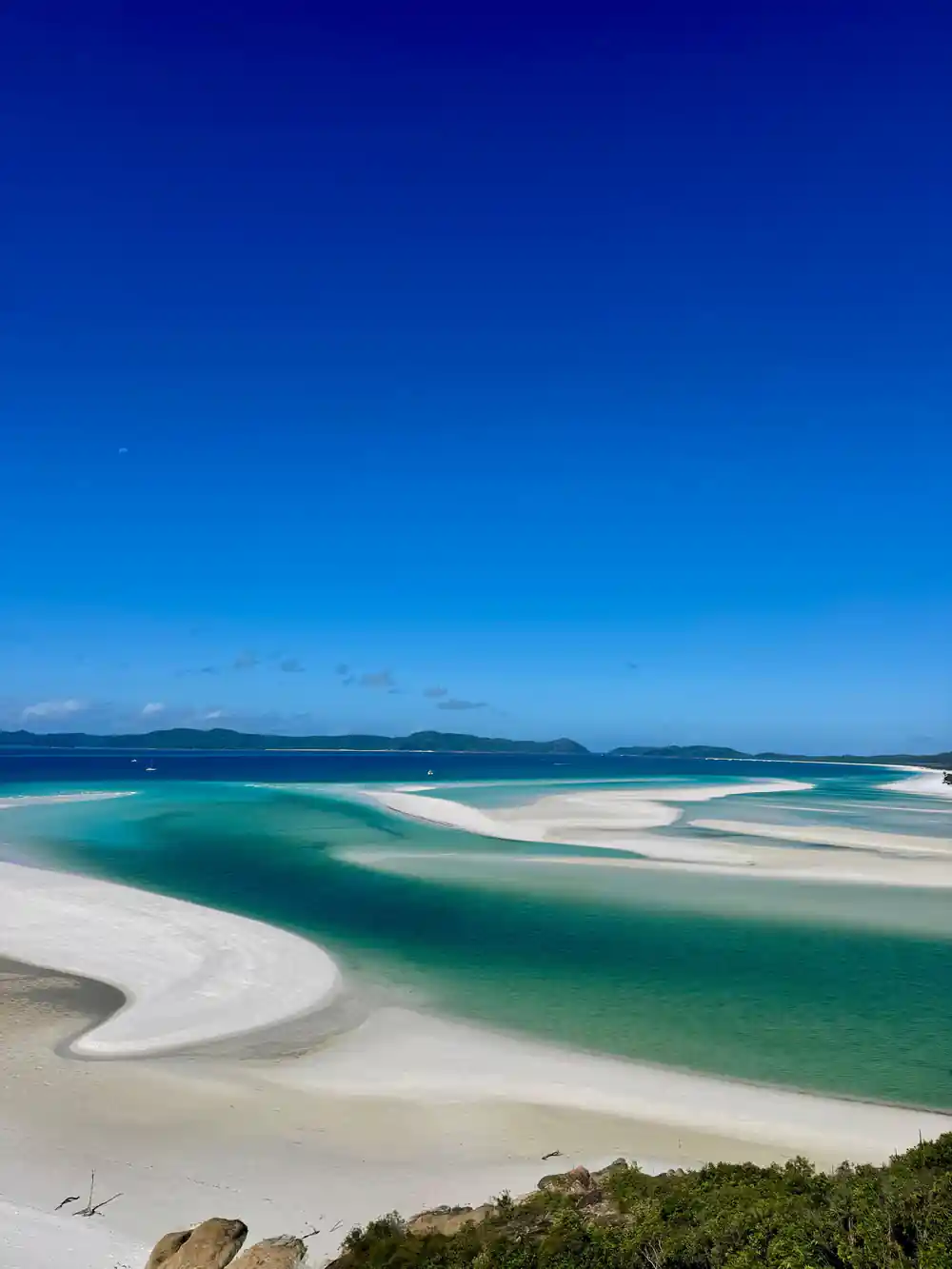
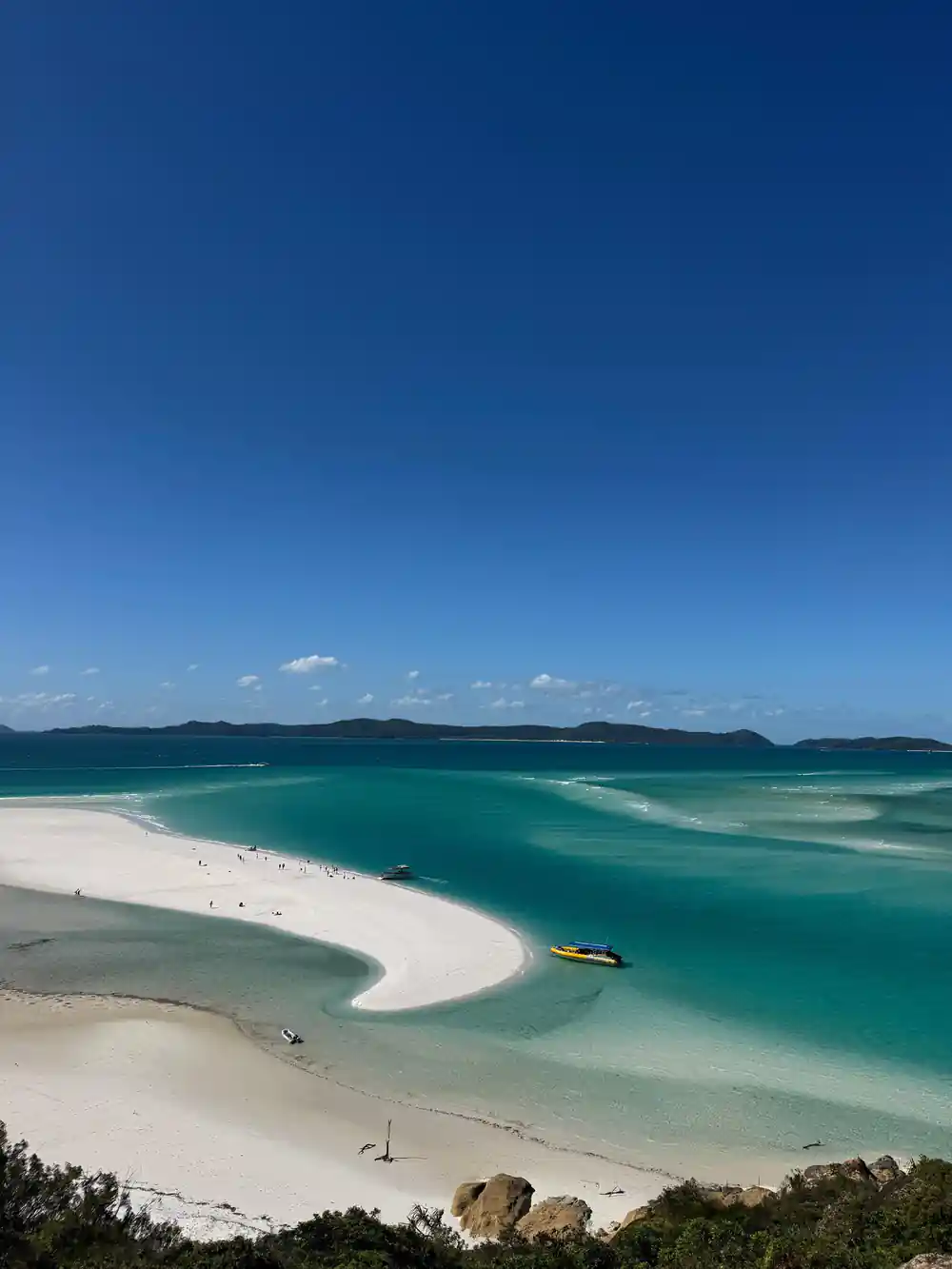
Hill Inlet Lookout is a must-see spot where swirling sands and turquoise waters form a mesmerising natural phenomenon that changes with the tides.[9] The track up is sandy and uneven underfoot, so wear something that stays on your foot rather than sliding off it, and carry water with you.
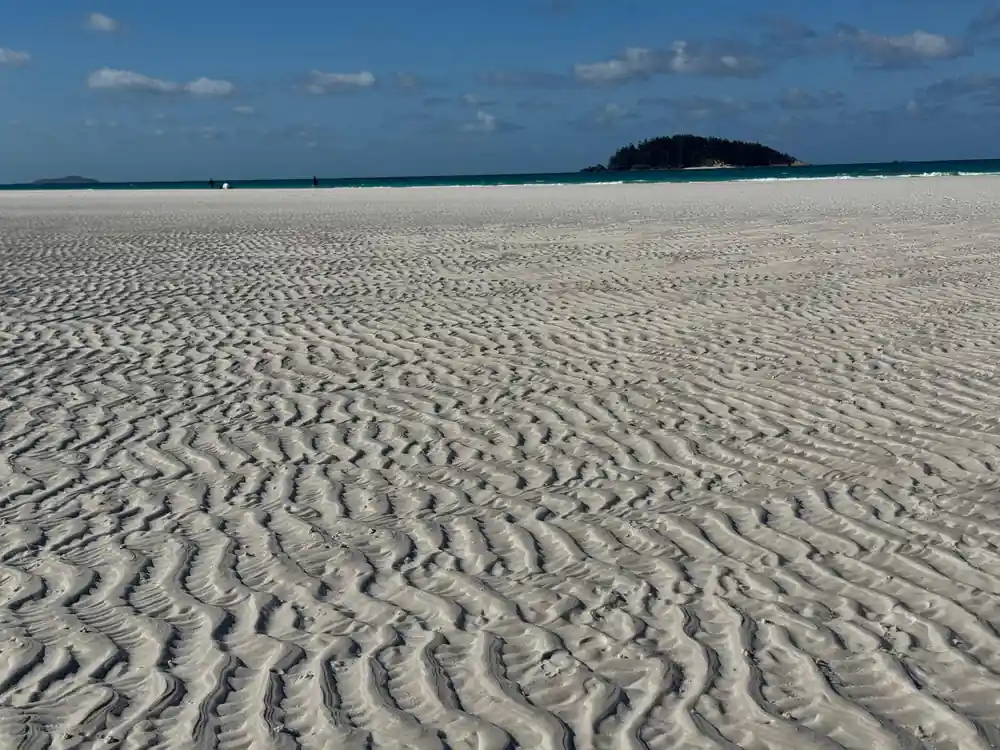
Bare feet are fine on the soft sand near the waterline, though the walk back towards the trees gets hot and hard underfoot. If you are staying overnight, camp sites at the Whitehaven Beach camping area are nestled among lowland vine forest and eucalyptus woodland behind the beach, suitable for walk in camping, with a hybrid toilet and picnic tables.[10]
Layering for a windy crossing and the ride home
Whitehaven Beach is approximately 35 km from Airlie Beach by sea, and fast boat tours generally take 60 to 75 minutes depending on the vessel and sea conditions.[2] That is long enough for wind to bite on the way out, especially if you sit up front, and long enough for the shade to feel cold once you are wet on the way back. Sit towards the back if you feel the motion, and keep your bag under your seat rather than on your lap.
Three layers work well: swimmers, a rash shirt or light tee, and a packable long-sleeve top or thin windbreaker that lives in your bag all day. Quick-dry fabric beats cotton, which stays damp and heavy against the skin. A spare pair of dry shorts and a shirt in the dry bag means you can change out of wet swimmers before the return leg. A spare plastic bag for wet swimmers keeps the rest of your bag dry.
Wind on deck is stronger than it looks from the marina, and a hat without a chin strap will end up over the side. Tie long hair back, keep a cap or a light buff for the boat, and save the wide brim for the beach and the lookout. If you feel the cold, a thin fleece costs you nothing in weight and saves the last hour of the day.
Water, snacks and the rest of your day
Drink more than you think you need. A refillable bottle beats a warm plastic one, and the eco-cruise is listed as a full-day trip with a buffet.[3] Plan the rest of your food around a proper lunch rather than a bag of chips, and keep fruit, a muesli bar and something salty in your day bag for the gap between boarding and the beach. Filling your bottle at the marina before boarding saves carrying extra weight later.
The eco-cruise listing offers reserve now and pay later, and free cancellation up to 24 hours in advance for a full refund.[3] On most commercial tourism operations in the Great Barrier Reef Marine Park, visitors are liable to pay the environmental management charge to the permit holder, who remits it to the Reef Authority.[11] A card and a little cash cover both.
Keep an eye on the horizon on the crossing. The Whitsundays has six species of whale and four species of dolphin officially recorded as calling the area home.[12] The region is served daily by Great Barrier Reef Airport on Hamilton Island (HTI) and Whitsunday Coast Airport at Proserpine (PPP),[13] which is worth knowing when you book your flight home.
How long Whitsunday day trips run
Whitehaven day trips, from-prices in US dollars
From-prices on GetYourGuide for these listings:[3][4][5][16]
When to go and when to book
Pack your day, step by step
Wear your swimmers
Put swimmers on before you leave Airlie Beach, then pack one dry shirt and a quick-dry towel at the top of your bag.
Pack sun cover
Reef-safe sunscreen, a lip balm, sunglasses with a strap and a wide hat with a chin strap go in first and stay easy to reach.
Bag the valuables
Phone, keys, cards and cash into a small dry bag that floats, so nothing sits loose on a wet deck or on the sand.
Sort your feet
Wear or carry shoes for the water, and add one dry pair with grip for the lookout track and the walk back to the trees.
Layer for wind
Add a packable long-sleeve top or thin windbreaker, plus a warm layer for the shaded run home, and tie long hair back.
Fill your bottle
Top up a refillable water bottle and add a snack or two, since the beach has no shops and the day runs long.
Ready for a full day at Whitehaven Beach?
from US$176Reserve now & pay later