At a glance
- Two hulls instead of one means a flatter, less leaning ride, which suits travellers who go green on a single-hulled sailing yacht.
- The dry season runs from June to October and September is named the best month, while stinger season in the Whitsundays runs from late October until May.[1][2]
- Whitehaven Beach is approximately 35 km from Airlie Beach by sea, and fast boat tours generally take 60 to 75 minutes depending on the vessel and conditions.[3]
- The full-day eco-cruise runs 8 hours with a live tour guide in English, pickup included, and free cancellation up to 24 hours in advance.[4]
- Sit in the middle of the boat, face forward, keep your eyes on the horizon and tell the crew early. Fresh air on deck beats a warm cabin.
- Top choice Whitehaven Eco-Cruise from US$175 Duration8 hours[4]Rating4.78 from 3,065 reviews[4]Boat styleCatamaranGuideLive tour guide in English[4]CancellationFree up to 24 hours before[4] Check availability
- Camira Sailing Day from US$182 Duration10 hours[5]Rating4.70 from 1,423 reviews[5]Boat styleCamira sailing catamaranGuideLive tour guide in English[5]CancellationFree up to 2 days before[5] See this tour
- Whitsundays Half-Day from US$87 Duration7 hours[6]Rating4.15 from 1,661 reviews[6]Boat styleHalf-day cruise boatGuideHost or greeter in English[6]CancellationFree up to 2 days before[6] See this tour
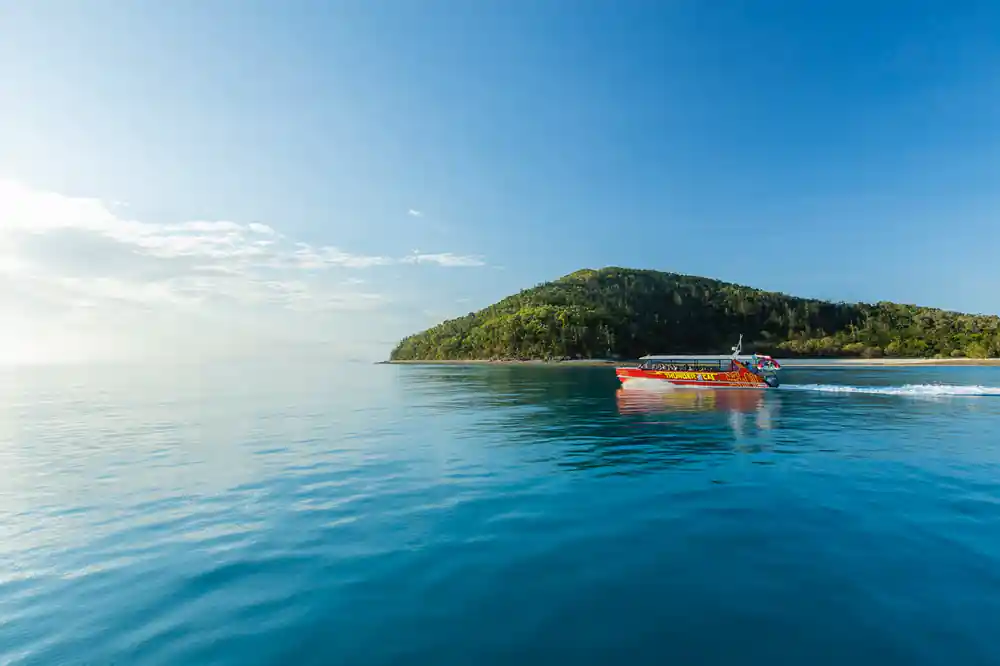
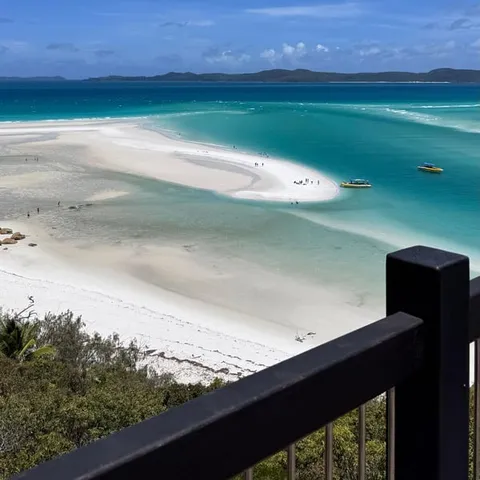

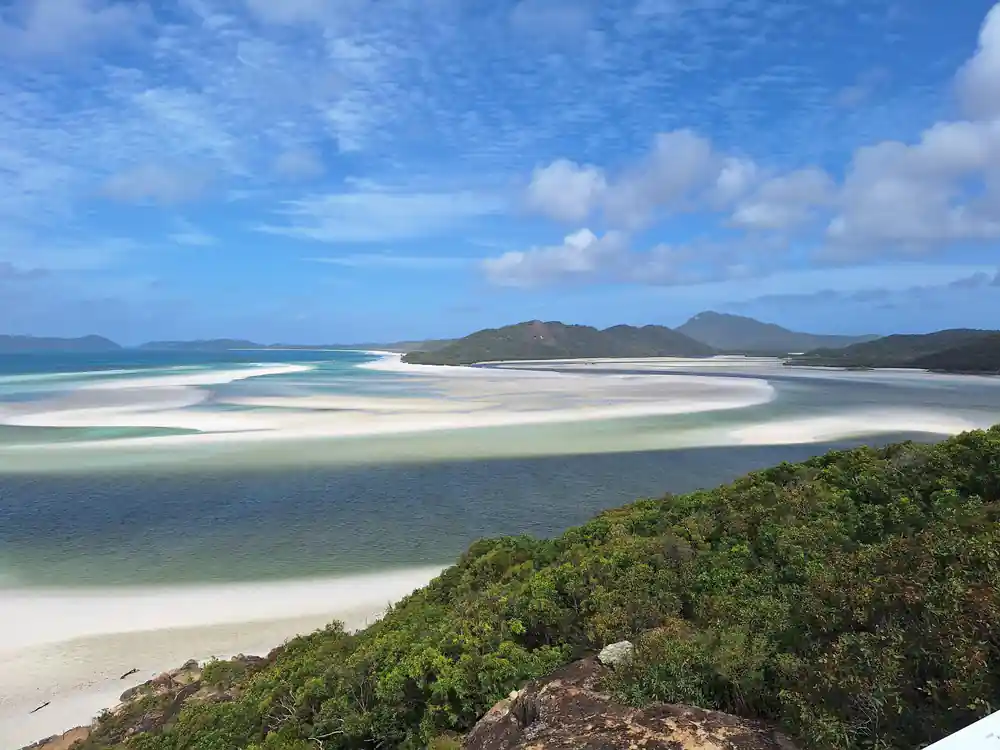
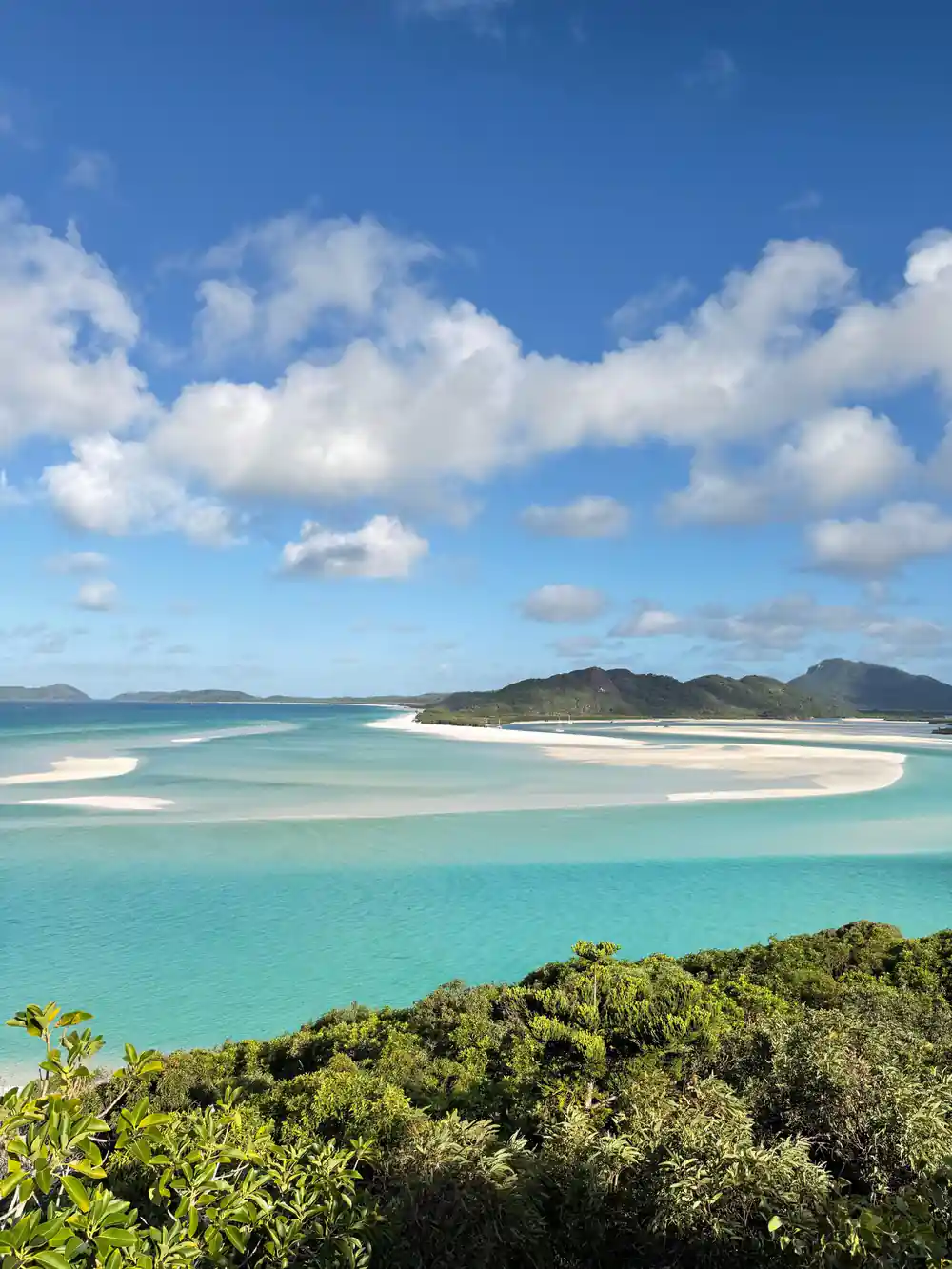
Don’t miss the Hill Inlet Lookout, where the swirling sands and turquoise waters form a mesmerising natural phenomenon that changes with the tides.
Is the eco-cruise a good pick if you get seasick?
Before you board
- Book a date with a free cancellation window you are comfortable with
- Take motion sickness tablets, patches or bands well before departure
- Pack a hat, high-factor sun cream and a light long-sleeved layer for the ride home
- Check the forecast and your booking messages the day before you travel
On the water
Twin-Hull Design and Catamaran Stability
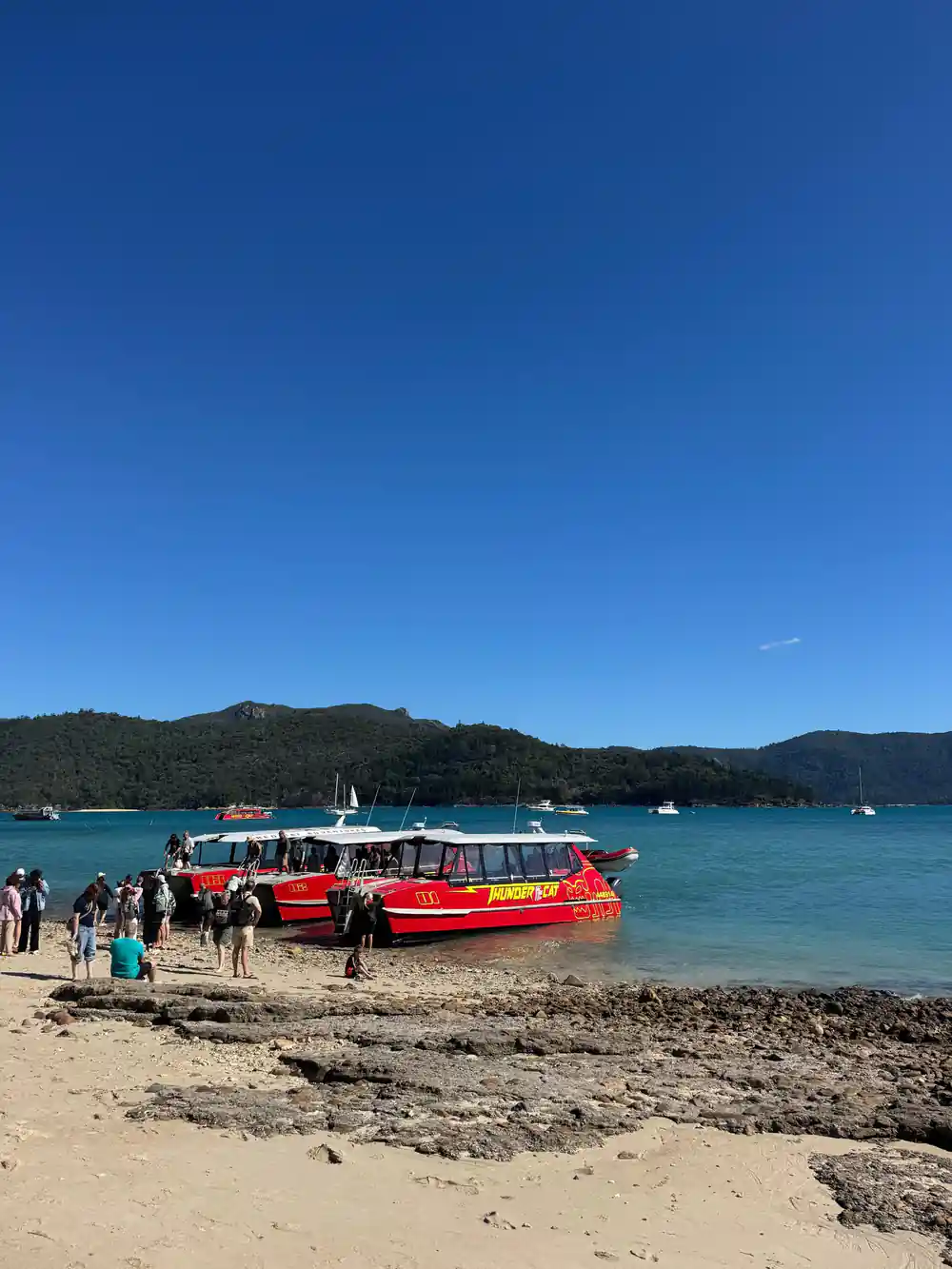
A catamaran floats on two hulls rather than one, and that changes the whole feel of a day at sea. A single-hulled yacht leans away from the wind and rolls through every wave, so you spend the trip bracing against a tilt. A twin-hull boat sits flatter, and the motion you feel is more of a steady rise and fall than a sideways swing. For anyone who has gone green on a leaning sailboat, that difference is worth a great deal. The Whitehaven full-day eco-cruise runs on a catamaran, and the day is built around that stable platform: you can walk to the rail, move about the deck and sit down to lunch without gripping the table.[4]
The full-day eco-cruise runs 8 hours with a live tour guide in English, and pickup is included, with the details shown when you check availability.[4] Stability is not the same as stillness, though. Even a large catamaran responds to swell, and the open water between the islands can be livelier than the sheltered bays you see in photographs. Knowing that in advance helps you prepare properly, and it also helps you enjoy the calm stretches for what they are.
When and What to Take Before You Board
Pack for a day that starts warm and can turn breezy the moment the boat picks up speed. A soft bag is easier to stow than a hard case, and a light long-sleeved layer earns its place on the ride home. Bring swimwear, a towel, a hat, high-factor sun cream and a dry bag for your phone and camera. If you use motion sickness tablets, patches or bands, buy them before you travel and follow the instructions on the packet about timing. A refillable water bottle and a few plain snacks are sensible too. Visitors on most commercial tourism operations in the Great Barrier Reef Marine Park are liable to pay the environmental management charge to the permit holder, who remits it to the Reef Authority.[7]
Timing matters as much as packing. The dry season runs from June to October, and September is named as the best month to visit the Whitsundays.[1] Stinger season in the Whitsundays runs from late October until May.[2] At Whitehaven Beach the water is usually calm, warm and clear, and during stinger season most tours provide protective suits so you can swim safely.[3] If you are flying in, two airports serve the Whitsundays on a daily basis: Great Barrier Reef Airport on Hamilton Island (HTI) and Whitsunday Coast Airport at Proserpine (PPP).[8] Both sit within easy reach of the marina where the day begins.
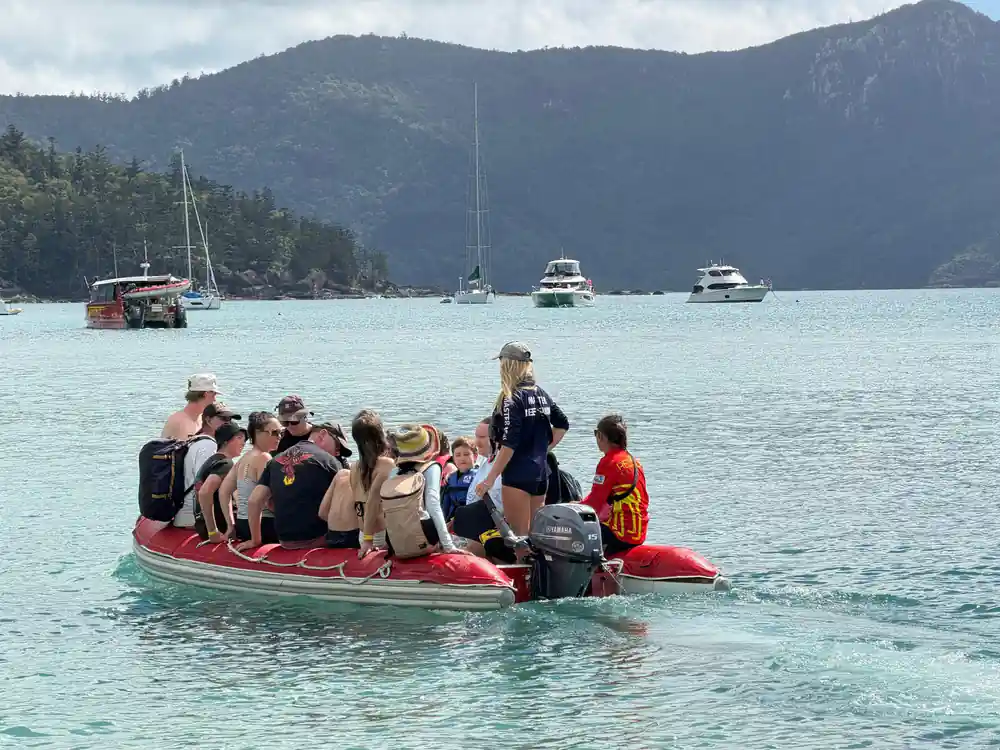
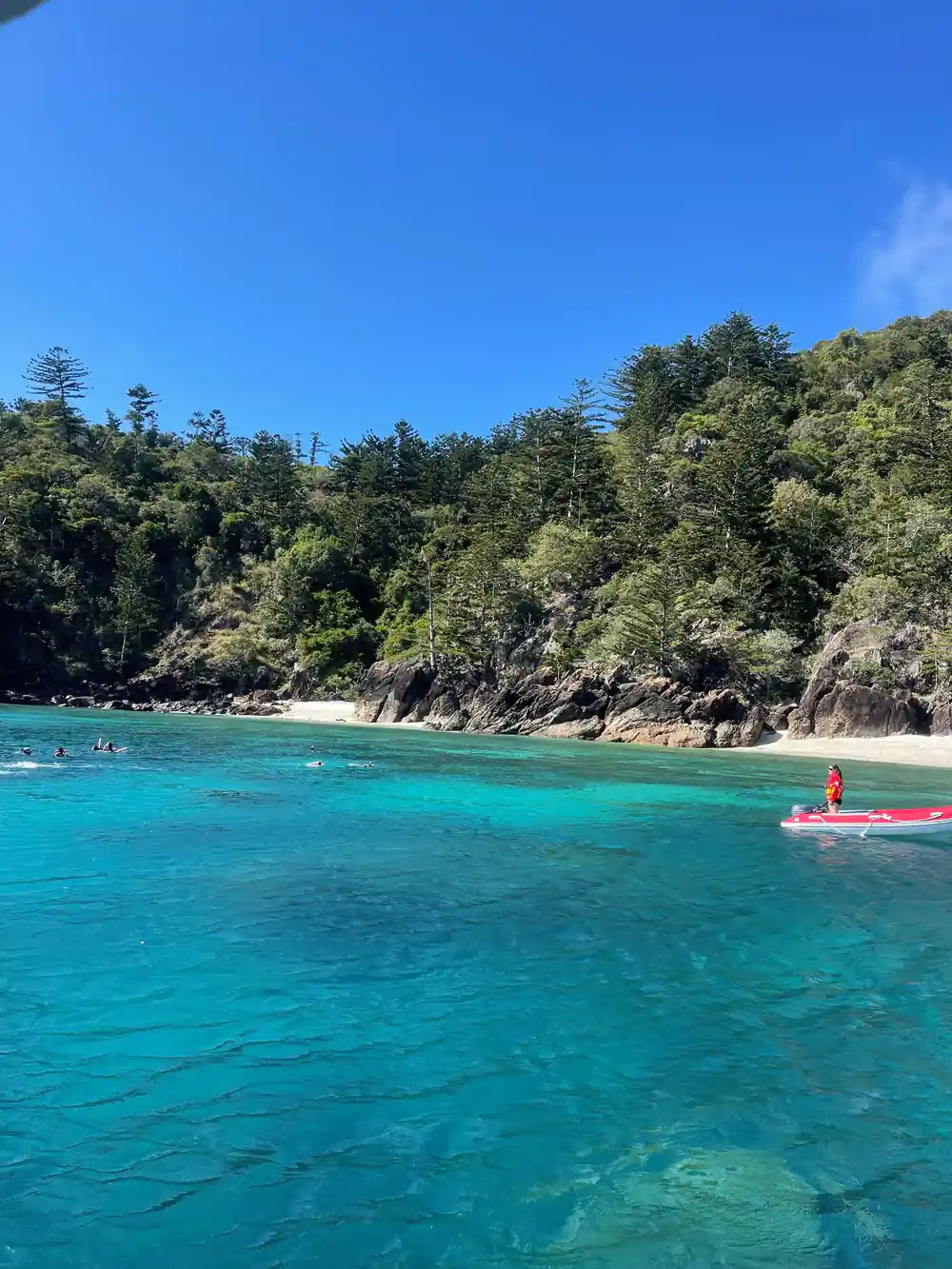
The catamaran at anchor in a sheltered Whitsunday bay, out of the wind
The Steadiest Seats and Shaded Areas
Where you sit changes how much you feel. The middle of a catamaran, roughly above the space between the two hulls, moves least, and the aft deck is generally kinder than the bow. Up forward you get the spray and the biggest swings, which is wonderful for a short burst and tiring before long. If you are worried about your stomach, aim for the middle bench, sit facing forward and keep your eyes on the horizon rather than on a screen or a book. If you can, claim that spot as soon as you step aboard, before the boat fills up.
Shade is worth planning for as well. The cabin and the covered aft area give you a break from the sun, and a hat plus a long-sleeved shirt works better than hiding below deck, where the air is warmer and the motion can feel worse. Once the boat is anchored, the sheltered side away from the wind is the comfortable place to sit and eat. On shore, remember that public toilets are the only facilities at Whitehaven Beach, found at Hill Inlet Lookout and at the campgrounds near South Whitehaven Beach.[9] There are no shops, so carry whatever you need for the day.
Whitsunday Passage Conditions and What to Expect
Whitehaven Beach is approximately 35 km from Airlie Beach by sea, and fast boat tours generally take 60 to 75 minutes, depending on the vessel and sea conditions.[3] The run out of the marina crosses open water before you reach the shelter of the islands, and the afternoon ride home often feels different from the morning one. Morning departures frequently get the softer conditions, though nobody can promise that. The islands themselves act as a break, so once you are in the lee of a headland the water flattens noticeably, even on a windy day.
On the way you may spot wildlife. The Whitsundays has six species of whale and four species of dolphin officially recorded as calling the area home.[10] Ashore, the sand is the famous part: Whitehaven Beach is a little over four miles long and its sand is composed of 98 percent silica.[11] Hill Inlet Lookout is the classic vantage point, where swirling sands and turquoise waters form a mesmerising natural phenomenon that changes with the tides.[12] If you would rather sleep on the island than sail home, you can camp overnight on Whitsunday Island at the Whitehaven Beach camping area in Whitsunday Islands National Park.[13]
from US$175
The full-day eco-cruise with buffet runs 8 hours with a live English-speaking guide and free cancellation up to 24 hours ahead.[4]
How Skippers Adapt Snorkel Sites When Wind Builds
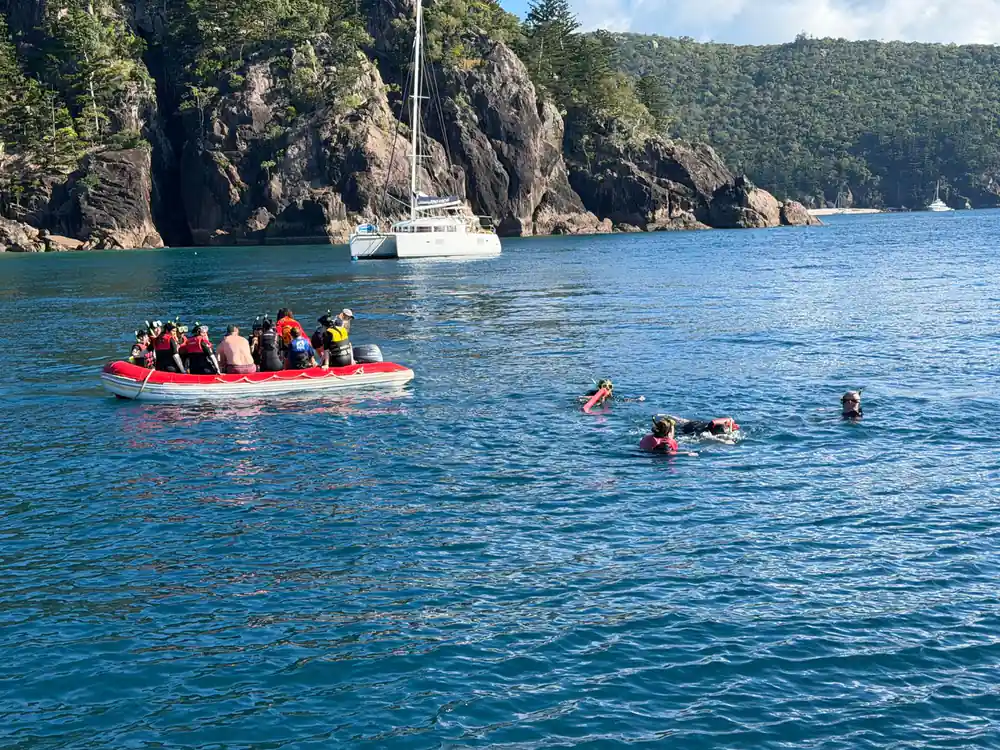
Wind rarely cancels a Whitsundays day, but it does change where you go. Skippers read the forecast, the tide and the swell, then pick the side of an island that is out of the breeze. Snorkelling in choppy water is hard work and the visibility is poorer. Hook Island is a good illustration of how much shelter matters: across the top of the island there is a series of bays that all offer excellent quality snorkelling with healthy coral and diverse marine life.[14]
This eco-cruise lists stops at Hill Inlet Lookout, Whitehaven Beach and Hook Island.[4] A skipper's job is to move the day around the weather, so the order of those stops can shift. Bring a reef-safe approach with you: keep your fins and hands off the coral, follow the crew's instructions about where to swim, and stay with the group. Listening carefully to the briefing matters more on a breezy day, because the safest line through the water changes with the conditions, and the crew are the ones watching it.
What Happens If Bad Weather Cancels or Alters the Day
Weather on this coast is one thing you cannot schedule, and operators watch it closely in the days before departure. The eco-cruise offers free cancellation up to 24 hours in advance for a full refund, and you can reserve now and pay later.[4] If you would like a longer cushion, the Camira full-day sailing adventure and the half-day Whitsundays cruise both allow free cancellation up to 2 days in advance.[5][6] Booking with one eye on the forecast, rather than months ahead and fingers crossed, keeps your options open.
If a day is altered rather than cancelled, it usually means swapping one anchorage for another or reversing the route so you spend more time in shelter. Beach time and wildlife sightings can never be guaranteed, and no operator controls the weather. Check the forecast before you book, keep an eye on messages the day before you travel, and make sure the phone number and email on your booking are current so any change reaches you quickly. That small piece of admin is the difference between a smooth morning and a scramble at the marina.
Motion Sickness Concerns: When to Reach Out
If you are pregnant, prone to severe motion sickness, recovering from an ear infection or unsure how a medication will affect you, speak to a doctor or pharmacist before you book. Seasickness usually announces itself with a cold sweat, a dry mouth and a creeping queasiness, and it is far easier to head off early than to settle once it has taken hold. Tell the crew as soon as you feel off. They have looked after a great many passengers, and a quiet word on deck is always better than suffering in silence.
Simple things help. Stay on deck in the fresh air, keep your eyes on the horizon, sip water, and go easy on heavy fried food and alcohol the night before. Ginger, acupressure bands and plain crackers work for some people and not others, so it is worth finding out what suits you on a shorter harbour trip first. If you do start to feel bad, sitting in the middle of the boat with a breeze on your face beats lying down in a warm cabin. Someone in your group will usually spot the signs before you do, so agree in advance that they will nudge you.
Hours on the water by Whitsunday boat tour
What a Whitsunday boat day costs, from prices
US dollar from-prices of each GetYourGuide listing:[4][5][6][15]
When to travel and when to book
Before you step aboard
Sort out motion sickness first
Tablets, patches and bands work best when they are already in your system, so take them at the time the packet advises, not once the boat is moving.
Eat light, drink water
A heavy fried breakfast and a few drinks the night before are a poor combination at sea. Keep it plain and keep sipping water through the day.
Claim a steady seat
Head for the middle of the boat or the aft deck as soon as you are aboard, and face forward so you can watch the horizon rather than the cabin wall.
Stay on deck in fresh air
If you start to feel queasy, step outside, breathe slowly and look at something far away. A warm cabin below tends to make it worse.
Say something early
Tell the crew as soon as you notice the first signs. They have dealt with seasickness many times and can move you somewhere better.
Ready for a steady catamaran day on the Whitsundays?
from US$176Reserve now & pay later